My 25 Years at Distributed Proofreaders

March 1, 2026

25 years of dilemmas

When I signed up on 18 January 2001 on a new and exciting website with the then-unfamiliar name Distributed Proofreaders, I couldn’t imagine I would still be there 25 years later, with over 1200 ebooks posted to Project Gutenberg. That is almost one per week, over the entire period.

The basic Distributed Proofreaders ebook production model is simple: Using scanned page images and OCR text provided by a Content Provider, volunteers proofread and format one page at a time in three proofreading rounds and two formatting rounds. Then a Post-Processor assembles the completed pages into an ebook that is submitted to the Project Gutenberg collection. My primary roles at Distributed Proofreaders are Content Provider and Post-Processor.

Instead of talking about all the niceties of the process, let me delve into the dilemmas I have faced while working as a volunteer for such a long time.

What content to provide

Obtaining interesting books to process into ebooks can be a real challenge. Although in most cases we are forced to work with books that are about a century old or older, I often try to find books that have a link with current events. When a calamity hits a certain region, I often try to find books about that region, especially if that book provides some background to the events. The earthquake in Haiti prompted me to look up some books about that island nation’s curious history. The Russian invasion of Ukraine inspired me to collect a range of works on that embattled country, such as Ukraine, the Land and Its People.
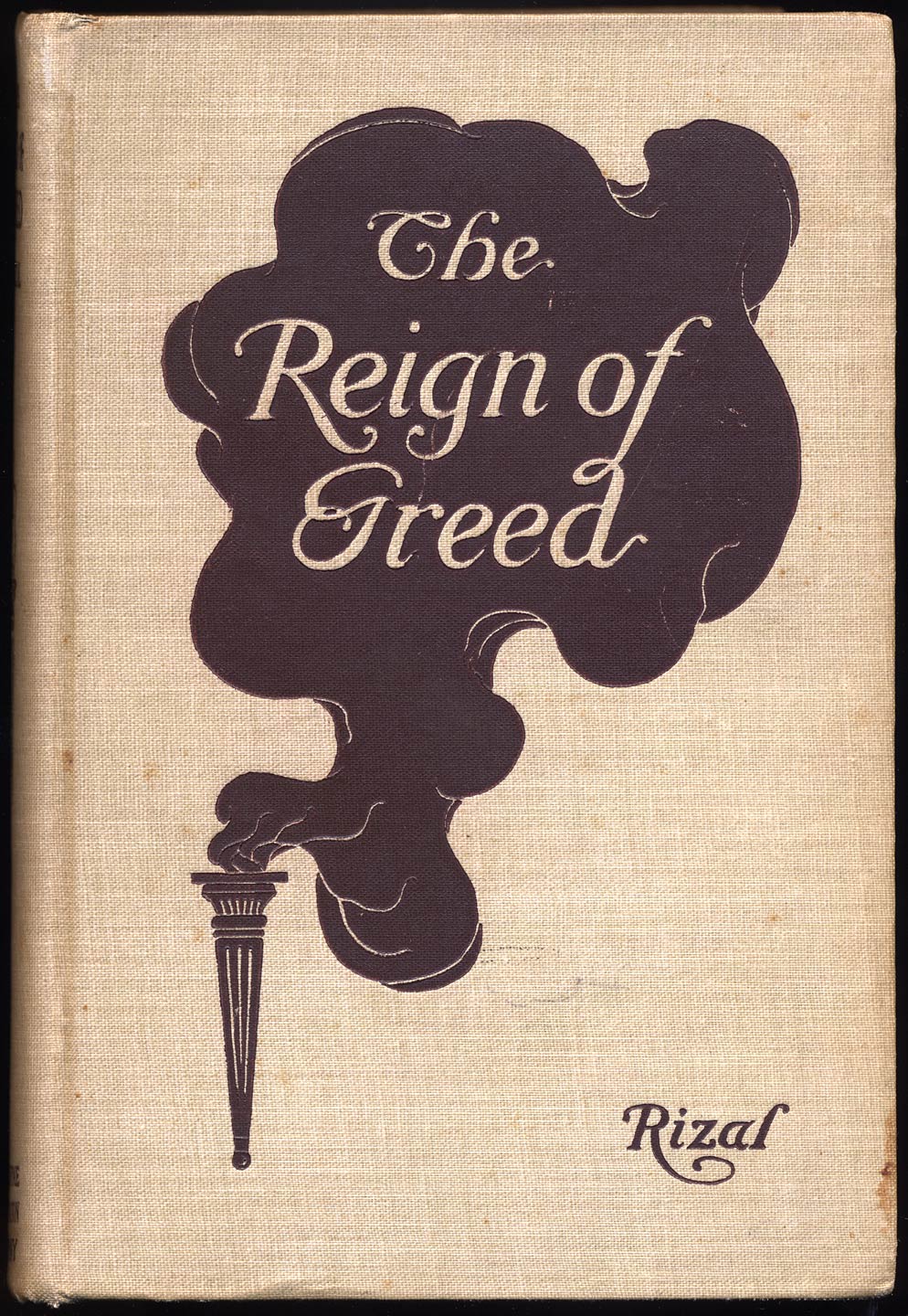
Apart from that, I often turn to my long-time favorites: exploration, anthropology, folklore, nature, and science in general, and works related to India or the Philippines in particular, including The Reign of Greed, an English translation of the powerful 1887 novel by Filipino nationalist José Rizal, which remains required reading in Filipino schools. (I also provided the ebook version of the Dutch translation of this important work, Noli me tangere: Filippijnsche roman.)

To buy or not to buy

Antique books can be expensive, so buying books to scan and run at Distributed Proofreaders is often out of the question. My most significant source of physical books over the years has been thrift stores, but what you can buy there is often very limited. Good finds are rare, but not impossible, and require a regular quick scan. About five or six thrift shops are within half an hour’s cycling distance from my home or office in the Netherlands, which makes them reachable during a lunch break. The second most important source are online classifieds. Books from that source tend to be cheaper than professional book stores. My normal strategy is not to look for a particular title, but to go through the book racks or online classifieds and ask myself, is this eligible (clears copyright, no duplicate), is this doable, and does it add value to the Project Gutenberg collection? If so, I will buy the book, mostly for just a few euros.

Unfortunately, certain categories of books are far more likely to end up in thrift stores. Nice old illustrated books on nature are a rare find, whereas old children’s books are relatively common. Classic (or former classic) novels take a middle position, and a large bulk are religious texts, which I normally don’t run.

To scan or to download

In the early days, before large archives of scans like the Internet Archive appeared online, just downloading a scan-set wasn’t an option: everything had to be scanned by hand. Over the years, I think I’ve owned more than six or seven different scanners, all with their own quirks and abilities. Next to the books themselves, they are the biggest investment, and most aren’t made to last many thousands of pages.

Scanning takes a lot of time. However, the benefit of self-scanning is twofold. Obviously, if a book has not been scanned before, you have no choice, and you can truly make something more available immediately. But even with previously scanned books, having the illustrations available in high resolution, and without the compression artifacts or vignetting caused by the overhead scanners used for the large projects, helps to get a better end-result.

It may be a surprise for some, but the most time spent on preparing ebooks does not go into correcting or formatting text, but rather in the processing of scanned illustrations. Since I like heavily illustrated works, and some individual images can take up to an hour to clean up, those images add up to more hours than any other activity.

Dutch or English or …

My native language is Dutch and I like to prepare Dutch books for processing at Distributed Proofreaders. Having enough material available for Dutch volunteers, and having enough Dutch volunteers for those books, is always a bit of a catch-22. Without books, the volunteers won’t come, and without volunteers, the books will stall in the rounds. For now, I try to balance them out, half Dutch, half English, and a small sprinkling of other languages in between. When I run a Dutch book, I will try to find an English edition of the same work, and run them close to each other. My special interest goes to English translations of Dutch works.

To duplicate effort or not

In the early days, Project Gutenberg was one of the few places that offered fully digitized ebooks. You had a few other sites, often with just a few texts, concentrating on one subject or author. This too has changed. Large government-subsidized repositories have been created. For Dutch, we have the Digital Library of Dutch Literature (DBNL), which includes full-text transcriptions of thousands of books. It seems quite pointless to duplicate that work at Distributed Proofreaders. However, there are several reasons I would still sometimes pick up a book that has already been done elsewhere:

  • Legal. Project Gutenberg has a very liberal terms-of-use license that places almost no restrictions on reuse, whereas other archives may dubiously claim copyright or (in the EU) database rights on the texts they offer. It is nice to have a copy of an ebook available without such encumbrances.
  • Accessibility. Project Gutenberg has some strict rules that make ebooks more accessible: a single HTML and plain text file, only using mature and stable technology, and without active components. This is a big boon for accessibility, and linked to that is:
  • Durability. Project Gutenberg has been around for over half a century, and probably will remain around for an even longer time. I have seen many ebook projects come and go, and disappear completely from the net.
  • Quality. The ebooks at Project Gutenberg that were prepared by Distributed Proofreaders are often of better quality than those available at other collections. For a few works I’ve duplicated from other ebook repositories, I’ve used software to find all relevant differences between ours and theirs, and I collected pretty exact statistics on errors in both versions. It was satisfying to find far fewer errors in the Distributed Proofreaders versions, demonstrating the care our volunteers take in the five proofreading and formatting rounds.

Hard or easy

As long-timers at Distributed Proofreaders will know, I don’t shy away from difficult works, such as the Fornander Collection of Hawaiian Antiquities and Folk-Lore (see this blog post for details on how this challenging ebook was prepared). The value added by manually proofreading difficult works is often much higher than for straightforward texts like novels. On the other hand, it is also good to have easy works like novels available. Those are great for beginning volunteers and are easy to post-process, so they allow me to regularly complete works, while the hard works slowly progress through the rounds and later through post-processing.

To finish the old or to start something new

I am a hopeless procrastinator. Having over 100 projects in the rounds at Distributed Proofreaders, I still have plenty of urges to start new projects, as new interesting books cross my path and more subjects need exploration. At the same time, I know several large projects are languishing in post-processing. They are hard, often needing a few final but boring steps to get up to my quality standards. Being a perfectionist, I often have to remind myself of that saying of Voltaire, “Le mieux est l’ennemi du bien,” the perfect is the enemy of the good. Then I try to make the ebook good enough and get it posted. Any remaining issues can better be seen and solved by the eyes and hands of the collective when it is out in the open. Still, it took me years to consider my posted texts fully ready for public consumption, as there still might be some comma confused for a period hiding in a text, or some odd OCR confusion surviving in the deep catacombs of a book.

Hobby or family

Finally, perhaps the biggest dilemma of all: to spend time on Distributed Proofreaders, or with my family. The kids are grown up now and have found their own place, but still want to get some assistance from their father once in a while, and my wife won’t appreciate being a “computer widow,” so joint activities are always on the table. And, of course, the elephant in the room: the bills need to be paid, so a full-time job is needed as well. Those high priorities are not dilemmas at all.

What motivates me…

All these dilemmas are practical ones, but after 25 years the more interesting question may be why I keep returning to this work at all.

All human beings, in a way, crave some kind of recognition, and most people build their own little cathedrals in one form or another. There is a short story by Tolkien, “Leaf by Niggle,” which explores some themes of that trait. In it, an artist paints a large tree, but his work is neither understood nor appreciated, and work on it is often frustrated by everyday needs. In the end, only one small leaf remains, framed and hung in the corner of a local museum. That already is more than most people will ever achieve. Nomen est omen, and my own name being derived from that of St. Jerome, the patron saint of librarians, it is perhaps obvious that my little cathedral would be a library.

We live in a world where text is often deemed outdated or superfluous, swamped by the flood of images and sounds that modern technology spews upon us at an unprecedented rate. I believe that idea is mistaken. Text is fixed speech: condensed, polished, and refined. It is the closest we can come to immortalizing our thoughts. The act of writing not only fixes those thoughts in a medium, but also forces us to rethink them, confronts us with their inconsistencies, and makes them available for others to scrutinize, critique, and improve. That is why I believe text is not going away, and why reading will remain an important activity.

Thoughts are dangerous. Thoughts are infectious: they motivate us, empower others, and as a result have often been suppressed. Libraries collect thoughts—condensed into text, bundled into books. Libraries are, in a sense, the antithesis of suppression. They are built to share thoughts, to collect often conflicting ideas and allow them to stand side by side, so that other minds can absorb them, scrutinize them, see their contradictions, and produce something new from the result. Libraries may even inspire and help movements to end injustice and bring social change.

Access to knowledge should not be a privilege. Underprivileged communities should be able to access historical works that are hard to find, works that hold their own heritage but are locked away in expensive tomes, stored in imposing buildings, and located in faraway countries. Page scans only go halfway in that respect, as fully proofread texts are far more accessible—an aspect that is particularly important for disabled people. Digitization is not only about preserving cultural heritage; it is about making it accessible, affordable, and ubiquitous, and in doing so keeping culture, and cultural diversity, alive.

My selection of texts is impulsive, as explained above, but little by little the library is growing—and I am learning and enjoying the work. Even better, I am not alone. For 25 years, I have shared this effort with the many wonderful volunteers at Distributed Proofreaders. That, too, is a great motivation: to be part of a community of like-minded individuals working toward a common goal, while holding widely diverging opinions on many other subjects—more like a bazaar than a cathedral.

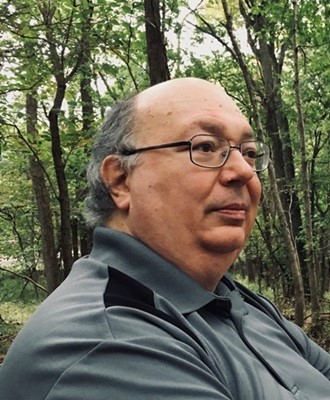
This post was contributed by Jeroen Hellingman, a Distributed Proofreaders volunteer.


What Are You Waiting For? (A Poem)

August 1, 2023

Are you enthralled with challenges that exercise the mind?
And do you feel some comfort with the literary kind?

Then let me tell you ‘bout this place where you’ll feel right at home.
Come join us for this worthy cause; there’s no more need to roam.

This place is called DP for short because the name is long,
And if I could, I’d add some notes and sing it like a song.

The worthy cause will bring some books to many folks indeed,
And you could play a key role in providing what they need.

If you’ve been told or know yourself that you’ve got special skills,
Then don’t wait ‘round; put them to use and reap in all the thrills.

Please take a seat so I may share the features of DP;
I think you’ll see your time spent here is better than TV.

There’s lots to put your brain to work while feeling so sublime,
Plus knowing all the good it does makes worthy all your time.

Have you been told that you excel at picking out details?
Then proofing might be just the thing to open up your sails.

Sail free and wide through punctuation, noting scanned mistakes.
Your bounty comes with knowing that your brain is all it takes!

Then share the funny, weird, inspired phrases that you find
On the friendly, helpful, worldwide forum where great minds are aligned.

Our forums are a gathering place for questions and support,
But socializing does take place, I’m happy to report!

Your questions are most welcome so feel free to post your plea;
We do not want you feeling you’re completely lost at sea.

Take one step more and join a team; there’re many you can choose.
So find a team that makes you smile and complements your views.

I have to say without a doubt, Team Diehards is my fave.
Those hard, forgotten projects are the ones we try to save.

If you like organizing things displayed all nice and square,
Your joy may be to format books, come try it if you dare.

You’ll use a nice assortment of some very nifty tags
To mark the words and wordy parts so well you’ll want to brag.

Our managers and processors pull everything together.
This type of work may suit you fine no matter what the weather.

Come rain or shine, this type of work is certainly rewarding,
Enough to make you jump from bed all fresh to start your morning.

And last, not least, there is a space where folks enjoy Smooth Reading.
Please sit right down and read a book; it’s key to us succeeding!

So if you love a challenge for your literary mind
And working with an online group whose goals are quite aligned,

Please join us at DP today; there’s so much to explore.
The final question without doubt: What are you waiting for?

This poem was contributed by Susan E., a Distributed Proofreaders volunteer.


In Memoriam Stephen Hutcheson

March 1, 2022

With heavy but grateful hearts, the volunteers at Distributed Proofreaders bid farewell to our Beloved Emeritus Stephen Hutcheson (1956-2021), who uploaded his final book to Project Gutenberg on September 27, 2021, one day before he passed away.

Stephen joined DP in July 2004 under the user name “hutcheson” and ultimately became one of our most prolific contributors. Although he proofread and formatted over 75,000 pages, his primary roles were as a Content Provider, Project Manager, and Post-Processor for numerous projects that he shepherded from the beginning steps (copyright clearances, image scanning) to final upload to PG. He also graciously processed items from the collections of other volunteers, with a “kid in the candy store” glee over the latest find. (Anything pertaining to his beloved home state of Tennessee would get top priority!) He completed over 1,000 projects and was also active with Distributed Proofreaders Canada, completing around 200 titles in the Canadian public domain. One of his projects, French Painting of the 19th Century in the National Gallery of Art, was selected as Distributed Proofreaders’ 37,000th title posted to PG and was celebrated in this Hot off the Press blog post.

Stephen was the oldest and only boy of six children reared on a farm in Murfreesboro. His sister, Libby Smelser, recalls that his hay fever kept him indoors, reading voraciously, listening to classical music, playing solo chess. “He was very cerebral, very focused, with wide-ranging interests … his mind had so many tendrils. We sisters thought he was just terribly smart!” Stephen followed in his father’s footsteps, graduating from Middle Tennessee State University and becoming a computer programmer. He and wife Ruth were married for over twenty years, and had two children, Laura and David. Although separated, he and Ruth remained dear friends; she enjoyed accompanying him on his book scouting forays to secondhand shops.

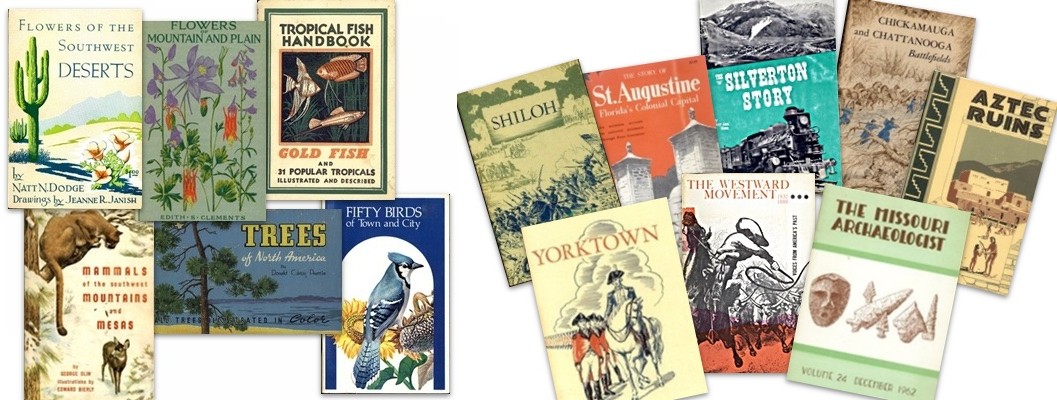
Stephen spent years developing his own tools for post-processing DP projects, requiring a special set of proofreading and formatting methods. Volunteers who braved the learning curve of his “Hutcheson Wiki” guidelines were rewarded with a rich variety of topics that reflected his own eclectic interests: old buildings, “interesting places” (as he phrased it), anthropology, archaeology, linguistics, history of inventions and technology, arts and crafts, cookbooks, botany, U.S. history and geography/geology, mining/minerals, religious history and hymnology, classical music, ornithology and zoology, juvenile mystery/adventure series, and science fiction. He loved coming upon cross-references between books at Project Gutenberg, saying, “That’s the thing about a library: the bigger it gets, the more the books start talking to each other.”

Stephen processed many field guides for U.S. National and State Parks, monuments, nature parks, museums, and locations with historical importance, with a view to having an eBook guide available to any traveler with a smartphone. These were his favorite projects to work on, and he had a penchant for maps and atlases. He inherited a love of birding from his family, and contributed many books about flora and fauna.

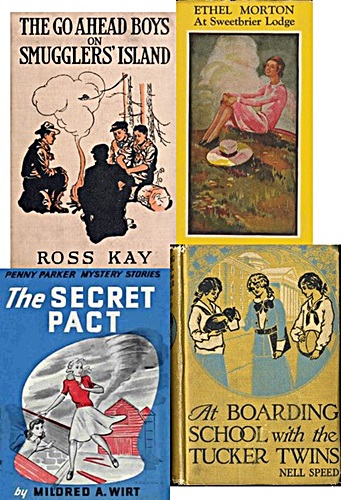
Stephen participated in DP’s “Project Not Quite Nancy Drew,” featuring various juvenile series in which young people ran around “unsupervised and unchecked,” solving mysteries and having adventures. His contributions helped expand and even complete PG’s collection of series such as the Camp Fire Girls, Jean Craig, Judy Bolton, Motor Girls, Dorothy Dale, Go Ahead Boys, The Airship Boys, and many more. His sardonic sense of humor was evident in his project comments: “What to expect: Ghosts. Cemeteries. Midnight vigils. Ominous telegrams. Disguises. Trafficking in illegitimate rubber products. City kids lost in the woods on a snowy night. Most frightening of all, efficiency experts in the newsroom. Amnesiacs. And … I forget. But I’m sure our blundering but persistent detective figured it all out, and her father published everything in a special edition of the Star.”

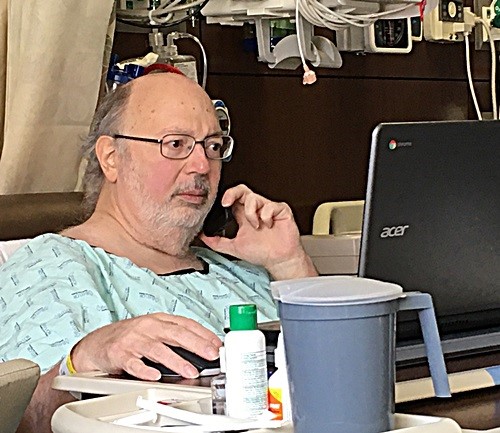
Soon after being diagnosed with leukemia, he was hospitalized in December 2020 until his passing in September 2021, but he continued diligently working on DP projects from his hospital room. He often remarked that DP was what kept him sane, and he worked every day except when the chemotherapy affected his vision. Even when he was in the ICU on a breathing machine, he made the effort to connect to DP. He was determined to reach a personal milestone of 1,000 projects uploaded to PG, which he achieved with about 80 to spare in his final weeks. Ruth recalled,

“Stephen loved his work and his friendships at Distributed Proofreaders. This spilled over into his contacts with the hospital staff as they learned about DP. His ability to continue with DP kept him going throughout his long hospitalization…. I was so thankful he could continue his passion project until almost the last day. It brought him joy, fed his thirst for knowledge, and gave him goals to work toward even on the most difficult days. The hospital staff encouraged him, inquired daily about his projects, kept track of his book count on his patient whiteboard, and celebrated each book completed. After he reached 200 books [posted to PG] while in hospital, staff gave him a celebration party.”

The DP community can certainly relate to Ruth’s phrase “passion project.” Stephen’s passion and dedication is an inspiration. DP offered Stephen the perfect venue for his love of books, his insatiable curiosity, and desire to stay productive until his very last day of life. In turn, he has left an enduring legacy of preserving lovely books across many genres for all the world to have at their fingertips – a treasure indeed. Rest in peace, Stephen. You were one of a kind.

This post was contributed by Lisa Corcoran (Leebot), a Distributed Proofreaders volunteer. Many thanks to Ruth Hutcheson and Libby Hutcheson Smelser for their valuable insight. Photos of Stephen courtesy of Ruth Hutcheson.


Ten (Eleven) Years at DP

January 1, 2020

Dans la Bibliothèque by Auguste Toulmouche

I recently reached my ten-year anniversary at Distributed Proofreaders. I thought it would be interesting to acknowledge ten memories, observations, events, changes, or other items of nostalgia and hopefully of interest to others — Screeching halt! I wrote that a year ago and never finished. So now it’s eleven years and eleven items.

The Beginning — Welcome!

Someone had mentioned Distributed Proofreaders on another website, and I came to see what it was about. I started at the DP page, decided to create an ID, and started as a beginner. I immediately felt welcome. People’s answers to questions, appreciation for efforts, and encouragement are part of the palpable fabric of DP life. This year, someone posted in the forums, “Being helpful is the sort of thing that DP does so well.” I agree. There’s a blog article about Comments That Matter that expresses this in more depth.

Nitpickers

I found a group of fellow nitpickers, perfectionists, error spotters, spelling geeks, and grammar guards. It’s great to be in a place where you can question the use of a comma, semi-colon, duplicated word, mis-seplling misspelling, etc., and instead of getting a long-suffering sigh in response, to know that the comment is appreciated or in some cases leads to a thoughtful discussion or a thank-you. I found a group of fellow nitpickers! If you are one also, this may be for you!

Diffs: A Source of Enlightenment

An e-book project at DP goes through several rounds of proofreading and formatting. After each round, a proofer or formatter can check his or her “diffs” — the changes made to the text of a project’s individual pages as it progresses through each round. (A diff doesn’t necessarily mean there was something wrong, just that the page text coming out of the subsequent round is different.) I learned so much from my diffs. Yes, I got gentle feedback for the pages I did in Begin (projects set aside especially for beginners). However, by looking at the changes the next rounds of proofers made to my pages, I also learned an incredible amount. I learned what my eyes were glossing over and seeing what they expected to see instead of what was there. I learned to slow down. I learned to stop for the day or at least take a break every so often. I learned to go over a page another time if I found I was just reading instead of proofing. I learned that I still need to access the Proofreading Guidelines regularly.

Variety, Variety, Variety

Within the first few days I was at DP, I had the temerity to work on an English-Spanish dictionary as well as part of the Encyclopædia Britannica (in the G’s). I’m pretty sure I worked on an issue of The American Missionary (a challenging 19th-Century periodical) in early days as well. I know I also worked on some Begin projects, got helpful feedback, and forged on ahead. Over time I’ve been impressed with the wide variety of projects we work on. There are of course English-language books published across time periods, mostly up through 1923 (due to copyright) in standard library categories like fiction, reference, science fiction, cookbooks, adventure, history, military, music, anthropology, etc., etc. Add to that books in those same categories, but in other languages: French, German, Catalan, Spanish, Esperanto, Italian, Latin, Dutch, Portuguese, Swedish, and Cebuano. But there are more — think of the patience of the DP volunteers who provide content and manage the projects, and the dedication of proofers and formatters to work on single- and dual-language dictionaries, multi-volume encyclopedias, “Complete Works of…,” etc. I’ve also seen and worked on thesis papers and handwritten documents. There are also relatively modern government publications about parks, national monuments, nature guides, and more. The variety seems infinite.

Working Site – Not Just Social

While there is definitely a rich social aspect to DP through the volunteer forums, that’s not the primary focus. This is a working site. People contribute in many, many ways. I like the feeling of my efforts being a small part that feeds into a much larger contribution. People’s work gets recognized. There are places to announce accomplishments, and DP Anniversaries are acknowledged and celebrated. Without that, I wouldn’t be aware of my tenth eleventh anniversary.

Incredible Volunteers

It’s incredible that so many people volunteer so much time to make this happen. It ranges from a-page-a-day to what approaches or even exceeds enough time for a full-time job. Volunteers are not just incredible for the time and/or consistency they donate, but for their incredible knowledge and willingness to share it with others.

International Community

There is a considerable international community involved at DP. There are contributors from English-speaking countries, but also from many other parts of the world. I mentioned some of the different languages in the Variety paragraph above. There are perspectives brought to various discussions that I wouldn’t be exposed to on a U.S.-only site.

It’s a Learning Site

I learn a lot from other volunteers. They are always willing to share their knowledge and answer questions. I’ve learned some html coding in setting up project comments, using templates others have provided, and then finding resources on the Internet to figure out how to do other things. I’ve learned from discussions on various threads. And of course, I’ve learned a lot from the content of projects I’ve worked on.

The Custom Proofreading Font Looks Normal Now

DP is continually looking for ways to make the volunteers’ work easier. For example, a DP volunteer created a display font especially for proofreading, DPCustomMono2. When I first proofed with it, I was amazed at how much it helped. It clearly differentiates among I, 1, l. It distinguishes O and 0 without strain. It helps point out capital W that should be lower-case w and much more. Although at first it seemed odd looking and just plain weird, one day I realized that I had gotten used to it. It was the day I was sure DPCustomMono2 was missing and had been replaced by a “normal” font. Looking more closely, I saw the l with the curve and the 0 with the dot. DPCustomMono2 looked “normal” to me now.

Change and Accomplishments

Over my eleven years at DP, there has been a lot of change and many accomplishments. DP’s management has changed from a “benevolent dictatorship” (being run by a single overworked volunteer) to a non-profit corporation with a Board of Trustees and a General Manager. DP posted its 14,000th e-book to Project Gutenberg a few weeks before I joined. We just posted our 38,000th e-book last month. That’s 24,000 books since I joined. The site has been made available in French. Hardware, operating system, middleware, and forum upgrades have been rolled out. Now we’re gearing up to support additional character sets. The site changes, but the sense of purpose continues, as do the improvements and milestones.

Blogging

This Blog was introduced in 2010, and DP volunteers were invited to contribute blog posts. Surprising myself, I found I had thoughts to share. Thoughts grew to paragraphs and to contributions. It’s a good feeling to see something I’ve worked on show up as an official blog post. It’s something I don’t think I would have attempted otherwise. Once again, although a year late, here’s another article.

Thanks for joining me on my journey through the past.

This post was contributed by WebRover, a Distributed Proofreaders volunteer.

Distributed Proofreaders wishes everyone a Happy New Year!


… this may be for you.

April 30, 2018

proofed textIf you are a perfectionist, a nit picker, a grammar “nut,” the punctuation police, know what the Oxford comma is, or can spot a typo or an anomaly a mile away, this may be for you.

If you would like a volunteer opportunity without a specific time or place commitment, this may be for you.

If you would like to volunteer from the comfort of your own home, your own PC, or your favorite library or coffee shop, this may be for you.

If you would like to be part of an online community with a shared purpose, mutually helpful and respectful, this may be for you.

If you enjoy passionate debate or if you choose to observe debate without participating, this may be for you.

If you like to read generally older materials, be in the know, review books before they become generally available (again), this may be for you.

If you are looking to be able to make a contribution that needn’t be a financial contribution, this may be for you.

If you want flexibility in what kind of volunteer work you do and which projects you work on, this may be for you.

If you are not afraid of getting addicted to an activity that is legal, this may be for you.

If you seek nerdy fun, this may be for you.

What is “this”? It’s volunteering time and energy to Distributed Proofreaders. For any, some or all of these reasons, I hope you’ll give distributed proofreading a try. You may discover that it really is for you.

This post was contributed by WebRover, a DP volunteer.


A Volunteer’s Thoughts on DP

August 1, 2017

majorca

From With a Camera in Majorca

Passing time at Distributed Proofreaders is not like working. It is for me a relaxing process that gives me many views of the world that I would have otherwise missed. I say missed because I have had neither the opportunity nor the money to travel, nor to read books as widely in my lifetime as I might have at one time wished to do. DP is a vicarious idea, where you can experience the world through books – one day a famous classic, the next maybe a few pages from a children’s book – a little adventure every day, the choices are wide. You can do as much or as little as you wish, and the tasks are variable and numerous. The wonderful world of books – maybe some are a little old-fashioned, but better late than never.

I have always lived in small villages near the sea, or on small boats, so computers were not a big thing with me. I only came to the connected world four years ago, rather late in my life, when I retired, and the village where I live had a rural wi-fi scheme installed. If I had only realized that there were sites like DP, it might have given me much greater incentive to become involved much sooner. I have always felt involved since my first day at DP. Like many other DPers, I found the site through downloading books from Project Gutenberg.

Proofing at DP is a relatively easy task, and working on so many different projects is like looking through a new window with every page that you do. Although formatting is a little more technical, the basics can be quickly learnt, and progress is made because everyone works as part of a large team. We contribute mutually, and one’s individual weaknesses are well covered by others’ combined strengths. The interaction between volunteers during this process makes it hard not to make friends, and so DP is a very friendly place to become attached to.

The bolder and more adventurous volunteers eventually progress to Post Processing, putting the projects into their final form before they are posted to PG. I quickly entered into this area and now have more than 50 books at PG from children’s books to larger and more difficult projects. I learned on the way to become quite proficient in image manipulation, especially old photographs and coloured book-plates.

Recently, I started to learn Content Providing and Project Managing. This has required further skills in OCR, and preparing and guiding the projects through the rounds. This has brought me into even closer contact with other volunteers, producing their requests and answering the inevitable questions as the books progress through the rounds. One of my recent efforts in this area is With a Camera in Majorca.

There are also important administrative jobs at DP held by Project Facilitators and “Squirrels” (the technical team who maintain the site and coding at DP, among other chores.) These tasks require experience that I have not yet acquired in my short time at DP.

Experienced volunteers who enjoy guiding new members can become Mentors and Post-Processing Verifiers. And for those who enjoy just reading, there is Smooth Reading, which, as its name implies, involves making sure that the book reads correctly in its final form and that there are no startling errors before it goes to PG.

I am very glad that I found DP. As a virtually housebound person it makes me feel useful, and the idea and the opportunity of making these books freely available at PG is a wonderful and altruistic pastime.

Please feel free to join us. I assure you that you will be made most welcome.

This post was contributed by readbueno, a DP volunteer.


Emmy’s Legacy

May 1, 2017

emmy_legacy_flower_wedding_finis

Distributed Proofreaders is a tight-knit community, and when beloved members pass away, we all grieve together. In February 2017, we lost Emmy. But her legacy lives on in the memory of her beautiful nature and in the many lovely e-books she left us.

Emmy was much loved for her warmth, her keen sense of humor, and her unfailing kindness. She never missed an opportunity to be friendly and helpful to anyone who needed a hand or a boost or a smile, and as a result she had many close friends among the DP volunteers.

And Emmy was a powerhouse. She joined DP in 2004 and performed many roles — proofer, formatter, Project Manager, Post-Processor, Post-Processor Verifier, and Mentor. She even contributed several pieces to this blog, though she preferred to do so anonymously. As Project Manager, she was responsible for 321 books posted to Project Gutenberg, all of which she also post-processed herself, including the lovely A Flower Wedding, which was DP’s 33,000th Unique Title. On top of that, she post-processed over 700 books for other Project Managers — making her responsible for contributing over 1,000 e-books to Project Gutenberg.

Although Emmy had a special love for children’s literature, her projects ranged from agriculture to Westerns and just about everything in between. To celebrate Emmy’s amazing legacy, DP’s General Manager, Linda Hamilton, put together a Project Gutenberg Bookshelf, Emmy’s Picks. It’s a library of extraordinary range and beauty.

And today, May 1, 2017, begins Children’s Book Week, a celebration of books for young readers, and a time that was always dear to Emmy’s heart. DP volunteers are making an extra effort for the celebration to produce children’s books in Emmy’s honor.

Browse, read, enjoy, remember.

This post was contributed by Linda Cantoni, a Distributed Proofreaders volunteer.


Comments That Matter!

September 1, 2016

DP logo“Thank you for working on this project.”  There I was, a new member of Distributed Proofreaders, tentatively asking what I was sure was a stupid question. I was sure that the answer would be glaringly obvious in the proofreading guidelines, but that I’d totally missed it. How nice to get a gentle answer and “Thank you for working on this project.” Or “Thanks for asking.”  Wow!  These were comments that mattered. These comments encouraged me to come back!

So I came back. I found the forum. I posted there. Back came comments. Recognizing that I was new, people said, “Welcome to DP!”  I got validation that the “diff” (i.e., change) that someone made to my edited page did not mean I’d made a mistake. Sometimes changes are made because of ambiguity. Sometimes different people interpret the same wording differently. Sometimes I understood the guidelines and the person after me did not. “Welcome to DP!” “Your questions matter.”  “Thanks for asking.” These are comments that make a difference!

The managers of the projects (mostly books) that we work on create project comments. They tell us a little about the book or the author. They emphasize items in the Guidelines that we will see in the project and need to deal with. They point out things that are not in the guidelines that may cause questions and provide answers before we need to ask. They may ask us to do something a little different than the usual in this one project. From these comments we decide if this is the right project for us to work on.  These are comments that matter!

In the Forums we post about Distributed Proofreaders aspects we care about. There’s change we want, functionality we want, Guidelines we want changed, Guidelines we want clarified, Guidelines we have different opinions on, language support we want, where we believe we need to focus efforts, where we feel we’re bogging down, what we have resources for, what we don’t. Because we care, we’re passionate. What we comment matters. How we comment matters!

Comments that welcome us. Comments that guide us. Comments that appreciate our efforts. Comments that push us to grow. Comments that help us as we each strive to leave each page better than we found it. These are comments that matter! These are comments made by volunteers who matter!

This post was contributed by WebRover, a DP volunteer.