 At Distributed Proofreaders, we are all volunteers. We are under no time pressure to proof a certain number of pages, lines or characters. When we check out a page, we can take our careful time to complete it.
We can choose a character-dense page of mind-numbing lists of soldier’s names, ship’s crews, or index pages. We are free to select character-light pages of poetry, children’s tales or plays. Of course these come with their own challenges such as punctuation, dialogue with matching quotes or stage directions. We can pick technical manuals with footnotes, history with side notes, or science with Latin biology names. We can switch back and forth to chip away at a tedious book interspersed with pages from a comedy or travelogue.
Every so often though, I stop and think about the original typesetters.
They didn’t get to pick their subject material, their deadline or their quota. They worked upside-down and backwards. They didn’t get to sit in their own home in their chosen desk set-up, with armchair, large screen, laptop or other comforts. Though we find errors in the texts that they set, many books contain very few of these errors. When I pause between tedious pages, I wonder how they did it.
Beyond the paycheck, what motivated them to set type on the nth day of the nnth page of a book that consisted mostly of lists, or indices? Even for text that would be more interesting to the typesetter, the thought of them having to complete a certain number of pages in a given day to meet a printing deadline is just impressive.
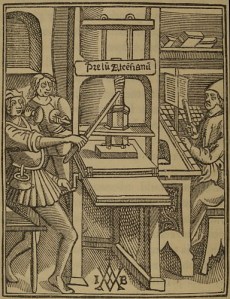 I know many have jobs today that require repetitive activities. But how many are so detail-oriented, with no automation, that leave a permanent record of how attentive you were vs. how much you were thinking about lunch? Maybe it was easier to review and go back and fix errors than I picture it to be. Maybe they got so they could set type automatically and be able to think of other things or converse.
When I’m proofing a challenging page, I sometimes think of that person who put those letters together for that page. I realize my task is so much easier. If I want I can stop after that page and hope some other proofer will do a page or two before I pick up that project again. I can stop, eat dinner, and come back tomorrow to finish the page when I’m fresh.
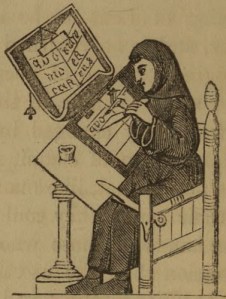
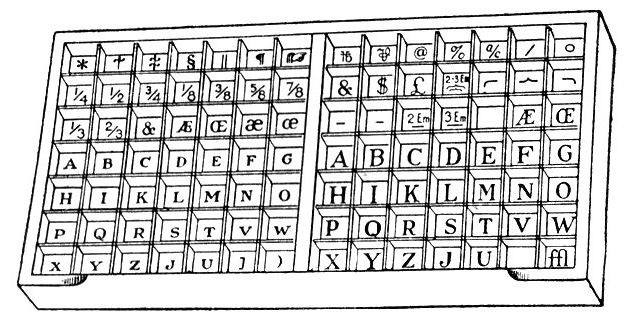
I imagine a man standing at a workbench with his frames of letters and numbers and punctuation at one side, picking out the type one by one, hoping that the “I” box doesn’t contain a misplaced “l” or “1.” I see him possibly thinking about how much easier life is for him than it was for the medieval scribe. The scribe was working on a page for days, weeks, even months, one hand-drawn character at a time. I see the typesetter appreciating how much improved his own life is and how much more available his work makes books to his current readers. And I smile as I see him smile.
This post was contributed by WebRover, a DP volunteer.


 Posted by LCantoni


 Hot off the Press