Christmas: Then and Now

December 10, 2014

Copyright restrictions prevent Distributed Proofreaders from working with recent publications so, by the very nature of what we do, we constantly look back towards the past and compare our present circumstances with reports of similar experiences from times gone by.

Now that the Christmas season is upon us, I wonder if the Christmas spirit has been the same in past times, if people a hundred and fifty years ago had a similar spirit or performed similar practices in their Christmas festivities as we do today.

cover

This came to my mind when post-processing Christmas Stories from French and Spanish Writers, by Antoinette Ogden, an anthology published originally in Chicago, in 1892, containing nine French and six Spanish tales, translated into English, and written several decades earlier. In these fifteen stories I found features that were similar to, and others that were a bit different from, our present way of celebrating Christmas.

Religious practices, Catholicism being the main religion of both France and Spain, are evident in most of these tales. Where religion is not present, Christmas appears more like a social event. In the French tale “I Take Supper with My Wife,” by Gustave Droz, the central point is how charming it is to have a quiet Christmas dinner at home, when it was expected to be had outside in a social gathering. And in the delightful story of Alphonse Daudet, “The Three Low Masses,” the crux is the clash between religious observance and gluttony.

In fact, Christmas is a traditional time for gluttony. Food is present in most of the French tales, but not in the Spanish ones, which usually depict less affluent people. Gift giving is not central in any tale, and there are many in which the idea of gift giving is totally absent (what a difference from the consumerism of our own times!). Christmas trees are not to be found, except very tangentially in a Spanish tale when describing the habits of an upper-class family. Christmas mangers are far more common, and even the yule log is to be found in the very title of the French tale “The Yule Log,” by Jules Simon, and also mentioned in the Provençal form of cacho fio, in Daudet’s sad tale, “Salvette and Bernadou.”

One thing that surprised me is the deep dramatic content in tales that are expected to be gentle, full of optimism, and suitable for children. In half of the tales of this collection, death is present, usually at the end. But in Benito Pérez Galdós’s “The Mule and the Ox,” it is present at the very beginning, most of the tale happening around a child’s coffin. Nevertheless it is a gentle story, where fantasy and dream, the more child-like properties of a tale, do soften and brighten the raw sadness of the scene.

Fantasy and dream play a principal part in many of the other stories too. “A Christmas Supper in the Marais,” by Daudet, is no more than a dream of what a Christmas Eve party would have been in pre-Revolution times among the French nobility. Star characters in “A Tragedy,” by Antonio Maré, and “The Princess and the Ragamuffin,” by Galdós, feature figurines and puppets interacting with humans. And the innards of heaven and hell make their appearance as a result of the fiasco in “The Three Low Masses.”

In all these stories Christmas Eve is more important than Christmas Day, just as in present times. Christmas Eve is pictured as a warm familiar gathering for those in deprived classes, evolving into a more social and public gathering when we move to an upscale world. This is the central point of “The Poet’s Christmas Eve” by the Spanish author Pedro Antonio de Alarcón, where the poet, unwilling to go to the conventional party he is expected to attend, takes refuge in a café where he reflects, to the lyrics of a seasonal carol, on the differences between his childhood and his present adult life.

Being Spanish myself, I was amused to find that the very same carol I used to sing at Christmas when I was a child was in use almost two centuries earlier. In reading the English translation I was able to recall, and hum, the Spanish words:

To-night is Christmas eve;
To-morrow is Christmas day.
Maria, fetch the jug of wine;
Let’s be merry while we may.

Esta noche es Nochebuena
y mañana Navidad,
dame la bota, María,
que me voy a emborrachar.

and:

Christmas comes,
Christmas goes;
But soon we all shall be of those
Who come back — never!

La Nochebuena se viene,
la Nochebuena se va,
y nosotros nos iremos
y no volveremos más.

In my early years, we sang this last stanza with other children in the street as a plea for some coins. The meaning was, “Tip us and we won’t come back again,” that is, we won’t annoy you any more, but the poet makes a very different reading of these last verses:

But soon we all shall be of those
Who come back — never!

Horrible thought! Cruel sentence, the definite meaning of which was like a summons to me,—death beckoning me from the shadows of the future. Before my imagination a thousand Christmas Eves filed by, a thousand hearths were extinguished, a thousand families that had supped together ceased to exist,—other children, other joys, other songs, lost forever; the loves of my grandparents, their antiquated mode of dress, their remote youth, the memories thereof that crowded upon them; my parents’ childhood, the first Christmas celebration in our home, all the happiness that had preceded me! Then I could imagine, I could foresee, a thousand more Christmas Eves recurring periodically and robbing us of our life and hope,—future joys in which we should not all take part together, my brothers scattered over the earth, my parents naturally dying before us, the twentieth century following upon the nineteenth!

How depressing! However, if we use Christmas time to reflect on our own lives, to remember the past, to foresee what is to come, especially if it is not good or amiable, when the future comes it may find us prepared, aware and resolute.

Considered globally, the Christmas festivities in these stories are not so different from ours, even if there are some differences in the detail. What these stories show is that they are not Christmas tales for children, but for grown-ups. That they are not, most of them, tales to be read to the family around a Christmas tree or a Christmas manger, but literary works to be savoured alone; tales not only to be enjoyed but to be reflected upon.

The main components of the Christmas spirit — hope, good will, forgiveness, fair-play with men and God, attention to the weak and the poor, generosity and unselfishness — are indeed present as a central theme. Christmas is a time of year to show the best of ourselves. It was already so in the 19th century. It should be so in the 21st century.

My best wishes for a merry (and thoughtful) Christmas to all members of Distributed Proofreaders.

rpajares (with thanks to jjz for overseeing my English)


Because We Remember

November 11, 2014

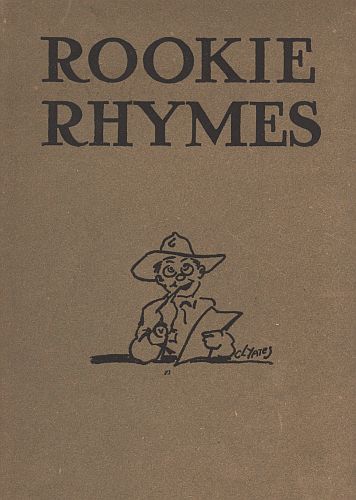
Rookie Rhymes cover

At Distributed Proofreaders we are all about preserving history. We believe in saving the classic, the good, the dry, the funny, and even the bad. A few years ago, it was my honor to pick up Rookie Rhymes to post-process for Veteran’s Day.

Written by The Men of the 1st. and 2nd. Provisional Training Regiments, Plattsburg, New York, May 15—August 15 1917, it is a short book. Some of these poems and songs are funny:

STANDING IN LINE

When I applied for Plattsburg I stood for hours in line
To get a piece of paper which they said I had to sign;
When I had signed I stood in line (and my, that line was slow!)
And asked them what to do with it; they said they didn’t know.

And when I came to Plattsburg I had to stand in line,
To get a Requisition, from five o’clock till nine;
I stood in line till night for the Captain to endorse it;
But the Q. M. had one leggin’ left; I used it for a corset.

We stand in line for hours to get an issue for the squad;
We stand in line for hours and hours to use the cleaning-rod;
And hours and hours and hours and hours to sign the roll for pay;
And walk for miles in double files on Inoculation day.

Oh, Heaven is a happy place, its streets are passing fair,
And when they start to call the roll up yonder I’ll be there;
But when they start to call that roll I certainly will resign
If some Reserve Archangel tries to make me stand in line.

They are poignant:

GO!

Your lips say “Go!”
Eyes plead “Stay!”
Your voice so low
Faints away
To nothing, dear—
God keep me here!

God end the war,
And let us two
Travel far
On Love’s road, you
And I in peace,
Never to cease.

Your lips say “Go!”
Eyes plead “Stay”—
Ah, how I know
What price you pay.

and

EUREKA

It may be from hot Tallahassee,
It may be from cold northern Nome,
But there’s nothing that can be compared with
That BIG little letter from home.

They are even dark at times, with a glimpse of the blackness of war, with temptations such as desertion found in “The Ballad of Montmorency Gray,” and far worse found in “The Three,” and falling beneath what you know is right. (But he doesn’t.)

These men opened their notebooks and let the rest of the world see their thoughts, their fears, and their strength. Because of men and women like these, most of us do not have to face these same fears. So, thank you men of the Regiment, thank you those who are willing to stand, thank you for facing your fears so that I can whine about the cost of eggs, the weather, and kiss those I love goodnight every night. We remember.

This post was contributed by a DP volunteer.


Novanglus and Massachusettensis

July 4, 2014

Many people have a vague idea that the battle for American independence from Great Britain began with the Declaration of Independence on July 4, 1776. But the battle really began much earlier—almost a decade earlier, when American colonists first began protesting “taxation without representation” in the British Parliament. Unrest turned to violence in 1770, when a crowd of angry Boston colonists surrounded a group of British soldiers, who fired into the crowd and killed three people in what became known as the Boston Massacre. In 1773 came the Boston Tea Party, during which saboteurs dressed as Mohawks dumped over 300 chests of British tea into Boston Harbor. Punishment was swift: the British government closed Boston Harbor and passed the “Intolerable Acts,” which, among other things, stripped the Massachusetts Bay Colony of its right to self-government.

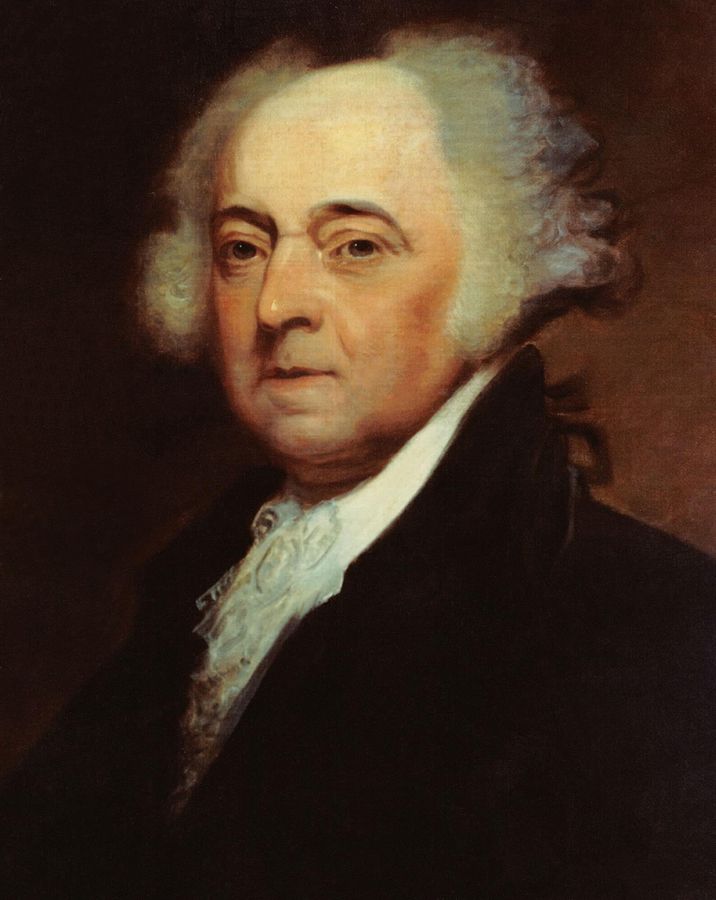
The battle wasn’t just waged in the streets or in the harbor. A bitter war of words erupted among the intellectual elite of the colonies, who were split in their opinions of Parliament’s actions. Among the combatants was a feisty Boston lawyer named John Adams (1735-1826), a future Founding Father and President of the United States. Adams, ironically, represented several of the British soldiers involved in the Boston Massacre, and his strong self-defense arguments resulted in acquittals. But Adams was no less of a patriot for that. He simply understood how important it was for the American cause to ensure that the soldiers had a fair trial.

Adams

John Adams

A few years later, as American-British relations deteriorated, Adams employed his brilliant legal skills to respond to a series of pro-British letters, by someone calling himself “Massachusettensis,” published in a Loyalist Boston newspaper beginning in December 1774. Writing as “Novanglus,” Adams set forth his argument that the colonies were not answerable to the British Parliament.  In 1819, these letters were collected in a volume entitled Novanglus, and Massachusettensis; or Political Essays, Published in the Years 1774 and 1775, on the Principal Points of Controversy, between Great Britain and Her Colonies. The edition that DP volunteers used to prepare the Project Gutenberg e-book was the presentation copy to John Adams from the printers.

In 1775—more than a year before the Declaration of Independence—Adams was not yet arguing for independence from Britain; he expressly disclaimed such a treasonous view. Instead, he stuck to the more subtle argument that the colonies might be subject to the will of the Crown, but they were not subject to Parliament, because they were self-governing. He argued extensively from British statutes and cases involving the similar status of Ireland and Wales.

Adams’s arguments were brilliant, but his opponent “Massachusettensis” was every bit a match for him, arguing his Loyalist views with equal vigor and skill.  Indeed, because “Massachusettensis” was the better writer, his arguments can seem more compelling than Adams’s “huge pile of learning,” as “Massachusettensis” sneeringly called Adams’s scholarly legal citations.

The exchange between “Novanglus” and “Massachusettensis” came to an abrupt halt in April, 1775, with the Battles of Lexington and Concord. The revolution had begun, and there was no going back.

The 1819 edition identifies “Massachusettensis” as Adams’s onetime friend Jonathan Sewall, the last King’s Attorney General for Massachusetts, and Adams himself long believed it was Sewall. But “Massachusettensis” was actually Taunton lawyer and Loyalist Daniel Leonard, another friend from whom Adams later became irrevocably estranged in the turmoil of the Revolution. Leonard was forced to flee America when the British evacuated Boston in 1776; he later became chief justice of Bermuda and then retired to London. When the letters were published in London in 1822, he revealed himself to be “Massachusettensis.”

The 1819 edition of Novanglus, and Massachusettensis also features letters that Adams wrote to various friends and colleagues later in life, recounting the events leading up to the American Revolution. John Adams died on July 4, 1826, at the age of 90. His last words were said to be, “Thomas Jefferson survives”—but the author of the Declaration of Independence had also passed away that very day.

Today, July 4, 2014, is the 238th anniversary of American independence.

This post was contributed by Linda Cantoni, a Distributed Proofreaders volunteer.


Ten Years of Music at DP

June 17, 2014

Today Distributed Proofreaders celebrates the 10th anniversary of its Music Team, which has been helping to make beautiful music for Project Gutenberg e-books since June 17, 2004.

music

Medieval French music notation

Founded by DP volunteer David Newman, a classical singer and voice teacher who provided dozens of music-related projects to DP, the Music Team was designed to bring together DPers who wanted to preserve more music books. Thus began a vibrant community of music-lovers, musicians and non-musicians alike, who share thoughts on finding, creating, managing, proofing, formatting, post-processing, and transcribing music-related projects.

Team discussions have wrestled with big issues, like whether and how to incorporate music transcription (i.e., creating sound files from printed music) into the DP formatting rounds, what music notation software should be the DP standard, and how to handle projects consisting solely of music notation with little or no text. DPers have conducted experiments in different methods, and the creative efforts to improve the overall transcription process continue to this day.

But these aren’t the Music Team’s only accomplishments. The team has long been a clearinghouse and sounding board for Content Providers in search of feedback and volunteers to work on important music projects. Post-Processors come to the team to find volunteer transcribers who can create sound files for a vast variety of DP projects, including children’s books and even novels. Some projects might contain some simple melodies; some might have dozens of pages of orchestral music. For projects with lots of music, team members have created “distributed transcription” systems in which any DPer with any music software can participate. One example is the delightful Traditional Games of England, Scotland, and Ireland, a two-volume set with dozens of children’s game songs, on which several Music Team members collaborated.

Music Team members also lend their expertise to answer a wide array of music questions from DPers. A project might have some arcane bit of music notation, often found in the older texts being worked on at DP. Or there might be a question whether some odd-looking notation is, in fact, a printer error. Music transcribers often ask the team to proofread (or even “proof-listen”) to the music they’ve transcribed, for accuracy or for aesthetics.

One thing is certain: being able to hear the music in an e-book enhances the reader’s experience immeasurably. Happy Anniversary, Music Team, and thanks for the melodies!

This post was contributed by Linda Cantoni, a Distributed Proofreaders volunteer.


A Very Special 27,000th Title

March 29, 2014

27,000 titles

It’s time to celebrate another Distributed Proofreaders achievement—our 27,000th title posted to Project Gutenberg, Storia della decadenza e rovina dell’impero romano, an Italian translation of The History of the Decline and Fall of the Roman Empire, by the famed English historian Edward Gibbon (1737-1794).

Decline and Fall is a monumental work, distinguished not only by Gibbon’s outstanding scholarship, but also by his witty, ironic commentary and iconoclastic views of the events he describes. His theory of Rome’s decline and fall was essentially that her citizens had become spoiled by success. The most controversial part of his argument was that Christianity contributed to Rome’s fall by shifting people’s focus from real-life practicalities to a spiritual afterlife.

The Italian translation, by the noted Italian author Davide Bertolotti, is a 13-volume tour-de-force, published in Milan between 1820 and 1824. He based his translation on a 1791 London edition, which Bertolotti described as “ottima e sicura edizione” (“an excellent and trustworthy edition”), mentioned by Gibbon himself in his Memoirs. Bertolotti promised that, unlike a previous Italian translation, “Non una idea, non una parola importante, venne ad essa tolta, mutata od aggiunta” (“Not a single idea, not a single important word, was deleted, changed or added”). That might be a motto for what DP does.

Congratulazioni e grazie to the dedicated DP volunteers who made this milestone possible!

This post was contributed by Linda Cantoni, a Distributed Proofreaders volunteer.


Celebrating Women’s History Month

March 23, 2014

March is Women’s History Month and whilst most of the attention tends to be centred on 8 March, International Women’s Day, here at Distributed Proofreaders we like to spend the whole month inviting volunteers to focus their attention on books by women or about them and their achievements.

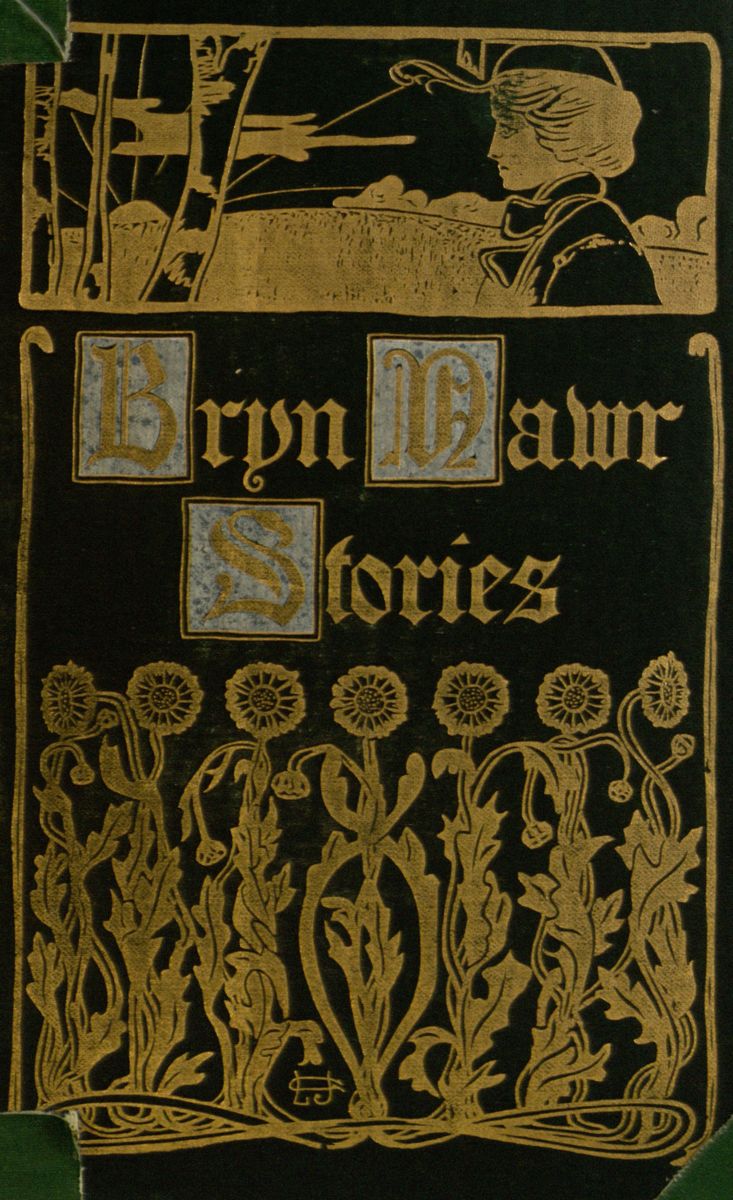
One of those books is one we posted in August last year, A Book of Bryn Mawr Stories by Harriet Jean Crawford et al. I wanted to talk about it because I feel that it fits well with this year’s theme—Celebrating Women of Character, Courage, and Commitment—as well as with the theme for International Women’s Day—Equality for Women is Progress for All.

Bryn Mawr College in Philadelphia was founded in 1885 and was one of the first higher education institutions to offer graduate degrees to women. 129 years later it is still going strong, and it still has a strong focus on promoting educational access, equality and opportunity for women. Initially affiliated with the Quakers, by the time this collection of stories was published in 1901 it had become non-denominational.Book cover - Bryn Mawr Stories

The book is a collection of stories written by students of the college.  In the opening story, Ellen, the central character, has been asked to give a speech on The Educational Value of College Life. Struggling to come up with inspiration, she visits fellow graduates of Bryn Mawr for ideas. When she parts from one of them, the other woman says, by way of advice:

“I should certainly deal with the practical value of college life, taking up some line of thought that will show its power to make women effective citizens in the broad sense of the word.”

And this is a recurrent theme in the book: how educating women, far from making them unfit for the place society has designated for them, actually makes them more fit.

I remember when they passed equal opportunities employment legislation here in the U.K. It seemed like the world opened up. I could do anything. It made you dizzy with the new possibilities. All right, I was fourteen and naive and unaware that legislation is one thing and changing the mindset of a whole country is another. It didn’t stop me visualising all sorts of possible futures that I would never have even considered before.

Those early women scholars must have felt a bit like that. At a time when it was still seriously believed by men of science that if a woman had to think about “man things” (like politics, economics, science, etc.) then her brain would literally overheat dangerously, the introduction of degree courses for women was revolutionary.

There were many critics of teaching women to this level. They said that it wasn’t necessary, after all a woman’s place was in the home as a wife and mother. They said it was dangerous, making women dissatisfied with their lot and leading them to disagree with men. It seems very strange, here in the U.K. slightly more than a century later, but it was the way things were back then.

Many of the characters in the stories sound slightly stilted and preachy to the modern ear. This is understandable when you remember that they were written in 1901, a time of great change, and at the height of the struggle for women’s suffrage and improved rights for women. They argue the point that educating women does not make them unwomanly, unfit for matrimony or other feminine pursuits. That it is good for women to be able to think and to be aware of the issues of the day. I am one of the many beneficiaries of the fight for women’s rights and I appreciate it every day. Although I live somewhere that has come a long way from where the students writing these stories were living, there are still places where women do not have the same rights as men, where they do not have the same access to education, property ownership, work and money. There are still societies where the fight fought by Bryn Mawr and other groundbreaking institutions like it is ongoing.

This book was inspirational and, more importantly, aspirational, and I, for one, hope that some day all women (and men) will be seen as equal, with the same rights and responsibilities, the same economic and political power.

Maybe, a century from now, we won’t need a special day or month to celebrate women and their contribution to the societies in which they live.

Here’s hoping.


Comic Insects—a fun way to celebrate 13 years of Distributed Proofreaders

October 1, 2013

Comic Insects

Yes, we have more than one reason to celebrate today! It’s been 13 years that Distributed Proofreaders opened its doors and started on its mission, and during those 13 years exactly 26,000 e-books have been uploaded to Project Gutenberg for all to enjoy. That’s an average of 2,000 books a year!

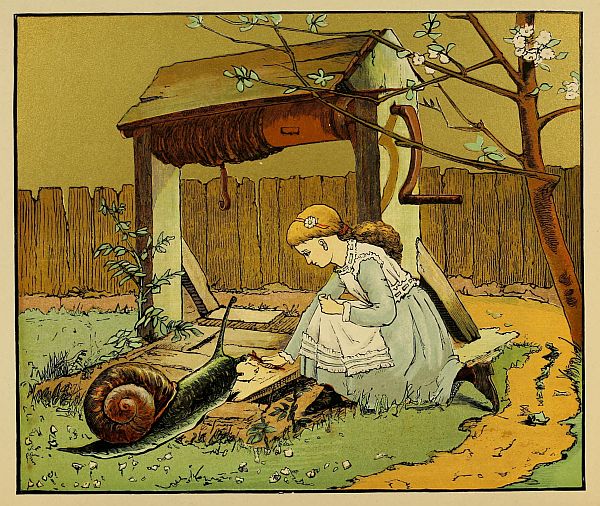
Comic Insects, the book chosen to mark the round 26,000, is just gorgeous: beautiful color plates about the creepy-crawlies accompanied by whimsical verses. There’s not that much more to say about it, go have a look yourself!

The Snail

The Snail

Poor little Snail,
How very pale,
Your cheek is blanched with fear!
What horrid dread
Has made you shed
So many a slimy tear?

Come! faster crawl
Along the wall,
Leave care behind,—all’s well!
That seeming pack
Upon your back
Is near an empty shell.

As always, this and all the other books couldn’t have been produced without the help of all the volunteers that have given their time to Distributed Proofreaders during those 13 years. Thank you all!


A Silver Anniversary—25,000 Titles posted to Project Gutenberg!

April 10, 2013

25,000 Books Posted - The Art and Practice of Silver Printing

Today we are celebrating a special anniversary: the 25,000th project produced by Distributed Proofreaders has been posted to Project Gutenberg.

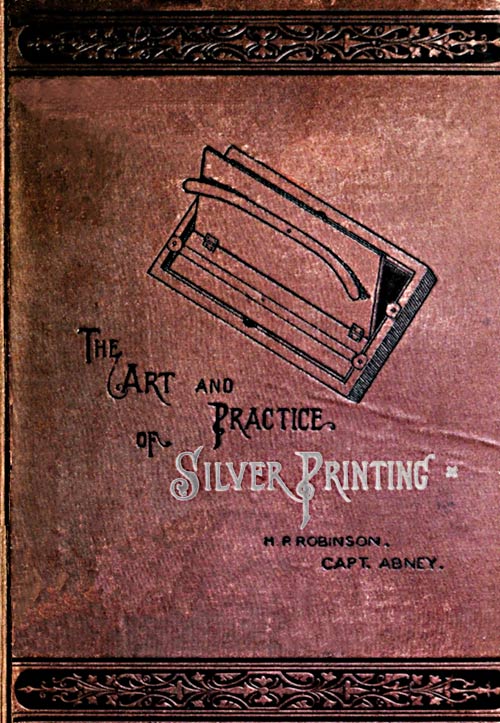
silver_printingThe Art and Practice of Silver Printing by Henry Peach Robinson and Captain William de Wiveleslie Abney is a fitting book to celebrate with, silver being generally connected with 25th anniversaries. Printed in 1881, the book gives a fascinating glimpse into early photographic printing techniques.

In our age of ubiquitous digital photography and image manipulation, it is fascinating to look back to the beginnings, when there was a lot of chemistry and craftsmanship involved in making even a single print. The book explains in great detail the whole process of getting from a photographic negative to a finished print, from preparing the chemical solutions involved and the paper, how to deal with different subjects, like portraits and landscapes, to how to mount the finished prints for presentation.

Thanks to all the volunteers who helped to produce this and the 24,999 books that got us to this milestone. All in all, that’s almost six million pages!


Music and Some Highly Musical People

February 9, 2012

When we think of 19th-century classical music, our minds tend to turn first to the many great European composers and performers who graced the Romantic era. Americans did not really make their mark on classical music until the 20th century. And African-Americans lagged even farther behind—but it was not for lack of trying. After Emancipation, former slaves and the children of slaves participated, as composers and performers, in a rich cultural world that deserves to be studied and remembered.

In Music and Some Highly Musical People, written in 1878, James Monroe Trotter (1842-1892) brings this world to life, with biographical accounts of the notable African-American musicians of the day. Trotter explains his motive for writing the book in his Preface:

While grouping, as has here been done, the musical celebrities of a single race; while gathering from near and far these many fragments of musical history, and recording them in one book,—the writer yet earnestly disavows all motives of a distinctively clannish nature. But the haze of complexional prejudice has so much obscured the vision of many persons, that they cannot see (at least, there are many who affect not to see) that musical faculties, and power for their artistic development, are not in the exclusive possession of the fairer-skinned race, but are alike the beneficent gifts of the Creator to all his children.

James M. Trotter

James M. Trotter

Trotter himself had an interesting history. His mother was a Mississippi slave; his father was her white master. She escaped with Trotter and his brother via the Underground Railroad and settled in Ohio. Trotter became a teacher, and, during the Civil War, enlisted in the Union Army, becoming the first African-American to achieve the rank of Second Lieutenant. He later became the first African-American to be employed by the U.S. Post Office, but resigned in protest when discrimination prevented his promotion. In 1887, President Cleveland appointed Trotter to the office of Recorder of Deeds for the District of Columbia, then the highest government position to be attained by an African-American.

In Music and Some Highly Musical People, Trotter subtly makes his point for equality through his generous portraits of a variety of musical artists. He describes in rich detail their humble beginnings, their perseverance in spite of poverty and prejudice, and their successes. Many of these musicians found a more welcoming home in Europe. The composer Lucien Lambert, for example, “grew restive under the restraints, that, on account of his complexion, were thrown around him in New Orleans. He longed to breathe the air of a free country, where he might have an equal chance with all others to develop his powers: and so, after a while, he went to France; and, continuing his studies in Paris under the best masters of the art, he rapidly attained to great skill in performance and in composition.”

A delightful feature of Trotter’s book is an Appendix containing 13 lovely compositions by some of the composers featured in the text. In Project Gutenberg’s edition, you can hear the music for each piece by clicking on the [Listen] link in the HTML version, and the pieces can be printed out as PDF sheet music.

Distributed Proofreaders posted this book to Project Gutenberg in celebration of Black History Month 2009.

This post was contributed by Linda Cantoni, a Distributed Proofreaders volunteer.


Distributed Proofreaders celebrates 20,000 books posted

April 9, 2011

Banner for DP's 20k celebration

Just half a year after our 10th anniversary, we have reason to celebrate another big milestone. As of today, Distributed Proofreaders has contributed 20,000 unique titles to the bookshelves of Project Gutenberg, free to enjoy for everybody.

Out of curiosity, I had a look at the numbers. It took us more than six years to post the first 10,000 books, reaching that milestone in March 2007.  We have doubled that number in just a bit over four years. That’s on average about 2500 projects posted per year!

In addition to being the biggest single producer of ebooks for Project Gutenberg, Distributed Proofreaders is a truly international community. People from all over the world contribute, bringing with them their unique skills and preferences. One area where this becomes obvious is the variety of different languages we’re working in. While most projects only contain a single language, there are those where two or even more languages are used. These books are often especially challenging, needing people with skills in different languages to complete. At Distributed Proofreaders, help with a language you’re not familiar with is never far away. Native speakers of lots of different languages as well as specialists in a few that aren’t even spoken anymore are always happy to answer questions about tricky issues, making it therefore possible to complete those challenging projects and post the resulting books to Project Gutenberg for everybody to enjoy.

To celebrate that diversity, we have chosen to showcase books containing at least two languages. Here’s a list of our projects for the 20,000 celebration for you to enjoy:

A big Thank You goes to everybody who has contributed to these and all the other books that make up this huge number, in whatever capacity.