How Time-Travel Led Me to Distributed Proofreaders

August 31, 2018

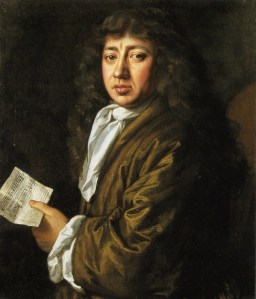
Samuel Pepys

Over the years I’ve travelled in time again and again.

Through the letters of Abigail and John Adams, I’ve lived through the start of the American Revolutionary War, 18th-century smallpox vaccinations, travel abroad, and the early days of a new republic. The originally unpublished diaries of Mary Boykin Chesnut took me to the start of the U.S. Civil War. I sat with her and her friends waiting breathlessly for news from the Battle of Fort Sumter where their husbands and brothers fought. The diary of John Evelyn took me to the Sun King’s court and to England in the time of Charles II. I cried with him over the early death of his two young sons. And my mother’s diary from the year she turned 17 took me to the early days of World War II in Western Canada — full of accounts of boy-friends, dances, factory work, and friends going off to war (I can still remember my mother’s “You read my diary?! — Give it back!!”).

The time travel that has enthralled me most was nine years in 17th-century England with a young man so full of life and so involved in the events of his time.

I had wanted to read the diaries of Samuel Pepys for many years, when I found an abridged version in a local bookstore. It didn’t take me long to realize that there was little of interest there — no more than a collection of “he was really there” names and events. Then I found the Project Gutenberg version of the full nine years of the diary (although, the edition on which it was based having been published in 1893, it had a few ellipses to hide the most racy bits, which I soon found out how to track down elsewhere).

Diary of Samuel Pepys — Complete 1660 N.S.
Diary of Samuel Pepys — Complete 1661 N.S.
Diary of Samuel Pepys — Complete 1662 N.S.
Diary of Samuel Pepys — Complete 1663 N.S.
Diary of Samuel Pepys — Complete 1664 N.S.
Diary of Samuel Pepys — Complete 1665 N.S.
Diary of Samuel Pepys — Complete 1666 N.S.
Diary of Samuel Pepys — Complete 1667 N.S.
Diary of Samuel Pepys — Complete 1668 N.S
Diary of Samuel Pepys — Complete 1669 N.S.

The Project Gutenberg version opened up a whole new world to me — the world of a young man in his 20s celebrating Christmas openly after the puritanism of the Cromwell years, travelling with the court to return the rightful king to England, and obtaining a new and interesting job through the influence of highly-placed friends. It took me years to live through the diaries, reading slowly night by night and heading off to bed myself with his “And so to bed” which ended so many of his daily entries.

I lived through a young man’s excesses in his nightly drinking with his friends and his delight in learning about the “hair of the dog,” until his reluctant decision to lead a more sober life. I experienced his joy at playing musical instruments, and all the details of his many house-decorating forays. With him, I casually passed by the bonfires of Guy Fawkes Day celebrations and experienced the terror and excitement of “shooting the bridge” by riding out the torrent of Thames tidewater under London Bridge with the ferrymen. I lived through the plague as it decimated London, leaving the streets silent and empty as more and more deaths were recorded each day, and was terrified anew by the great fire of London and the drama of the king and his brother working tirelessly with the citizens to save the city. And there was the time when everybody feared imminent invasion by the Dutch and I went with Pepys to hide his valuables. He was upset that one bag of buried coins could not be found. And of course, there were his constant infidelities, described in detail despite the ever-present ellipses.

How did the adventures and infidelities of this young man lead me to Distributed Proofreaders? After a few years of downloading and reading the Pepys diaries that had been prepared for Project Gutenberg by David Widger, I felt guilty. I’d had such a lovely time in 17th-century England that it seemed wrong for me not to repay in some way. By joining Distributed Proofreaders, I discovered a way to help create e-books that other people could download and enjoy.

I hope that some of the books I have helped prepare have given readers as much joy as the Pepys diaries have given me, and that you’ll consider joining the time-travellers at Distributed Proofreaders on our journeys into the past.

This post was contributed by Linda Hamilton, General Manager of Distributed Proofreaders.


Memoirs of the Dukes of Urbino

July 31, 2018
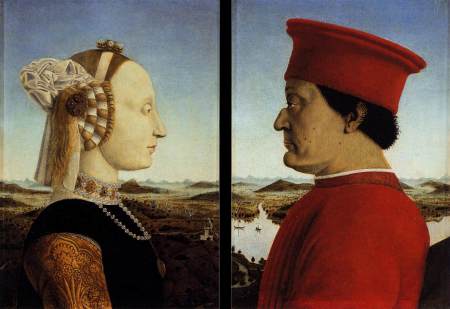
Duke and Duchess of Urbino

Federico III da Montefeltro, Duke of Urbino, and his wife Battista Sforza, by Piero della Francesca

So much praise has been heaped on Florence as the cradle of the Italian Renaissance that it is sometimes easy to forget that there were other glorious centers of art and literature outside of Tuscany. Urbino, a city in the Marche region of Italy, about 115 miles east of Florence, was one such example.

Urbino flourished most under the House of Montefeltro, which wrested control of the town from the Papacy in the 13th Century and eventually turned it into a dukedom. It reached its apex under the rule of Duke Federico III da Montefeltro (1422-1482), a true Renaissance man whose interest in the arts, and whose fortune, made Urbino into a mecca for culture.

One of the best accounts of Urbino’s legacy was written by a Scotsman, James Dennistoun of Dennistoun. His three-volume history, Memoirs of the Dukes of Urbino, originally published in 1851, covers “the arms, arts and literature of Italy” during Urbino’s golden years, from 1440 to 1630. As the subtitle suggests, however, Dennistoun’s work is also a wide-ranging review of “arms, arts and literature” that extends beyond the borders of the duchy to great Renaissance works throughout Italy.

Dennistoun rightly lavishes a great deal of attention on Federico III, a devoted humanist whose court was well known for its atmosphere of learning. Federico formed one of the greatest manuscript libraries in Italy, employing the finest scribes and illuminators to hand-produce, on the highest-quality parchment, nearly a thousand bound manuscripts for his collection. (Movable-type printing was still an innovation in Europe at that time, but there were also some printed books in Federico’s original collection.) The Florentine librarian and bookseller Vespasiano da Bisticci, who provided Federico with many of the original works for copying, and who supervised the binding of the final products, estimated that Federico spent more than 30,000 ducats on the library — over $5 million (USD) in today’s money. Later Dukes added many items to the collection over the next two centuries.

The Project Gutenberg e-book of the Memoirs is based on an enhanced edition published in 1909 and edited by Edward Hutton. In his Introduction, Hutton notes:

The book, which has long been almost unprocurable, is full, as it were, of a great leisure, crammed with all sorts of out-of-the-way learning and curious tales and adventures. Sometimes failing in art, and often we may think in judgment, Dennistoun never fails in this, that he is always interested in the people he writes of, interested in their quarrels and love affairs, their hair-breadth escapes and good fortunes…. Full of digressions, a little long-drawn-out, sometimes short-sighted, sometimes pedantic, it is written with a whole-hearted devotion to the truth and to the country which he loved.

Among the enhancements in the second edition of the Memoirs are numerous black-and-white photographs of Renaissance portraits, medals, paintings, sculptures, artifacts, and buildings, many taken by the famed Florentine photography house of Alinari. Hutton added his own footnotes expanding on, and occasionally correcting, Dennistoun’s text. And the first volume contains an interesting catalogue of the sale of Dennistoun’s own collection of Italian and other artworks after his death in 1855.

After over four centuries of rule by the Montefeltro and della Rovere families (with a brief stint under Cesare Borgia), the Duchy of Urbino fell back into papal hands in 1626. The great library Federico had founded was sold to the Vatican for a pittance in 1657, and it remains there today. But Urbino’s contributions to the “arms, arts and literature” of Italy, and to the Renaissance, are indelible. Through Dennistoun’s scholarly labor of love, we have a rich portrait of its former greatness.

This post was contributed by Linda Cantoni, a Distributed Proofreaders volunteer.


The Great Fire in St. John

May 31, 2018

“James Turnbull … was about to rush into the cellar and tell him [his father] how near the fire was when he turned and beheld a dark shadow in the doorway. It was coming towards him, and for a moment struck terror into his soul. The tall figure of a woman, deeply robed in black, holding up a long train in her hand, and with head-dress all aflame, stood before him in the hall.”

This is one of the scenes in George Stewart’s The Story of the Great Fire in St. John, N.B., June 20th, 1877, a detailed description of the massive fire that for nine hours tore through the city destroying 1,612 buildings, killing 18 people, and leaving more than 13,000 people homeless. At the time, St. John was one of the largest and most prosperous cities in North America, with shipyards that were famous around the world.

Prince William Street

Prince William Street, St. John, before and after the fire.

Stewart lived through the fire. Indeed, he lost his home and his pharmacy business to the flames. His book about the fire and its aftermath was so popular that its sales allowed him to recoup all his losses.

After weeks of dry warm weather, St. John citizens welcomed the strong wind that arose on “Black Wednesday.” They soon had reason to fear it, however, when a small fire that started at McLaughlin’s boiler shop swept into neighbouring buildings. The author witnessed as “in a few minutes the fire spread with alarming rapidity, and houses went down as if a mine of powder had exploded and razed them…. The huge blazing brands were carried along in the air for miles around, and where-ever they dropped a house went down.” The fire roared through the city and into the harbour where the flames mounted the masts of the schooners, passing from ship to ship until it “formed a complete bridge of fire from the north wharf to the south. It was like a gala-day celebration of fire-works on a large scale.” Passengers on the Empress steamship that was entering the harbour were stunned by the sight of a city in flames and tortured by fears for their homes and children.

The book describes how people frantically carted their belongings to places they believed would be safe from the flames, only to discover that safety was only temporary — “Men had their stores burned at four and five o’clock, and their goods burned at seven and eight o’clock.” One woman hired a team to carry all her valuables to her mother-in-law’s house, only to have all her goods destroyed when her mother-in-law’s home burned to the ground two hours later, while her own home was spared from the fire.

People who strove to save what they could often found that they’d left the most valuable things behind. A woman, who asked her husband to cart away the bag that contained the family silver, discovered that he had rescued the rag bag instead. One man saved an old tub and dipper, and watched his valuable library and private papers succumb to the flames. Another man tried vainly to protect his house by standing on his roof with a pitcher and splashing water onto the flying sparks. He escaped, but the next day all that was left of his house was a pile of ash and his pitcher, still standing on the ledge of the tall chimney where he had left it.

There are many images of horror. I can still picture the flock of pigeons whirling into the flames and the cat who, “maddened and wild, cut off from all escape, dashed along, when the fire pursued her, and she stood still.” The author continues, “On Thursday morning she was still standing in the same place. Her frame only could be seen, with head up and tail erect.” He describes a little boy who could not be comforted: “O, pa, pa, come and see! God is burning up the world, and He won’t make another, and He won’t make another!” But the book also recounts many moments of heroism as the people of St. John worked together to save themselves and their city.

As well as describing the struggles and frequent heroism of the citizens and the terrible losses suffered, this account covers the aftermath of the fire, including detailed lists of donations received. There are also many beautiful woodcuts of the city and its buildings before and after the destruction.

The Story of the Great Fire in St. John, N.B., June 20th, 1877 is a masterpiece of its kind, giving us a first-hand account of how ordinary people endured, survived and recovered from a disaster that destroyed more than half of their city.

This post was contributed by Linda Hamilton, General Manager of Distributed Proofreaders.


April Fools

April 1, 2018

april0001_cropped

Looking for a way to celebrate April Fool’s Day? Project Gutenberg has a few amusing works on pranks and hoaxes, thanks to the volunteers at Distributed Proofreaders.

Bram Stoker, best known for Dracula, penned an entertaining volume on Famous Impostors. Here we find pretenders to various thrones, dabblers in magic and alchemy, witches and wizards, false claimants to great fortunes, and a number of celebrated hoaxes of bygone times.

One such hoax was the brainchild of professional practical joker Theodore Hook, who bragged of his exploits in The Choice Humorous Works, Ludicrous Adventures, Bons Mots, Puns, and Hoaxes of Theodore Hook. His most famous prank was the Berners Street Hoax. On a bet that he could make any house the most talked about in London, he ordered numerous goods and services to be delivered to an address in Berners Street, all in one day. Hook’s shenanigans are also cited in an essay by Irish writer Robert Lynd on “The Humour of Hoaxes” in The Book of This and That.

The American West in the 19th Century presented opportunities for get-rich-quick schemes that were often founded on swindles. Pioneer and adventurer Asbury Harpending tries to clear his “family name and reputation” in his account of The Great Diamond Hoax, a purported diamond field in California that had in fact been “salted” with cheap gems.

For those who like their pranks dramatized, there’s the one-act farce April Fools, part of an 1889 collection of plays “for Church, School and Parlor Exhibitions.” The plot is a bit reminiscent of Hook’s Berners Street Hoax:

Mr. Peter Dunnbrowne, a gentleman with several unmarried daughters on his hands, receives a note from Mr. John Smith proposing for his daughter Fanny. Presently Mr. James Smith calls, he having received a letter announcing that Mr. D’s mare Fanny is for sale, and an amusing dialogue at cross purposes ensues. This disposed of, Mr. Joseph Smith, an undertaker, calls, he having been notified that Miss Fanny had suddenly died, and another puzzle follows.

We won’t give away the “surprise” ending…

Of course, children love April Fool’s Day pranks, and there are several children’s books at PG with stories about them, including Fun and Frolic, The Last Penny, and A Flock of Girls and Boys.

It just goes to show that Project Gutenberg has something for every occasion — with over 56,000,000* e-books in its library, that’s no surprise.

*56,000. April Fool!

This post was contributed by Linda Cantoni, a Distributed Proofreaders volunteer.


Songs of the West

March 1, 2018
Cornwall

Rocky Cliff with Stormy Sea, Cornwall, by William Trost Richards (1902)

Collecting folk songs became almost a craze among 19th-Century musical scholars who were concerned that the old traditional country songs and dances were dying out. Some blamed it on the Industrial Revolution: As young people from rural areas flocked to the cities, and the cities ate up surrounding rural areas, folk traditions began to disappear. So the folklorists went out among the people to hear and write down the old songs.

They had to write them down. Sound recording was not yet possible, so the folklorists took down the melodies in musical notation. Some then took it upon themselves to enhance the melodies with piano accompaniment. And then, faced with what one might call the earthiness of some of the lyrics they heard, some folklorists took it upon themselves to rewrite the lyrics.

In Songs of the West, the Reverend Sabine Baring-Gould did just that. In the 1880s, he traveled throughout Devon and Cornwall in southwestern England to collect songs “from the mouths of the people,” as the subtitle proclaims. But Baring-Gould apparently felt that those mouths needed to be washed out with soap, so he provided his own words.

The Introduction makes no apology for this bowdlerizing:

In giving these songs to the public, we have been scrupulous to publish the airs precisely as noted down, choosing among the variants those which commended themselves to us as the soundest. But we have not been so careful with regard to the words. These are sometimes in a fragmentary condition, or are coarse, contain double entendres, or else are mere doggerel. Accordingly, we have re-written the songs wherever it was not possible to present them in their original form.

Given the tenor of the times, Baring-Gould had no choice. The original lyrics to song No. 45, “The Mole Catcher,” for example, which Baring-Gould described as “very gross,” are admittedly on the bawdy side. But despite the censorship, Songs of the West is a valuable and entertaining collection of music that, thanks to Baring-Gould’s devotion, preserves folk traditions that might otherwise have been completely lost. He enlisted the help of three other music scholars — the Rev. H. Fleetwood Sheppard, F.W. Bussell, and the eminent folklorist Cecil J. Sharp (aptly referred to in the book as “C. Sharp”) — to help him take down the tunes and to render the very fine piano accompaniments. The work contains 121 songs with detailed notes about their origins and the adjustments Baring-Gould and his co-authors made to them.

Baring-Gould was himself a Devon native, born in Exeter. His church career took him to Yorkshire for a time, where he wrote the well-known hymn, “Onward Christian Soldiers.” In 1881, he was able to return to Devon, where he found the time to produce numerous books and articles on various subjects, but Songs of the West was his masterwork. The Songs of the West website, run by Martin Graebe, author of As I Walked Out: Sabine Baring-Gould and the Search for the Folk Songs of Devon and Cornwall, provides an excellent review of Baring-Gould’s work on the songs.

Project Gutenberg’s version of Songs of the West is based on the fifth edition of the book, as reprinted in 1913. The HTML version features MP3 audio files of all the songs, transcribed by a DP volunteer, so you can enjoy listening to them while viewing the music.

This post was contributed by Linda Cantoni, a Distributed Proofreaders volunteer.


Learning How to DP

February 1, 2018

mentorcover_croppedOne thing evident in the Distributed Proofreaders forums is that DPers love helping people, often tripping over each other in their enthusiasm to help others master the skills they need to work on various DP tasks. Looking at this another way, it’s easy to see how working at DP can be enormously satisfying for those who enjoy working in teaching/learning environments–the learning curve is steep, but the rewards well worth the effort.

In addition to answering questions in the forums, there is a structured proofreading mentoring system which involves proofreading beginner projects in the second proofreading round and providing feedback to the newcomers who proofread the pages in the first round. What skills and qualities do P2 mentors require? Enthusiasm, a really good knowledge of the proofreading guidelines, empathy, and a genuine desire to help people master what is required of them to become good proofreaders/transcribers.

Formatting mentoring is similar, and, while a little less structured, involves giving a guiding hand to those who have begun the steep learning curve to become good formatters. The skills and qualities are the same as for proofreading mentors, with a sound knowledge of the formatting guidelines added to the mix. Whereas proofreading is most often right or wrong, formatting can be less defined with several ways to format a page correctly, so both formatting and mentoring formatters can be more challenging.

Post-processing mentors are magicians. They help people learn about the software tools available for post-processing, and how to install and use them. Then they guide the new post-processor through the steps required to check the pages for any last remaining errors. But their job hasn’t finished there! Once the new post-processor has mastered the skills to get that far, the mentor takes them through the process of creating html, epub and mobi versions of the ebook. But wait! there’s more … they need to help the learner check all of those versions in the available tools to make sure nothing has been missed so that the best possible product will be uploaded to Project Gutenberg.

Post-processing verifiers need all the mentoring skills mentioned above because when checking a post-processor’s work they need to be able to advise on the tools and processes used, as well as to carry out all the checks the post-processor has already done. Their job is to advise the post-processor on layout issues, to catch any remaining errors, and to help reword transcriber’s notes if they are unclear or don’t reflect what has been done when transcribing the book. Post-processors have invested a lot of time and effort into producing their ebooks and the decisions they have taken along the way are important ones, so tact is required when providing feedback. Just as well post-processors are always keen to learn and apply that knowledge to their books.

And then at every stage we have mentors who mentor the mentors, as well as the as yet unmentioned developers who are learning and teaching in every development task they work on.

A big thanks to all DPers who have mentored and taught other volunteers how to produce high quality ebooks, and to those who have developed the site and tools required to do our jobs.

This post was contributed by a DP volunteer.


Celebrating 35,000 Titles

January 26, 2018

Distributed Proofreaders celebrates the 35,000th title it has posted to Project Gutenberg, Shores of the Polar Sea. Congratulations and thanks to all the DP volunteers who worked on it.

Prolonged periods of well-below-normal temperatures and wind chill have made life uncomfortable and even dangerous for people in areas of the northern hemisphere recently. This blast of frigid Arctic air gives scope to imagine what life was like for the British explorers venturing northwards toward the Pole in Shores of the Polar Sea, a Narrative of the Arctic Expedition of 1875-1876.

This detailed account of the expedition led by Sir George Strong Nares was written by British Royal Navy Surgeon Edward Lawton Moss (1843-1880), who served both as surgeon and artist on HMS Alert, one of the ships taking part. The many engravings and lovely chromolithographs in the book come from drawings and watercolor sketches made by Moss himself during the journey.

The expedition sailed from England with three ships, two of which would venture on northwards, HMS Alert and HMS Discovery. The third, HMS Valorous, was a support vessel carrying additional supplies to be transferred to the other two ships at a rendezvous point along the coast of Greenland. The goal of the expedition was to “attain the highest northern latitude, and, if possible, reach the Pole.” A sketch map in the book details the paths taken by the expedition ships on their way northwards and later back home, as well as the tracks made by sledges across land covered by snow and ice.

As the book starts, the narrator sets the scene for the coming adventure:

… the Arctic Circle has obvious boundaries. A conspicuous change in the ordinary habits of nature warns the traveller that he is leaving the hospitable realms of earth behind him, and entering a region full of new experiences. Here familiar light and darkness cease to alternate, morning and evening no longer make the day, and in proportion as the latitude increases, day and night become mere figures of speech.

The Alert, towing the Discovery in an effort to save fuel, leaves contact with home behind after a stop in Upernivik, then the northernmost settlement in the world.

The explorers remark upon the beauty of the sunlight on ice, comparing it to “fields of mother-of-pearl.” It is not long though before the ice pack halts the progress of the ships for days, with the men waiting for an opening that will allow them to push on. The ice floes continue to be a hazard to progress, tearing against the sides of the ships and crushing the ships in between them. The explorers eventually have to blast the ice with gunpowder to free themselves after their ice-saws are no longer sufficient to get through the thicker ice.

While the Discovery, according to plan, settles down to spend the winter in a harbour near Lady Franklin Sound, the Alert continues onwards, the men still optimistic about their goal. They struggle their way through the ice up the Robeson Channel and find shelter on a beach, but a sense of confusion falls over them. The continuing coastline northwards that they expect to see based on their maps is not there; instead, they find themselves looking at the open polar sea.

sledges_cropped

Various sledges pulled by dogs and their crews trek outwards from the ship to the north and west, hoping to find some evidence that the coastline eventually continues towards the Pole. The men on the sledges encounter waist-deep soft snow and harsh temperatures as low as 47 degrees below freezing. With water-bottles freezing shut, the men have only “icy cold raw rum” to drink! The sledge parties return to the ship weeks later without conclusive results and the Alert hunkers down for the impending winter, where the explorers will go 142 days without seeing the sun and experience temperatures of 73.7 degrees below freezing and lower.

The narrator notes that it is not the extreme cold that is the worst part of enduring the long winter, that “An icy tub on an English winter morning feels colder to the skin than the calm Arctic air.” The constant darkness is more unsettling, and worst of all is the confinement in a relatively small space with others, requiring discipline and dedication to a routine. The men keep up with astronomical, meteorological and other scientific measurements and notes during the winter. Outside the ship there is only silence, occasionally interrupted “by sudden unearthly yells and shrieks from the still moving pack, harsh and loud as a steam siren, but unlike anything else in art or nature.”

As travel becomes possible again in the spring, men from the Alert crew the sledges once more and set off, one track going along the shore to the northwest, the other heading out northwards over ice floes. The bright sun burns the men’s faces and damages their eyesight, but also creates this stunning visual:

Every crystal of snow reflected a miniature sun, and the path of the rays seemed literally sown with gems, topaz and sapphire generally, but here and there a ruby. Similar colours, but with a curious metallic lustre like oil on water, tinted the fleecy clouds overhead….

The sledges taking the northern route come within four hundred miles of the Pole, reaching a record northern latitude of 83° 20´ 26´´, but they and the sledges on the other track eventually have to turn back as the men become afflicted with scurvy, suffering from “exhaustion, swollen and sprained ankles, stiff knees, and bruised and painful legs,” and cannot continue. Not all will survive to get back on the ships as they turn back towards home, fighting through the ice and racing against time to avoid another Arctic winter.

Today, a small community still exists not far from where HMS Alert wintered during this expedition. Named after the ship, Alert is the northernmost permanently inhabited place in what is now Nunavut, Canada, and is home to various Canadian weather and military facilities as well as an airport.

This post was contributed by ellinora, a DP volunteer.


King Winter

December 31, 2017

The winter solstice has long been a time of celebration, going back as far as Neolithic times. Many cultures around the world have indulged, and still indulge, in some kind of winter festival to mark the turn of the year. The waning daylight hours begin to wax again, and, although the next couple of months will still be mighty cold, the increasing sunshine brings the hope of spring and rebirth.

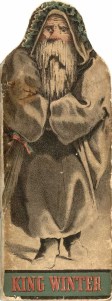
King Winter coverMeanwhile, humans being human, and therefore always looking to make the best of things, a host of celebratory traditions arose to take the sting out of a bleak midwinter. Many revolve around prayer and worship, eating and drinking, making music and dancing, and, most importantly, keeping warm. But many also revolve around the sharing of legends and fables and stories. With the rise of Western children’s literature, which came into full flower in the 19th Century, many of those winter legends and fables and stories were adapted or created especially for children.
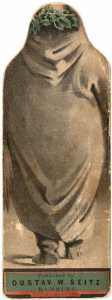
Project Gutenberg has an extensive Christmas bookshelf, but there are also storybooks devoted to winter and the New Year. One of the loveliest in the collection is King Winter, a man-shaped little book in English verse but published in Hamburg, Germany, around 1859.

On a cold, gray day, by the fireside, Mamma tells her children of King Winter, and “Jack Frost, his man,” and Queen Winter, who all live in a snow palace in the “Frozen Zone.” King Winter makes an annual world tour, and to make things comfortable for him, the Queen puts down “a carpet of downy snow.” Meanwhile, Jack Frost decorates the landscape with mirror-like frozen lakes and icicle-laden trees. Delighted children frolic in the snow, which prompts King Winter to ask Jack Frost for a report on who has been good and who hasn’t — the familiar “naughty or nice” list. The good children get toys and Christmas trees (the only mention of Christmas in the book); the bad get birch rods — tied with a pretty red ribbon, though one doubts that would be any comfort to them. King Winter stays until the snowdrops pop up out of the ground, heralding spring.

The pretty color illustrations in King Winter were created with an early color-printing process called chromolithography, which replaced the labor-intensive and expensive hand-coloring process. Chromolithography allowed for fast, cheap mass production of color illustrations with rich, vibrant tones. And, through the magic of HTML, the volunteers at Distributed Proofreaders were able to produce the e-book version with a searchable text surrounded by the illustrations, exactly where the text appears in the original book.

King Winter back coverAnother PG e-book celebrating winter is The Pearl Story Book: Stories and Legends of Winter, Christmas, and New Year’s, an eclectic collection compiled by Ada M. and Eleanor L. Skinner in 1910.  A wide range of noted authors are represented — Longfellow, Hawthorne, Dickens, Tennyson, Tolstoy, to name just a few — and there are even American Indian, Russian, Japanese, and Norwegian legends.
King Winter makes several appearances in prose and poetry, along with King Frost, the Ice King, and of course good King Wenceslas. The book is divided into sections focused on winter legends, winter woods, Christmas, the New Year, and the passage of winter into spring. Some selections are abridged, but they are all delightful, like this excerpt from Tennyson’s “In Memoriam”:

Ring out, wild bells, to the wild sky,
The flying cloud, the frosty light:
The year is dying in the night;
Ring out, wild bells, and let him die.

Ring out the old, ring in the new,
Ring, happy bells, across the snow:
The year is going, let him go;
Ring out the false, ring in the true.

Hot off the Press wishes all its readers a happy and healthy New Year.

This post was contributed by Linda Cantoni, a Distributed Proofreaders volunteer.


A Bohemian’s Bohemian

November 1, 2017

This post is dedicated to the memory of Elizabeth Oscanyan, affectionately known as Mama Beth, a Distributed Proofreaders volunteer who post-processed, among many other projects, Peter Altenberg’s Neues Altes and Semmering 1912“. The latter was her last project before she passed away last month.

Though she was not a native German speaker, in the true spirit of DP teamwork she worked with a German-speaking post-processing partner, woldemar, in order to make the project the best it could be. Another German-speaking DP volunteer, salmonofdoubt, was the post-processing verifier for the Altenberg projects and completed „Semmering 1912“ after Mama Beth died.

Mama Beth never shrank from a challenge, and the Altenberg books posed for her not only a language challenge but also a formatting challenge, due to Altenberg’s unique style, which often made it difficult to tell what was prose and what was poetry. Many thanks to woldemar and salmonofdoubt for helping her to make these projects as great as they are. Special thanks to salmonofdoubt for his kind assistance with the translations in this post.

Mama Beth was much loved by her many DP friends for her warmth and generosity. She will be much missed. Auf wiedersehen, Mama Beth.


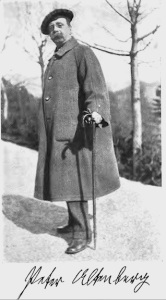
Peter Altenberg

Bohemians — not the Czechs, but rather those unorthodox artistes who came into full flower in 19th-Century Europe — will forever be associated with coffeehouses. And it was in the Belle Époque Viennese coffeehouse culture that the Austrian writer Peter Altenberg (1859-1919) gave birth to his eccentric, modernist work.

Born Richard Engländer into a middle-class Jewish family, Altenberg struggled against his parents’ bourgeois expectations, dropping out of both law and medical school. In his 30s, he plunged into the “Jung-Wien” (Young Vienna) artistic movement, even though he was older than most of its proponents, adopted oddball modes of dress — baggy clothes and broad-brimmed hats and sandals — and wrote the short poems and sketches that are the hallmark of his art.

Altenberg spent the vast majority of his time in Viennese cafés, especially the famous Café Central, where he even received his mail. There he hobnobbed with the likes of Hugo von Hofmannsthal, Adolf Loos, Gustav Klimt, and other fellow iconoclasts who led the modernist movement in fin-de-siècle Vienna. They admired him; he admired them, drank with them, borrowed money from them. And he wrote — often for them — numerous snippets of prose and poetry that demonstrated his wit, his poetic sensibility, and his zest for humanity and nature.

Altenberg liked to scribble his striking pieces on the backs of picture-postcards and mail them to his friends. One such friend was the composer Alban Berg, who wrote Fünf Orchesterlieder nach Ansichtskarten-Texten von Peter Altenberg (Five Orchestral Songs on Picture-Postcard Texts of Peter Altenberg), more conveniently known as the Altenberg Lieder. Its 1913 premiere in Vienna literally caused a riot in the middle of the piece, with the audience calling for both Berg and Altenberg to be committed. Too late — Altenberg had already checked himself into a private asylum a few months before the concert.

Some of Altenberg’s Ansichtskarten-Texten — including the texts of all five Altenberg Lieder — can be found at Project Gutenberg in the collection Neues Altes (New Old), published in 1911. Here is a blank-verse ode to the Soul:

Seele, wie bist du schöner, tiefer, nach Schneestürmen — — —.
Auch du hast sie, gleich der Natur — — —.
Und über beiden liegt noch ein trüber Hauch, wenn das Gewölk sich schon verzog!

Soul, how much lovelier you are, deeper, after snowstorms — — —.
You have them, too, like Nature — — —.
And over both still lies an overcast tinge, though the clouds already dispersed.

And here, a prose poem that is a poet’s heart-cry:

Hier ist Friede — — —. Hier weine ich mich aus über alles. Hier löst sich mein unermeßliches unfaßbares Leid, das meine Seele verbrennt. Siehe, hier sind keine Menschen, keine Ansiedlungen. Hier tropft Schnee leise in Wasserlachen — — —.

Here is peace — — —. Here I weep my heart out over everything.  Here is released my immense, unfathomable pain, which burns my soul. See, here are no people, no settlements. Here snow trickles gently into puddles — — —.

The asylum Altenberg had entered in late 1912 was where he completed another collection of short works, „Semmering 1912“, first published in 1913 and reissued in 1919, the year he died. Before committing himself, he had been staying at Semmering, an Austrian mountain resort. In “Winter auf dem Semmering” (“Winter on the Semmering”) he writes of his uneasy love affair with snow:

Ich habe zu meinen zahlreichen unglücklichen Lieben noch eine neue hinzubekommen — — — den Schnee! Er erfüllt mich mit Enthusiasmus, mit Melancholie.

I have added to my numerous unhappy loves yet a new one — — — snow! It fills me with enthusiasm, with melancholy.

In spite of his bouts with mental illness, Altenberg lived his unconventional life with gusto, and his vital spirit is fully reflected in his work. His many friends never stopped supporting him, even when he irritated them, and he was even nominated for a Nobel Prize in 1914 (but no prize was given that year, due to the outbreak of World War I). It is unfortunate that few of his works have been translated into English, but it is fortunate to have at least these German editions freely available to all on Project Gutenberg, thanks to the dedicated volunteers at Distributed Proofreaders.

This post was contributed by Linda Cantoni, a Distributed Proofreaders volunteer.


New England Bluestocking

October 1, 2017

During the Enlightenment, that great period of intellectual exploration in the 18th Century, a group of educated Englishwomen, tired of being excluded from “masculine” literary and artistic discourse, banded together to form a celebrated salon known as the Blue Stockings Society.  It flourished for about half a century, attracting prominent guests such as Samuel Johnson and Horace Walpole. But by the 19th Century, its popularity had waned, and the term “bluestocking” became a pejorative one for any intellectual woman — stereotyped as a frumpy spinster with literary pretensions.

Guiney

Louise Imogen Guiney as St. Barbara,
by Fred Holland Day.

As with all stereotypes, that view did a profound disservice to its targets. In 19th Century America, New England produced a rich vein of female literary talent. While those like Emily Dickinson and Louisa May Alcott take center stage today, there were others of great ability but lesser renown whose works deserve a revival. The poet and essayist Louise Imogen Guiney (1861-1920) is one of them.

Guiney was born in Roxbury, Massachusetts, the daughter of an Irish-born Civil War hero and lawyer. She was educated at a Catholic convent school, but her father’s death in 1877 forced her to work to support herself and her mother, taking jobs as a postmistress in a small Massachusetts town and a cataloger at the Boston Public Library. Meanwhile, at 19, she launched her literary career with a poem, “Charles Sumner,” published in a Boston newspaper. Her critically acclaimed poetry collections, Songs at the Start (1884) and The White Sail (1887), soon followed.

Guiney also garnered a reputation as an incisive and learned essayist. Her first essay collection, Goose-Quill Papers (1885) shows off her scholarship as well as her wit and flair. The amusing essay “On Teaching One’s Grandmother How to Suck Eggs” gives us a tongue-in-cheek survey of the subject:

In the days of the schoolmen, when no vexed question went without its fair showing, it seems incredible that the proposition hereto affixed as a title provoked no labyrinthine reasoning from any of those musty and hair-splitting philosophers. Aristotle himself overlooked it; Duns Scotus and the noted Aureolus Philip Theophrastus Bombast de Hohenheim Paracelsus were content to repeat his sin of omission. Even that seventeenth-century English essayist and scholar, “whose understanding was wide as the terrene firmament,” neither unearthed the origin of this singular implied practice, nor attempted in any way to uphold or depreciate it. The phrase hath scarce the grace of an Oriental precept, and scarce the dignity of Rome. It might sooner appertain to Sparta, where the old were held in reverence, and where their education, in a burst of filial anxiety, might be prolonged beyond the usual term of mental receptivity.

After her initial successes, Guiney became a key part of Boston’s aesthetic revival of the 1890s, and counted among her friends the poet and physician Oliver Wendell Holmes (to whom Goose-Quill Papers is dedicated), the architect Ralph Adams Cram, the poet Bliss Carman, and the photographer Fred Holland Day. Her third poetry collection, A Roadside Harp (1893) sealed her reputation as a fine aesthetic poet, with some flourishes harking back to an earlier time, as in “Tryste Noel”:

The Ox he openeth wide the Doore
And from the Snowe he calls her inne,
And he hath seen her Smile therefore,
Our Ladye without Sinne.
Now soone from Sleepe
A Starre shall leap,
And soone arrive both King and Hinde;
Amen, Amen:
But O, the place co’d I but finde!

Guiney began a new epoch in her life and work when she moved to England, where she liked “the velvety feel of the Past underfoot,” in 1901. She gave up poetry — her last collection, Happy Ending, was published in 1909 — and refocused much of her literary work on biographies of prominent English Catholics (Blessed Edmund Campion) and Irish historical figures (Robert Emmet). Her work was not lucrative, however, and she often went without food or coal in order to have enough money to buy books. She died of a stroke at her home in Gloucestershire in 1920.

Consistent with the stereotype of the bluestocking spinster, Guiney never married, and was said to share a “Boston marriage” with the writer Alice Brown. But, inconsistent with the stereotype, so far from being a frump, she was “tall and lithe. . . given to such outdoor pursuits as hiking,” as Douglass Shand-Tucci describes her in Boston Bohemia: 1881-1900. Guiney was not only “pretty, with beautiful dark gray eyes,” but also “warm and affectionate, even flirtatious, and altogether a buoyant free spirit with an irrepressible sense of humor.”

Guiney’s free spirit shines through in the dozen or so of her works available at Project Gutenberg. Her biographer, Henry G. Fairbanks, called her the “lost lady of American letters.” She deserves to be found again.

This post was contributed by Linda Cantoni, a Distributed Proofreaders volunteer.