Novanglus and Massachusettensis

July 4, 2014

Many people have a vague idea that the battle for American independence from Great Britain began with the Declaration of Independence on July 4, 1776. But the battle really began much earlier—almost a decade earlier, when American colonists first began protesting “taxation without representation” in the British Parliament. Unrest turned to violence in 1770, when a crowd of angry Boston colonists surrounded a group of British soldiers, who fired into the crowd and killed three people in what became known as the Boston Massacre. In 1773 came the Boston Tea Party, during which saboteurs dressed as Mohawks dumped over 300 chests of British tea into Boston Harbor. Punishment was swift: the British government closed Boston Harbor and passed the “Intolerable Acts,” which, among other things, stripped the Massachusetts Bay Colony of its right to self-government.

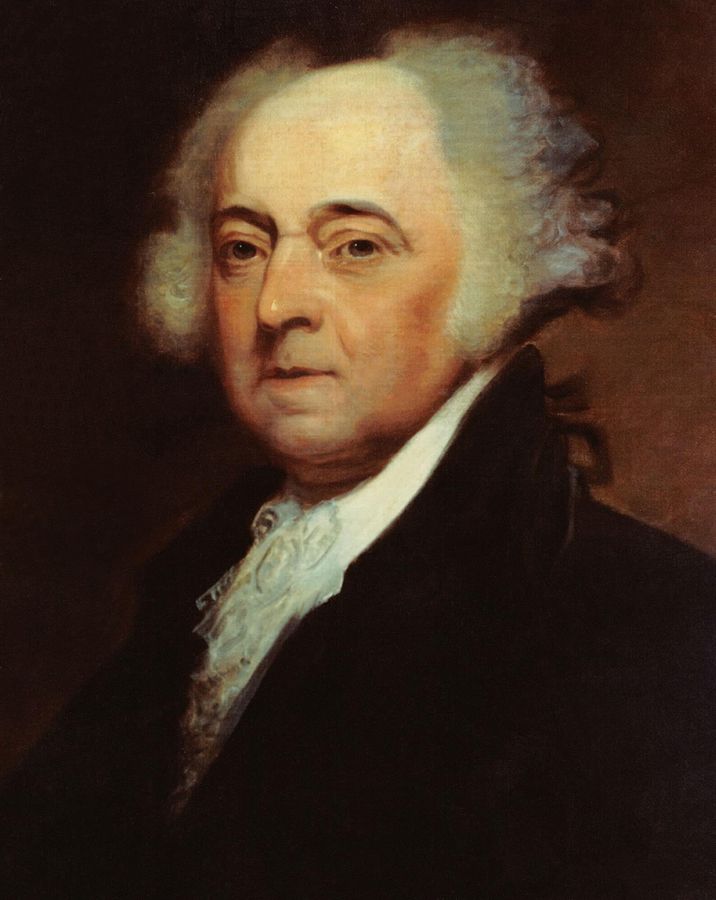
The battle wasn’t just waged in the streets or in the harbor. A bitter war of words erupted among the intellectual elite of the colonies, who were split in their opinions of Parliament’s actions. Among the combatants was a feisty Boston lawyer named John Adams (1735-1826), a future Founding Father and President of the United States. Adams, ironically, represented several of the British soldiers involved in the Boston Massacre, and his strong self-defense arguments resulted in acquittals. But Adams was no less of a patriot for that. He simply understood how important it was for the American cause to ensure that the soldiers had a fair trial.

Adams

John Adams

A few years later, as American-British relations deteriorated, Adams employed his brilliant legal skills to respond to a series of pro-British letters, by someone calling himself “Massachusettensis,” published in a Loyalist Boston newspaper beginning in December 1774. Writing as “Novanglus,” Adams set forth his argument that the colonies were not answerable to the British Parliament.  In 1819, these letters were collected in a volume entitled Novanglus, and Massachusettensis; or Political Essays, Published in the Years 1774 and 1775, on the Principal Points of Controversy, between Great Britain and Her Colonies. The edition that DP volunteers used to prepare the Project Gutenberg e-book was the presentation copy to John Adams from the printers.

In 1775—more than a year before the Declaration of Independence—Adams was not yet arguing for independence from Britain; he expressly disclaimed such a treasonous view. Instead, he stuck to the more subtle argument that the colonies might be subject to the will of the Crown, but they were not subject to Parliament, because they were self-governing. He argued extensively from British statutes and cases involving the similar status of Ireland and Wales.

Adams’s arguments were brilliant, but his opponent “Massachusettensis” was every bit a match for him, arguing his Loyalist views with equal vigor and skill.  Indeed, because “Massachusettensis” was the better writer, his arguments can seem more compelling than Adams’s “huge pile of learning,” as “Massachusettensis” sneeringly called Adams’s scholarly legal citations.

The exchange between “Novanglus” and “Massachusettensis” came to an abrupt halt in April, 1775, with the Battles of Lexington and Concord. The revolution had begun, and there was no going back.

The 1819 edition identifies “Massachusettensis” as Adams’s onetime friend Jonathan Sewall, the last King’s Attorney General for Massachusetts, and Adams himself long believed it was Sewall. But “Massachusettensis” was actually Taunton lawyer and Loyalist Daniel Leonard, another friend from whom Adams later became irrevocably estranged in the turmoil of the Revolution. Leonard was forced to flee America when the British evacuated Boston in 1776; he later became chief justice of Bermuda and then retired to London. When the letters were published in London in 1822, he revealed himself to be “Massachusettensis.”

The 1819 edition of Novanglus, and Massachusettensis also features letters that Adams wrote to various friends and colleagues later in life, recounting the events leading up to the American Revolution. John Adams died on July 4, 1826, at the age of 90. His last words were said to be, “Thomas Jefferson survives”—but the author of the Declaration of Independence had also passed away that very day.

Today, July 4, 2014, is the 238th anniversary of American independence.

This post was contributed by Linda Cantoni, a Distributed Proofreaders volunteer.


Ten Years of Music at DP

June 17, 2014

Today Distributed Proofreaders celebrates the 10th anniversary of its Music Team, which has been helping to make beautiful music for Project Gutenberg e-books since June 17, 2004.

music

Medieval French music notation

Founded by DP volunteer David Newman, a classical singer and voice teacher who provided dozens of music-related projects to DP, the Music Team was designed to bring together DPers who wanted to preserve more music books. Thus began a vibrant community of music-lovers, musicians and non-musicians alike, who share thoughts on finding, creating, managing, proofing, formatting, post-processing, and transcribing music-related projects.

Team discussions have wrestled with big issues, like whether and how to incorporate music transcription (i.e., creating sound files from printed music) into the DP formatting rounds, what music notation software should be the DP standard, and how to handle projects consisting solely of music notation with little or no text. DPers have conducted experiments in different methods, and the creative efforts to improve the overall transcription process continue to this day.

But these aren’t the Music Team’s only accomplishments. The team has long been a clearinghouse and sounding board for Content Providers in search of feedback and volunteers to work on important music projects. Post-Processors come to the team to find volunteer transcribers who can create sound files for a vast variety of DP projects, including children’s books and even novels. Some projects might contain some simple melodies; some might have dozens of pages of orchestral music. For projects with lots of music, team members have created “distributed transcription” systems in which any DPer with any music software can participate. One example is the delightful Traditional Games of England, Scotland, and Ireland, a two-volume set with dozens of children’s game songs, on which several Music Team members collaborated.

Music Team members also lend their expertise to answer a wide array of music questions from DPers. A project might have some arcane bit of music notation, often found in the older texts being worked on at DP. Or there might be a question whether some odd-looking notation is, in fact, a printer error. Music transcribers often ask the team to proofread (or even “proof-listen”) to the music they’ve transcribed, for accuracy or for aesthetics.

One thing is certain: being able to hear the music in an e-book enhances the reader’s experience immeasurably. Happy Anniversary, Music Team, and thanks for the melodies!

This post was contributed by Linda Cantoni, a Distributed Proofreaders volunteer.


A Very Special 27,000th Title

March 29, 2014

27,000 titles

It’s time to celebrate another Distributed Proofreaders achievement—our 27,000th title posted to Project Gutenberg, Storia della decadenza e rovina dell’impero romano, an Italian translation of The History of the Decline and Fall of the Roman Empire, by the famed English historian Edward Gibbon (1737-1794).

Decline and Fall is a monumental work, distinguished not only by Gibbon’s outstanding scholarship, but also by his witty, ironic commentary and iconoclastic views of the events he describes. His theory of Rome’s decline and fall was essentially that her citizens had become spoiled by success. The most controversial part of his argument was that Christianity contributed to Rome’s fall by shifting people’s focus from real-life practicalities to a spiritual afterlife.

The Italian translation, by the noted Italian author Davide Bertolotti, is a 13-volume tour-de-force, published in Milan between 1820 and 1824. He based his translation on a 1791 London edition, which Bertolotti described as “ottima e sicura edizione” (“an excellent and trustworthy edition”), mentioned by Gibbon himself in his Memoirs. Bertolotti promised that, unlike a previous Italian translation, “Non una idea, non una parola importante, venne ad essa tolta, mutata od aggiunta” (“Not a single idea, not a single important word, was deleted, changed or added”). That might be a motto for what DP does.

Congratulazioni e grazie to the dedicated DP volunteers who made this milestone possible!

This post was contributed by Linda Cantoni, a Distributed Proofreaders volunteer.


Mendelssohn in Italy

February 3, 2013

Sometimes we DP volunteers wonder whether anyone actually reads or uses the e-books we produce. After all, with most of the world’s best-known works already posted to Project Gutenberg, nowadays we tend to labor on the somewhat obscure.

Mendelssohn

Felix Mendelssohn in 1839

But the books we produce are being read and used every day, by readers, students, teachers, scholars, and even musicians. Here’s a real-life example: Last year, my husband, an orchestra conductor, asked me to put together some program notes for one of his concerts. His idea was to have me be a sort of narrator, reading the notes to the audience before each piece. One of the pieces was to be Felix Mendelssohn’s Symphony No. 4, the “Italian.”

Because the notes were to be given live, I wanted to make sure they’d be especially interesting to a general audience.

Technical details about the music were not going to do the trick. With the Italian Symphony, I was in luck twice over. First, in the course of my research, I learned that it had been inspired by Mendelssohn’s first trip to Italy in 1830, when he was just 21. Second, better yet, I remembered a book then in progress at DP and since posted to PG: the Letters of Felix Mendelssohn Bartholdy from Italy and Switzerland. I decided to take appropriate excerpts from the letters and read one before each movement of the symphony.

These exuberant letters to Mendelssohn’s parents, brother, and sisters back home in Berlin express the manifold wonders he experienced on his journey. The ruined glory of the Roman Forum and the Colosseum, the stunning loveliness of the hills, the romantic palazzi and canals of Venice, all spoke to his deepest sense of beauty.

Here is young Mendelssohn, newly arrived in Venice, eagerly writing to his parents on October 10, 1830:

Italy at last! And what I have all my life considered as the greatest possible felicity is now begun, and I am basking in it.

You can hear this youthful enthusiasm in the exciting opening bars of the Italian Symphony, which he began writing on this trip. As he wrote to his sister Fanny from Rome on February 22, 1831:

I have once more begun to compose with fresh vigour, and the Italian symphony makes rapid progress; it will be the most sportive piece I have yet composed, especially the last movement.

Except for the last movement, which is based on a lively Italian dance called the saltarello, there is nothing particularly Italian about the music itself. Rather, it evokes the impressions of an awestruck tourist, impressions he shared with his family in his letters home.

The stately tone of the symphony’s second movement is reflected in this letter to his parents, from Rome, November 8, 1830:

Just as Venice, with her past, reminded me of a vast monument: her crumbling modern palaces, and the perpetual remembrance of former splendour, causing sad and discordant sensations; so does the past of Rome suggest the impersonation of history; her monuments elevate the soul, inspiring solemn yet serene feelings, and it is a thought fraught with exultation that man is capable of producing creations, which, after the lapse of a thousand years, still renovate and animate others.

The third movement of the symphony, a graceful minuet, puts one in mind of Botticelli’s lovely painting, Primavera. It hangs in the Uffizi Gallery in Florence, where Mendelssohn immersed himself in the glories of Italian art, as he wrote to his sisters, June 25, 1831:

I have to-day passed the whole forenoon, from ten till three, in the gallery; it was glorious!… I wandered about among the pictures, feeling so much sympathy, and such kindly emotions in gazing at them. I now first thoroughly realized the great charm of a large collection of the highest works of art. You pass from one to the other, sitting and dreaming for an hour before some picture, and then on to the next…. I could not help meditating on all these great men, so long passed away from earth, though their whole inner soul is still displayed in such lustre to us, and to all the world.

The symphony’s rushing, leaping saltarello finale may have been inspired by something like the festival Mendelssohn saw in Florence, as he described it to his sisters on June 26, 1831:

It was Midsummer’s day, and a celebrated fête was to take place in Florence the same evening…. I heard a tumult, and looking out of the window I saw crowds, both young and old, all hurrying in their holiday costumes across the bridges. I followed them to the Corso, and then to the races; afterwards to the illuminated Pergola, and last of all to a masked ball in the Goldoni Theatre…. I recalled to myself the various occurrences of the day, and the thoughts that had chased each other through my mind, and resolved to write them all to you. It is in fact a reminiscence for myself, for it may not be so suggestive to you, but it will one day be of service to me, enabling me to recall various scenes connected with fair Italy.

It was indeed of service to him. The memories and inspirations of the trip, recorded in his letters, enabled him to finish the symphony quickly upon his return to Germany, and he himself conducted the premiere in London in 1833. Although he was never entirely happy with it, it deservedly remains one of the most popular works in the symphonic repertoire.

And, thanks to DP, the audience at my husband’s concert, hearing Mendelssohn’s own words accompany his music, cheered loud and long.

This post was contributed by Linda Cantoni, a Distributed Proofreaders volunteer.


Music and Some Highly Musical People

February 9, 2012

When we think of 19th-century classical music, our minds tend to turn first to the many great European composers and performers who graced the Romantic era. Americans did not really make their mark on classical music until the 20th century. And African-Americans lagged even farther behind—but it was not for lack of trying. After Emancipation, former slaves and the children of slaves participated, as composers and performers, in a rich cultural world that deserves to be studied and remembered.

In Music and Some Highly Musical People, written in 1878, James Monroe Trotter (1842-1892) brings this world to life, with biographical accounts of the notable African-American musicians of the day. Trotter explains his motive for writing the book in his Preface:

While grouping, as has here been done, the musical celebrities of a single race; while gathering from near and far these many fragments of musical history, and recording them in one book,—the writer yet earnestly disavows all motives of a distinctively clannish nature. But the haze of complexional prejudice has so much obscured the vision of many persons, that they cannot see (at least, there are many who affect not to see) that musical faculties, and power for their artistic development, are not in the exclusive possession of the fairer-skinned race, but are alike the beneficent gifts of the Creator to all his children.

James M. Trotter

James M. Trotter

Trotter himself had an interesting history. His mother was a Mississippi slave; his father was her white master. She escaped with Trotter and his brother via the Underground Railroad and settled in Ohio. Trotter became a teacher, and, during the Civil War, enlisted in the Union Army, becoming the first African-American to achieve the rank of Second Lieutenant. He later became the first African-American to be employed by the U.S. Post Office, but resigned in protest when discrimination prevented his promotion. In 1887, President Cleveland appointed Trotter to the office of Recorder of Deeds for the District of Columbia, then the highest government position to be attained by an African-American.

In Music and Some Highly Musical People, Trotter subtly makes his point for equality through his generous portraits of a variety of musical artists. He describes in rich detail their humble beginnings, their perseverance in spite of poverty and prejudice, and their successes. Many of these musicians found a more welcoming home in Europe. The composer Lucien Lambert, for example, “grew restive under the restraints, that, on account of his complexion, were thrown around him in New Orleans. He longed to breathe the air of a free country, where he might have an equal chance with all others to develop his powers: and so, after a while, he went to France; and, continuing his studies in Paris under the best masters of the art, he rapidly attained to great skill in performance and in composition.”

A delightful feature of Trotter’s book is an Appendix containing 13 lovely compositions by some of the composers featured in the text. In Project Gutenberg’s edition, you can hear the music for each piece by clicking on the [Listen] link in the HTML version, and the pieces can be printed out as PDF sheet music.

Distributed Proofreaders posted this book to Project Gutenberg in celebration of Black History Month 2009.

This post was contributed by Linda Cantoni, a Distributed Proofreaders volunteer.


Annie Brassey’s Voyages

January 15, 2012

On September 14, 1887, at sunset, the body of a woman was committed to the sea midway between Christmas Island and the northwestern coast of Australia. Her grieving husband and their four children stood by to pay their last respects, along with the entire crew of the vessel on which they had been sailing for nearly a year.
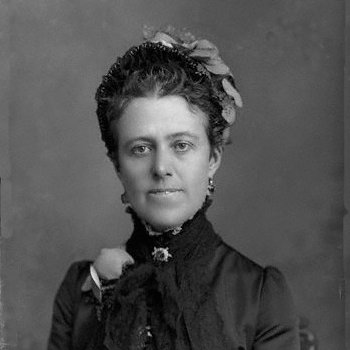
Annie Brassey

Annie Brassey

The vessel was the yacht Sunbeam, and the woman was 47-year-old Lady Brassey—Annie Brassey, as she styled herself—one of the most celebrated travel writers of her day. Her lengthy voyages with her husband, Sir Thomas Brassey, and their children were simply and beautifully recorded in several lavishly detailed and illustrated books. The volunteers at Distributed Proofreaders have preserved two of them for posterity at Project Gutenberg: the first, A Voyage in the ‘Sunbeam’, published in 1878; and the last, The Last Voyage, published posthumously in 1889.

Annie Brassey was born Anna Allnutt in London in 1839. Her privileged childhood did not spare her from serious health problems. In a memoir of her life published in The Last Voyage, her husband recounted that she suffered from an inherited “weakness of the chest,” apparently in the form of chronic bronchitis. As a young woman, she suffered severe burns when she stood too close to a fireplace and her crinolined skirt caught fire; it took her six months to recover.

When she was 21, Annie married Thomas Brassey, the son of a prominent railway contractor. Thomas was a Member of Parliament who later became Lord of the Admiralty and Baron Brassey of Bulkeley. Annie and Thomas had five children; one of them, Constance, died in 1873 at age five. Annie, despite her chronic illnesses, busied herself with her family and with charitable work, becoming a tireless supporter of the St. John Ambulance, an organization devoted to providing and teaching first aid.

Thomas was a keen yachtsman, and on July 1, 1876, he, Annie, and the children (ranging in age from one to 13) set off to circumnavigate the globe in the Sunbeam—said to be the first private yacht to do so. This was no Kon-Tiki—the Sunbeam was a steam-assisted schooner, and the family and crew totaled 43 people.

Nonetheless, in the nineteenth century, traveling around the world was neither safe nor comfortable, as the Brasseys well knew from prior, shorter voyages. In 1869, Annie had contracted malaria while traveling through the Suez Canal; the disease plagued her for the rest of her life.

But it did not stop her. She entered into the first voyage of the Sunbeam with great enthusiasm, writing extensive letters to her family in England, in which she detailed all the wonders of the exotic lands they visited. Her family urged her to publish these letters in the form of a journal, and the result was A Voyage in the ‘Sunbeam’.

Annie’s journal entries demonstrate a keen eye for observation, boundless curiosity, and a profound sympathy for humankind. It is no wonder that A Voyage in the ‘Sunbeam’ became an instant best-seller. The grace and simplicity of her writing bring the voyage vividly to life, often with understated humor. Here, for example, is her account of what happened after the yacht came through a severe storm:

Soon after this adventure we all went to bed, full of thankfulness that it had ended as well as it did; but, alas, not, so far as I was concerned, to rest in peace. In about two hours I was awakened by a tremendous weight of water suddenly descending upon me and flooding the bed. I immediately sprang out, only to find myself in another pool on the floor. It was pitch dark, and I could not think what had happened; so I rushed on deck, and found that, the weather having moderated a little, some kind sailor, knowing my love of fresh air, had opened the skylight rather too soon; and one of the angry waves had popped on board, deluging the cabin.

Despite Annie’s ill health, the voyages continued, in part because winters in London (with its then dreadful fogs of pollution) were intolerable to her. In the 1880s she published other travelogues, including In the Trades, the Tropics, and the Roaring Forties (1885), currently in progress at DP.

Annie’s last voyage on the Sunbeam began in January 1887. The family toured India and then set sail for Ceylon, explored Burma, Borneo, and nearby islands, and circumnavigated Australia, with fascinating side-trips to the major towns and even into the bush. She participated in these tours in spite of renewed attacks of malarial fever, and throughout her time in Australia she actively promoted the St. John Ambulance.

But the disease that had beset her for so long finally took its toll. Annie wrote her last published journal entry on August 29, 1887, as the Sunbeam lay at Thursday Island, off Cape York in Queensland, Australia. She was so ill that she needed to be carried in a chair as she toured the island that day, but she pressed on, and even discussed starting a chapter of the St. John Ambulance with the local residents.

Thereafter, as her friend and editor, M.A. Broome, puts it in the Preface to The Last Voyage, Annie’s journal entries “are simple records of suffering and helpless weakness, too private and sacred for publication.” She made her last private entry four days before she died. In her husband’s tender memoir in The Last Voyage, addressing their children, he said, “We have seen how your mother used her opportunities to make the world a little better than she found it. . . . I could never tell you what your mother was to me.”

Annie Brassey, with her inspiring courage and humanity, left the world a beautiful legacy in her fascinating journals.

Note: In 1922, the Sunbeam was sold to Sir Walter Runciman. Sir Walter, as it happens, was a distant relative of the late Steven Gibbs, the DP volunteer who provided the scans of The Last Voyage.

This post was contributed by Linda Cantoni, a Distributed Proofreaders volunteer.


Renaissance in Italy: Italian Literature, by John Addington Symonds

May 26, 2011

The Renaissance — French for “rebirth” — was a period of re-flowering for art and literature after the gloom of the Dark Ages. From the 14th through the 16th Centuries, artists and writers all over Europe created an amazing body of masterworks whose beauty and intensity still bring joy to us today. And Italy — though not yet a unified nation — was the birthplace of this re-flowering.

Renaissance in Italy is a monumental series of treatises by English literary critic John Addington Symonds (1840-1893), covering virtually all aspects of the subject. The first three volumes cover the fragmented political landscape of the time; the rise of Humanism; and a detailed study of the great Italian architects, sculptors, and painters.

The fourth and fifth volumes, Italian Literature (Part I, Part II), brilliantly examine Italian literary masters, from Dante to Machiavelli. For Symonds, the Golden Age of Italian literature took place between 1300 and 1530, when poets and essayists moved away from Latin and composed their best works in their native Italian dialects — particularly Tuscan, which became the basis for modern Italian. Sicilian and Provençal troubadours of the 13th Century, writing in their own languages, led to the “dolce stil novo” (sweet new style) of Dante and other poets writing in the Tuscan dialect. The highest expression of this style was, of course, Dante’s Divine Comedy.

From this linguistic and literary transition sprang all that followed: Boccaccio and his Decameron, Ariosto and his Orlando Furioso, Machiavelli and his Prince, and many other masterpieces by many other masters in between. Symonds recognized that Italy’s greatest literature was also born of the artistic ideals of ancient Rome:

When all her deities were decayed or broken, Italy still worshiped beauty in fine art and literary form. When all her energies seemed paralyzed, she still pursued her intellectual development with unremitting ardor… They wrought, thought, painted, carved and built with the antique ideal as a guiding and illuminative principle in view. This principle enabled them to elevate and harmonize, to humanize and beautify the coarser elements existing in the world around them. What they sought and clung to in the heritage of the ancients, was the divinity of form — the form that gives grace, loveliness, sublimity to common flesh and blood in art; style to poetry and prose; urbanity to social manners; richness and elegance to reflections upon history and statecraft and the problems of still infantine science.

Renaissance in Italy: Italian Literature (Part I) was part of DP’s 20,000 titles celebration. The entire Renaissance in Italy series is available at Project Gutenberg: The Age of the Despots, The Revival of Learning, The Fine Arts, Italian Literature (Part I), Italian Literature (Part II), and The Catholic Reaction (Parts I and II).

Banner for DP's 20k celebration

This post was contributed by Linda Cantoni, a Distributed Proofreaders volunteer.


A Wonder Book for Girls and Boys

December 1, 2010

In the spring of 1850, Nathaniel Hawthorne (1804-1864), having just enjoyed his first great success with The Scarlet Letter, moved with his wife and two young children from bustling Salem, Massachusetts, to the Berkshire Hills in the western part of the state. Although “The Berkshires” are now one of America’s premier cultural and natural resorts, they were then a rather wild and remote place. The beauty and peace of its rolling hills made it the perfect setting for a writer who wanted inspiration and no distractions.

The Hawthornes rented a little red farmhouse in Lenox, on the summer estate of the wealthy Tappan family, and Hawthorne set to work. In just a year and a half, Hawthorne produced his masterpiece, The House of the Seven Gables, as well as The Blithedale Romance. And it was here that he wrote his enchanting book for children, A Wonder Book for Girls and Boys.

Midas

Midas’ Daughter Turned to Gold

A Wonder Book is a collection of stories within a frame story. Eustace Bright, a lively student at nearby Williams College, is visiting Tanglewood (Hawthorne’s fictional name for the Tappan estate). He gathers a group of “little folks” — the Hawthorne and Tappan children under assumed names like “Primrose” and “Cowslip” — and, in various places on and around the estate, charmingly narrates for them several ancient Greek myths.

Here is Perseus, lopping off the Gorgon’s Head; Midas, miserably living with his Golden Touch; Pandora and that terrible box; Hercules braving monsters to retrieve the Three Golden Apples; the generous old couple, Baucis and Philemon, unwittingly entertaining the gods in their poor cottage; Bellerophon taming Pegasus and defeating the Chimæra. Both the frame story and the myths are simply and beautifully told, with Hawthorne’s wonderfully evocative touches:

The golden days of October passed away, as so many other Octobers have, and brown November likewise, and the greater part of chill December, too. At last came merry Christmas, and Eustace Bright along with it, making it all the merrier by his presence. And, the day after his arrival from college, there came a mighty snow-storm. Up to this time, the winter had held back, and had given us a good many mild days, which were like smiles upon its wrinkled visage. The grass had kept itself green, in sheltered places, such as the nooks of southern hill-slopes, and along the lee of the stone fences. It was but a week or two ago, and since the beginning of the month, that the children had found a dandelion in bloom, on the margin of Shadow Brook, where it glides out of the dell.

In spite of his appreciation of the beauty of the Berkshires, his productivity there, and the birth of his daughter Rose in 1851, Hawthorne loathed the changeable climate. In one of his journals (later published as Twenty Days with Julian and Little Bunny by Papa), he wrote, “I detest it! I detest it!! I de-test it!!! I hate Berkshire with my whole soul, and would joyfully see its mountains laid flat.” The Hawthornes went back east in November 1852 and never returned.

But Hawthorne’s Wonder Book lives on, as does its sequel, Tanglewood Tales, published in 1853. The Tappans, in fact, adopted Hawthorne’s name for their estate, and their descendants donated Tanglewood to the Boston Symphony Orchestra for its now-famous summer concert series. The little red farmhouse burned down in 1890 and a privately-owned replica stands in its place.

Project Gutenberg’s version of A Wonder Book for Girls and Boys is the 1893 edition, with lovely, richly-detailed illustrations by Walter Crane.

This post was contributed by Linda Cantoni, a Distributed Proofreaders volunteer.


The Art of Stage Dancing

November 24, 2010

It started as an all-too-common story: a young performer — an actor, dancer, musician, stage director — from the Midwest comes to New York to break into the big time on Broadway. His specialty act on the piano wowed ’em in his hometown, and he’s determined that it’ll wow ’em in New York.

But when he gets there to play his first gig, he finds that there’s no piano at the theater. Worse, he discovers that someone has stolen his act and has already performed it all over town. Now he has no job. He has no money. He trudges from agent to agent in a vain search for a break. He now understands why they call Broadway the “Boulevard of Broken Dreams.”

But the dream of Ned Wayburn (1874-1942) wasn’t broken yet. His ragtime piano playing eventually caught the attention of one of the great Broadway stars of the 1890s, May Irwin, who hired him to accompany her for the princely sum of $25 a week. And from that big break grew Wayburn’s outstanding career as the first important choreographer on Broadway.

Actually, Wayburn didn’t care for the title “choreographer.” He styled himself as a director, and from 1901 into the 1920s he was one of the kings of Broadway, his spectacular vaudeville shows drawing huge crowds. He perfected synchronized chorus-line dancing, using large numbers of attractive young female dancers in imaginative, precisely-timed production numbers. He hit the pinnacle of his career when he directed the Ziegfeld Follies several years in a row, from 1916 to 1923.

But in spite of his success, financial security frequently eluded Wayburn. He went bankrupt for the first of several times in 1908. He bought a theater in 1915 to showcase his own productions, only to have it shut down four months later. He became involved in a messy divorce and was nearly jailed for failing to pay alimony.

Fred and Adele Astaire

Fred and Adele Astaire, pupils of Ned Wayburn

To shore up his finances, Wayburn opened a dance school in Manhattan in 1905. Among his early students were a young Fred Astaire and his sister, Adele. By the 1920s, the school was a Broadway institution, training legions of dancers in Wayburn’s unique styles of tap dancing (which some claim he invented), acrobatic dancing, “modern Americanized ballet,” specialty dancing, and ballroom dancing. The Art of Stage Dancing, written in 1925, is essentially a book-length advertisement for the Ned Wayburn Studios of Stage Dancing — but a fascinating advertisement nonetheless.

Wayburn’s book is chock full of photographs of the Broadway stars of yesteryear whom Wayburn had taught, or with whom he had worked, in his long career: Fred and Adele Astaire, the Dolly Sisters, Eddie Cantor, Will Rogers, W.C. Fields, Marion Davies, Gertrude Lawrence, Al Jolson, and a host of other greats who are now, alas, forgotten.

But the book is more than just a self-congratulatory plug for Wayburn and his school. It’s also a complete guide for the would-be dancing star (primarily female, of course), with detailed, richly illustrated chapters on dance styles, steps, and tempos (with music); makeup and costume; stage technique; exercise, diet (with daily menus to slim down or fatten up), and health; and much more. Wayburn even threw in a collection of sample contracts so that his students would know what to expect in the real world.

Wayburn believed fervently in the power of confidence as the key to stage success:

Be patient, you who would star and see your name go up in the bright lights on the Great White Way. Do not get discouraged. You will meet with obstacles on the route to fame undoubtedly, as others have done, and, like the others who have finally arrived, you must overcome them one at a time as they appear, by sheer force of willpower, determination, pluck or whatever you desire to call it. If you are a weakling and lack strength of character do not ever take up a stage career, for you will get many a bump; so be prepared to stand it. For only those who are determined to succeed will ever reach the top, where there is plenty of room always.

Unfortunately, no amount of confidence could stop the march of time for Wayburn. The Depression brought both vaudeville and the Ned Wayburn Studios to a slow and painful end. Wayburn went bankrupt for the last time in 1935; he died in 1942 at the age of 68. But his legacy lives on in every Broadway show with a chorus line.

The Art of Stage Dancing was the 14,000th title posted to Project Gutenberg by Distributed Proofreaders.

This post was contributed by Linda Cantoni, a Distributed Proofreaders volunteer.


A Week at Waterloo in 1815

November 17, 2010

One might think, from the title, that A Week at Waterloo in 1815 is an old soldier’s memoir of a glorious battle. But the lengthy subtitle, “Lady De Lancey’s Narrative: Being an Account of How She Nursed Her Husband, Colonel Sir William Howe De Lancey, Quartermaster-General of the Army, Mortally Wounded in the Great Battle,” is the first clue that this is no ordinary military tale. Lady De Lancey’s narrative is, instead, a heart-wrenching account of a young bride who tended to her husband in his last agonizing days.

Lady Magdalene De Lancey

Lady Magdalene De Lancey

Magdalene Hall De Lancey (1793-1822), daughter of the noted Scottish geologist Sir James Hall of Dunglass, married Sir William Howe De Lancey (1778-1815) in April 1815. De Lancey was a descendant of the prominent De Lancey (or Delancey) family of New York City (Delancey Street on the Lower East Side of Manhattan was named after them). Sir William’s branch of the family were Loyalists during the American Revolution, and fled to England when the British lost the war in 1783. Sir William joined the British Army as a teenager in 1792, and, shortly after his marriage to Magdalene, began serving under the Duke of Wellington in the last Napoleonic War.

As was the custom in those days, Magdalene accompanied her new husband when he was posted to Brussels for the Belgian campaign, in June 1815. Their first days there were surprisingly peaceful and happy. It soon became clear, however, that the French would attack Brussels, so Magdalene moved to Antwerp while Sir William went off to battle. He wrote her on June 16, assuring her that he was safe.

It was the last letter she would receive from him. On June 18, 1815, in the first hours of the Battle of Waterloo, a cannonball struck Sir William in the back, sending him flying off his horse. Wellington himself saw Sir William fall, and rushed to his side. Believing that the wound was fatal, Sir William begged to be left to die on the field of battle, and asked Wellington to give his wife a last message. He was moved to a cottage, where, believed to be dead, he was left untended for a day and a half.

Meanwhile, the day after the battle, Magdalene was told that her husband had “died like a soldier.” Overcome by grief, she locked herself in her room:

I locked the outer door, and shut the inner one, so that no one could again intrude. They sent Emma [her maid] to entreat I would be bled; but I was not reasonable enough for that, and would not comply. I wandered about the room incessantly, beseeching for mercy, though I felt that now, even Heaven could not be merciful.

But Heaven was, for a time, merciful. The following day, Magdalene received the news that her husband was, in fact, alive, though badly wounded; a fellow officer had found him in the cottage and had gotten a surgeon to treat him. Magdalene made ready to go to her husband immediately. She was in a state of terror as she waited for her carriage:

I would not if I could, describe the state I was in for two hours more; then I lost all self-command. . . . My agitation and anxiety increased. I had the dreadful idea haunting me that I should arrive perhaps half an hour too late. This got the better of me, and I paced backward and forward in the parlour very fast, and my breathing was like screaming.

The horrors of the battle were brought home to her as her carriage approached Waterloo. “The horses screamed at the smell of corruption, which in many places was offensive,” she wrote. But she rejoiced to find her husband alive. His first stoic words to her were, “Come, Magdalene, this is a sad business, is it not?”

For the next six days, Magdalene nursed her husband in what was essentially a hovel with few supplies or conveniences. At first, he seemed to improve somewhat, but he was soon coughing up blood. His breathing became labored, and he developed severe chest pain and a fever. And no wonder: the cannonball had smashed eight of his ribs, and his lungs were punctured. The only medical treatment he received, typical of the day, was to be bled repeatedly — a fine treatment indeed for one who was bleeding internally!

On the night of the fifth day, Sir William, unable to sleep, asked Magdalene to lie down with him in his tiny sickbed against the wall:

He said if I could lie down beside him it would cut off five or six hours. I said it was impossible, for I was afraid to hurt him, there was so little room. His mind seemed quite bent upon it. Therefore I stood upon a chair and stepped over him, for he could not move an inch, and he lay at the outer edge. He was delighted; and it shortened the night indeed, for we both fell asleep.

The next day his lungs filled with water, and Magdalene knew the end was near:

I sat down by my husband and took his hand; he said he wished I would not look so unhappy. I wept; and he spoke to me with so much affection. He repeated every endearing expression. He bade me kiss him. He called me his dear wife. . . . [H]e looked up at me and said, “Magdalene, my love, the spirits.” I stooped down close to him and held the bottle of lavender to him: I also sprinkled some near him. He looked pleased. He gave a little gulp, as if something was in his throat. The doctor said, “Ah, poor De Lancey! He is gone.” I pressed my lips to his, and left the room.

Sir William was buried two days later near Brussels. Magdalene made a final visit to his grave on July 4. Her narrative concludes: “At eleven o’clock that same day, I set out for England. That day, three months before, I was married.”

After her return to England, Magdalene wrote A Week at Waterloo in 1815 at her brother’s request. It was privately circulated among family and friends. Magdalene remarried, but died in 1822, at the age of 29, giving birth to her third child. A Week at Waterloo in 1815 was published for the first time in 1906, and became a part of the Project Gutenberg library in 2010.

Magdalene De Lancey’s simple, unaffected style has an impact that no florid emotional verbiage could match. An introduction and notes in the published edition give historical context to the narrative, but her story transcends mere historical fact. It is a story of love and loss, ineffably human, and unforgettable.

This post was contributed by Linda Cantoni, a Distributed Proofreaders volunteer.