Proofreading at Distributed Proofreaders has exposed me to a whole genre of books I never knew existed and which I’ve learned I really enjoy: first-hand accounts of the exploration and development of America—especially the American West.
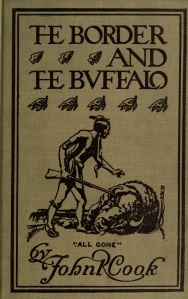
Recently I worked on proofing one of these, a 1907 autobiography, The Border and the Buffalo: An Untold Story of the Southwest Plains, by John R. Cook. Cook participated in the slaughter of what is now believed to have been about 4.5 million American buffalo in a few years during the 1870s. Alarmed by the prospect of the buffalo’s extinction, several states, including Colorado and Kansas, had outlawed wholesale slaughter of buffalo. But not everyone thought that was a good idea. When the Texas Legislature met regarding a bill drawn up for the protection of buffalo,
General Phil. Sheridan … went to Austin, and, appearing before the joint assembly of the House and Senate, told them that they were making a sentimental mistake by legislating in the interest of the buffalo…. He said: “These men have done in the last two years and will do more in the next year, to settle the vexed Indian question, than the entire regular army has done in the last thirty years. They are destroying the Indians’ commissary; and it is a well-known fact that an army losing its base of supplies is placed at a great disadvantage. Send them powder and lead, if you will; but, for the sake of a lasting peace, let them kill, skin, and sell until the buffaloes are exterminated. Then your prairies can be covered with speckled cattle, and the festive cowboy, who follows the hunter as a second forerunner of an advanced civilization.”
I was aware that the buffalo slaughter had occurred, but had no idea of the role Sheridan had in encouraging it, nor that it was an intentional strategy to control the Native American populations and to open up the prairies for cattle. I had thought it was just the shortsightedness of individuals seeing the opportunity for financial gain and not realizing, or perhaps not caring, about their impact on the long-term survival of the species. They reduced the population of buffalo from multiple millions to what is believed to be only 300 in 1900. Today, with conservation efforts, the American buffalo population has increased to about half a million.
The hunters were after the hides and sometimes the tongues, which they dried and shipped east. In what appears to be an exception, Cook tells us about the Moore brothers, who “dried tons and tons of meat for a St. Louis firm.” In most cases, after killing the buffalo for their hides, the hunters left the rest behind.
But all was not wasted. When the army of hunters had annihilated those massive, sturdy creatures, the hair and bone scavengers followed them up with four- and six-horse, mule, or ox teams. They gathered up and hauled to the nearest railroad station every vestige of buffalo hair and bones that could be found.
I saw in 1874, the year before the great buffalo slaughter began in earnest, a rick of buffalo bones, on the Santa Fe railroad right-of-way, and twenty miles ahead of the track from Granada, Colorado, piled twelve feet high, nearly that wide at the base, and one-half mile long. Seven, eight, nine, and ten dollars per ton was realized from them alone.
I was also interested in the fact that individuals who had fought on opposite sides of the American Civil War, just a few years later, were working together in the American West. One group is described thus:
There were several ex-Confederate soldiers and Union ex-soldiers who had joined issues in a common cause. There were three school-teachers. All the party were native-born Americans with the exception of the two Englishmen, whose camp had been destroyed.
In the following tale they seemed to have more in common in the fact that they had had military experience than in the fact they had fought on opposite sides.
This book is written in an entertaining style. Cook introduces the reader to many characters of the time and tells interesting stories about them: the man who doesn’t realize he can use a left rear wagon-wheel to replace a damaged right rear wheel by turning it around—later known as Wrong-Wheel Jones; a horse that plays lame and dead and allows his owner to use his head as a gun rest; and Cook’s meeting with Pat Garrett, the man who later became sheriff of Lincoln County, New Mexico, and who killed Billy the Kid.
Through Cook we meet Smoky Hill Thompson, Squirrel-eye, Limpy Jim Smith, Wild Skillet, Crazy Burns, Buffalo Jones, Dirty-Face Jones, Arkansaw Jack, and Powder-Face Hudson, and sometimes we learn the source of their nicknames.
Cook also shows some regret at the slaughter he was involved in. Whether it really occurred at the time as represented, or whether it came to him when he wrote his autobiography some thirty years later, he reflects:
I then thought: What fertile soil! And what profitable and beautiful homes this region would make if only moisture were assured! How seemingly ruthless this slaughter of the thousands of tons of meat, one of the most wholesome and nutritious diets, as a rule, in the world!… Then a slight feeling of remorse would come over me for the part I was taking in this greatest of all “hunts to the death.” Then I would justify myself with the recollection of what General Sheridan had said; and I pictured to myself a white school-house on that knoll yonder where a mild maid was teaching future generals and statesmen the necessity of becoming familiar with the three R’s. Back there on that plateau I could see the court-house of a thriving county seat. On ahead is a good site for a church of any Christian denomination.
In addition to stories about killing buffalo, Cook tells many tales of encounters with Indians, personal stories of other travelers, and accounts of experiences while traveling through the American West in its last days before development. He provides an entertaining and insightful view of a time and place experienced and documented by only a few travelers. He wraps up one of his stories: “And this is just simply another of the many remarkable incidents that happened on the Range during the passing of the buffalo.”
This post was contributed by WebRover, a DP volunteer.


 Posted by LCantoni

 “Decorated by Walter Crane.”
 Today, children’s books have to compete with a huge range of different entertainment options, and they have first and foremost to appeal to the child. In a previous age they were bought by parents for their children, and it seems to me that a major requirement was to give the child a strong moral compass. If you’re thinking that’s the same today, I would encourage you to take a look at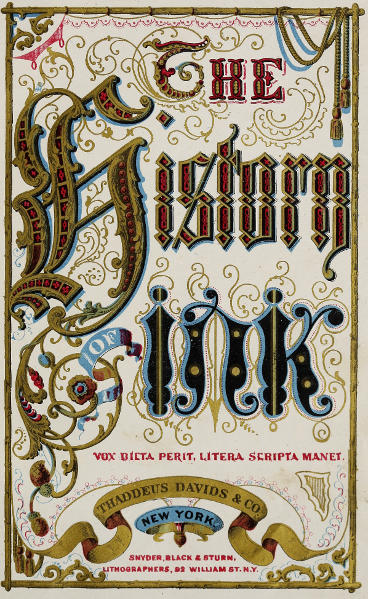


 Shakespeare, Wordsworth, Coleridge, Dobell, Stevenson, Tennyson, Scott, Blake, Shelley … did you have a favourite poet when you were a child? A century ago, Kenneth Grahame put together a collection of poems from some of the most well-known and packaged them as


Comments That Matter!
September 1, 2016So I came back. I found the forum. I posted there. Back came comments. Recognizing that I was new, people said, “Welcome to DP!” I got validation that the “diff” (i.e., change) that someone made to my edited page did not mean I’d made a mistake. Sometimes changes are made because of ambiguity. Sometimes different people interpret the same wording differently. Sometimes I understood the guidelines and the person after me did not. “Welcome to DP!” “Your questions matter.” “Thanks for asking.” These are comments that make a difference!
The managers of the projects (mostly books) that we work on create project comments. They tell us a little about the book or the author. They emphasize items in the Guidelines that we will see in the project and need to deal with. They point out things that are not in the guidelines that may cause questions and provide answers before we need to ask. They may ask us to do something a little different than the usual in this one project. From these comments we decide if this is the right project for us to work on. These are comments that matter!
In the Forums we post about Distributed Proofreaders aspects we care about. There’s change we want, functionality we want, Guidelines we want changed, Guidelines we want clarified, Guidelines we have different opinions on, language support we want, where we believe we need to focus efforts, where we feel we’re bogging down, what we have resources for, what we don’t. Because we care, we’re passionate. What we comment matters. How we comment matters!
Comments that welcome us. Comments that guide us. Comments that appreciate our efforts. Comments that push us to grow. Comments that help us as we each strive to leave each page better than we found it. These are comments that matter! These are comments made by volunteers who matter!
This post was contributed by WebRover, a DP volunteer.
Share this: