The Pony Express

May 13, 2012

When I was about seven, I read a story about the Pony Express in a book my grandparents had given me. This fascinated me, the idea of young men galloping through the wilderness to deliver mail, fighting off Indians and thundering into a depot to pass the mail on to the next rider. The Pony Express rider who was featured was Bill Cody, Buffalo Bill. The Pony Express only lasted for a couple of years, moving mail rapidly east and west in the old American West until tracks were laid and mail was shipped by train.

I had to write a report in elementary school on a topic about the development of the American West and was able to use the Pony Express as the central theme of my report. I had access to general reference books, history books, and Encyclopedias, but no first-hand accounts of the time.

How exciting, then, for me to get to work on two books here at Distributed Proofreaders, in a period of a few weeks, with accounts of the Pony Express and the settling of the West. These books were written by two men who were in the center of the events.

The first book is an autobiography, The Adventures of Buffalo Bill by Col. William F. Cody, published in 1904. Bill Cody was a teenaged rider for the Pony Express and told personal accounts of some of his rides. This book also imparted that Alexander Majors initiated the Pony Express and was Buffalo Bill’s boss.

The second book is Seventy Years on the Frontier, the autobiography of Alexander Majors, published in 1893. Majors shares from his unique viewpoint the changes he saw and contributed to in his lifetime. I had never really thought about the business and political sides of setting up the Pony Express and found these very interesting.

Without Distributed Proofreaders I never would have discovered either of these books. I am so pleased to have an opportunity to work on these accounts, written by the people involved, in the time period these events occurred. How much more interesting would my elementary school report have been had I had access to these books!

From The Adventures of Buffalo Bill (told in the third person):

When the time came for him to be ready for the first trip the boy was outside of his station with his pony ready, looking across the prairie for the rider who was to bring the mail pouches from the next station. Close upon time the man appeared. Drawing up to the station he jumped off, threw the bag to Cody, who in turn leaped into his saddle with it and started on his fifteen miles. He reached his first station on time, dismounted, and mounted a fresh pony which was standing ready, and started on the second relay. And so with the third, until he finished his thirty-five miles and threw the bag to the next man, who was waiting. And within an hour he was ready again for the rider coming from the direction of San Francisco. As soon as he had the mail he mounted a fresh pony and rode back over the same thirty-five miles.

Thus the boy did seventy miles every day for three months.

From Seventy Years on the Frontier:

Among the most noted and daring riders of the Pony Express was Hon. William F. Cody, better known as Buffalo Bill, whose reputation is now established the world over. While engaged in the express service, his route lay between Red Buttes and Three Crossings, a distance of 116 miles. It was a most dangerous, long, and lonely trail, . . . An average of fifteen miles an hour had to be made, including changes of horses, detours for safety, and time for meals. Once, upon reaching Three Crossings, he found that the rider on the next division, who had a route of seventy-six miles, had been killed during the night before, and he was called on to make the extra trip until another rider could be employed. This was a request the compliance with which would involve the most taxing labors and an endurance few persons are capable of; nevertheless, young Cody was promptly on hand for the additional journey, and reached Rocky Ridge, the limit of the second route, on time. This round trip of 384 miles was made without a stop, except for meals and to change horses, and every station on the route was entered on time. This is one of the longest and best ridden pony express journeys ever made.

Again from Seventy Years on the Frontier:

The quickest time that had ever been made with any message between San Francisco and New York, over the Butterfield line, which was the southern route, was twenty-one days. Our Pony Express shortened the time to ten days, which was our schedule time, without a single failure, being a difference of eleven days. . . .
Two important events transpired during the term of the Pony’s existence; one was the carrying of President Buchanan’s last message to Congress, in December, 1860, from the Missouri River to Sacramento, a distance of two thousand miles, in eight days and some hours. The other was the carrying of President Lincoln’s inaugural address of March 4, 1861, over the same route in seven days and, I think, seventeen hours, being the quickest time, taking the distance into consideration, on record in this or any other country, as far as I know.

These books are not just about the short-lived Pony Express, but cover many aspects of both men’s lives, times and observations. This level of detail, history and sense of excitement was not in the reference books I had access to. I am thrilled to be able to help preserve books like these.

Seventy Years on the Frontier is still in progress at Distributed Proofreaders. A link to the book will be added once it has been posted at Project Gutenberg. Edit February 26, 2013: Seventy Years on the Frontier has now been posted to Project Gutenberg.


Music and Some Highly Musical People

February 9, 2012

When we think of 19th-century classical music, our minds tend to turn first to the many great European composers and performers who graced the Romantic era. Americans did not really make their mark on classical music until the 20th century. And African-Americans lagged even farther behind—but it was not for lack of trying. After Emancipation, former slaves and the children of slaves participated, as composers and performers, in a rich cultural world that deserves to be studied and remembered.

In Music and Some Highly Musical People, written in 1878, James Monroe Trotter (1842-1892) brings this world to life, with biographical accounts of the notable African-American musicians of the day. Trotter explains his motive for writing the book in his Preface:

While grouping, as has here been done, the musical celebrities of a single race; while gathering from near and far these many fragments of musical history, and recording them in one book,—the writer yet earnestly disavows all motives of a distinctively clannish nature. But the haze of complexional prejudice has so much obscured the vision of many persons, that they cannot see (at least, there are many who affect not to see) that musical faculties, and power for their artistic development, are not in the exclusive possession of the fairer-skinned race, but are alike the beneficent gifts of the Creator to all his children.

James M. Trotter

James M. Trotter

Trotter himself had an interesting history. His mother was a Mississippi slave; his father was her white master. She escaped with Trotter and his brother via the Underground Railroad and settled in Ohio. Trotter became a teacher, and, during the Civil War, enlisted in the Union Army, becoming the first African-American to achieve the rank of Second Lieutenant. He later became the first African-American to be employed by the U.S. Post Office, but resigned in protest when discrimination prevented his promotion. In 1887, President Cleveland appointed Trotter to the office of Recorder of Deeds for the District of Columbia, then the highest government position to be attained by an African-American.

In Music and Some Highly Musical People, Trotter subtly makes his point for equality through his generous portraits of a variety of musical artists. He describes in rich detail their humble beginnings, their perseverance in spite of poverty and prejudice, and their successes. Many of these musicians found a more welcoming home in Europe. The composer Lucien Lambert, for example, “grew restive under the restraints, that, on account of his complexion, were thrown around him in New Orleans. He longed to breathe the air of a free country, where he might have an equal chance with all others to develop his powers: and so, after a while, he went to France; and, continuing his studies in Paris under the best masters of the art, he rapidly attained to great skill in performance and in composition.”

A delightful feature of Trotter’s book is an Appendix containing 13 lovely compositions by some of the composers featured in the text. In Project Gutenberg’s edition, you can hear the music for each piece by clicking on the [Listen] link in the HTML version, and the pieces can be printed out as PDF sheet music.

Distributed Proofreaders posted this book to Project Gutenberg in celebration of Black History Month 2009.

This post was contributed by Linda Cantoni, a Distributed Proofreaders volunteer.


Annie Brassey’s Voyages

January 15, 2012

On September 14, 1887, at sunset, the body of a woman was committed to the sea midway between Christmas Island and the northwestern coast of Australia. Her grieving husband and their four children stood by to pay their last respects, along with the entire crew of the vessel on which they had been sailing for nearly a year.

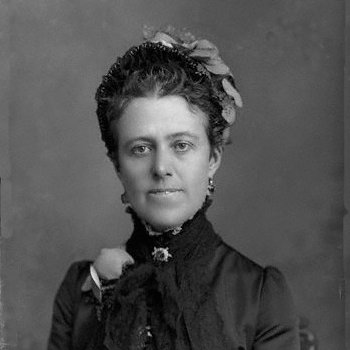
Annie Brassey

Annie Brassey

The vessel was the yacht Sunbeam, and the woman was 47-year-old Lady Brassey—Annie Brassey, as she styled herself—one of the most celebrated travel writers of her day. Her lengthy voyages with her husband, Sir Thomas Brassey, and their children were simply and beautifully recorded in several lavishly detailed and illustrated books. The volunteers at Distributed Proofreaders have preserved two of them for posterity at Project Gutenberg: the first, A Voyage in the ‘Sunbeam’, published in 1878; and the last, The Last Voyage, published posthumously in 1889.

Annie Brassey was born Anna Allnutt in London in 1839. Her privileged childhood did not spare her from serious health problems. In a memoir of her life published in The Last Voyage, her husband recounted that she suffered from an inherited “weakness of the chest,” apparently in the form of chronic bronchitis. As a young woman, she suffered severe burns when she stood too close to a fireplace and her crinolined skirt caught fire; it took her six months to recover.

When she was 21, Annie married Thomas Brassey, the son of a prominent railway contractor. Thomas was a Member of Parliament who later became Lord of the Admiralty and Baron Brassey of Bulkeley. Annie and Thomas had five children; one of them, Constance, died in 1873 at age five. Annie, despite her chronic illnesses, busied herself with her family and with charitable work, becoming a tireless supporter of the St. John Ambulance, an organization devoted to providing and teaching first aid.

Thomas was a keen yachtsman, and on July 1, 1876, he, Annie, and the children (ranging in age from one to 13) set off to circumnavigate the globe in the Sunbeam—said to be the first private yacht to do so. This was no Kon-Tiki—the Sunbeam was a steam-assisted schooner, and the family and crew totaled 43 people.

Nonetheless, in the nineteenth century, traveling around the world was neither safe nor comfortable, as the Brasseys well knew from prior, shorter voyages. In 1869, Annie had contracted malaria while traveling through the Suez Canal; the disease plagued her for the rest of her life.

But it did not stop her. She entered into the first voyage of the Sunbeam with great enthusiasm, writing extensive letters to her family in England, in which she detailed all the wonders of the exotic lands they visited. Her family urged her to publish these letters in the form of a journal, and the result was A Voyage in the ‘Sunbeam’.

Annie’s journal entries demonstrate a keen eye for observation, boundless curiosity, and a profound sympathy for humankind. It is no wonder that A Voyage in the ‘Sunbeam’ became an instant best-seller. The grace and simplicity of her writing bring the voyage vividly to life, often with understated humor. Here, for example, is her account of what happened after the yacht came through a severe storm:

Soon after this adventure we all went to bed, full of thankfulness that it had ended as well as it did; but, alas, not, so far as I was concerned, to rest in peace. In about two hours I was awakened by a tremendous weight of water suddenly descending upon me and flooding the bed. I immediately sprang out, only to find myself in another pool on the floor. It was pitch dark, and I could not think what had happened; so I rushed on deck, and found that, the weather having moderated a little, some kind sailor, knowing my love of fresh air, had opened the skylight rather too soon; and one of the angry waves had popped on board, deluging the cabin.

Despite Annie’s ill health, the voyages continued, in part because winters in London (with its then dreadful fogs of pollution) were intolerable to her. In the 1880s she published other travelogues, including In the Trades, the Tropics, and the Roaring Forties (1885), currently in progress at DP.

Annie’s last voyage on the Sunbeam began in January 1887. The family toured India and then set sail for Ceylon, explored Burma, Borneo, and nearby islands, and circumnavigated Australia, with fascinating side-trips to the major towns and even into the bush. She participated in these tours in spite of renewed attacks of malarial fever, and throughout her time in Australia she actively promoted the St. John Ambulance.

But the disease that had beset her for so long finally took its toll. Annie wrote her last published journal entry on August 29, 1887, as the Sunbeam lay at Thursday Island, off Cape York in Queensland, Australia. She was so ill that she needed to be carried in a chair as she toured the island that day, but she pressed on, and even discussed starting a chapter of the St. John Ambulance with the local residents.

Thereafter, as her friend and editor, M.A. Broome, puts it in the Preface to The Last Voyage, Annie’s journal entries “are simple records of suffering and helpless weakness, too private and sacred for publication.” She made her last private entry four days before she died. In her husband’s tender memoir in The Last Voyage, addressing their children, he said, “We have seen how your mother used her opportunities to make the world a little better than she found it. . . . I could never tell you what your mother was to me.”

Annie Brassey, with her inspiring courage and humanity, left the world a beautiful legacy in her fascinating journals.

Note: In 1922, the Sunbeam was sold to Sir Walter Runciman. Sir Walter, as it happens, was a distant relative of the late Steven Gibbs, the DP volunteer who provided the scans of The Last Voyage.

This post was contributed by Linda Cantoni, a Distributed Proofreaders volunteer.


Annals of the Bodleian Library

December 18, 2011

I recently smooth-read Annals of the Bodleian Library. I was a bit familiar with the holdings of the Bodleian Library, because they have one of the very best collections of illuminated manuscripts in the world. So when a book that seemed to be describing the holdings of the Bodleian entered the Smooth-Reading Pool, I thought I’d take a look.

I learned many things about the library. First, I learned that it started out in St. Mary’s Church, in a room just 45 feet long and 20 feet wide. It was established by Bishop Thomas Cobham in 1367. I remember seeing prints of Medieval libraries, with books chained to the shelves so that they could not be removed. The Bodleian started out with chained books, too. Apparently, before 1367,

… there were indeed some books kept in chests in St. Mary’s Church, which were to be lent out under pledges, as well as some chained to desks, which were only to be read in situ; but this University chest soon gave way to the formal Library …

Many of the first books were donated by Duke Humphrey of Gloucester, who funded most of the building of the library and school of divinity in 1426. “… Between the years 1439 and 1446 he appears to have forwarded about 600 MSS, which were for the time deposited in chests in Cobham’s library….” Because of the generosity of Duke Humphrey, it soon became necessary to build another building, which at the time Annals was written was still the main reading room at the Bodleian. The Duke stipulated that anyone who made a donation (or at least a significant donation) was to be remembered in the prayers of the church on the anniversary of their donation; it was agreed that this would be in perpetuity.

I was shocked when I read the following:

… the Library was destroyed. For in 1550 the Commissioners deputed by Edward VI for reformation of the University visited the Libraries in the spirit of John Knox, destroying, without examination, all MSS. ornamented by illuminations or rubricated initials as being eminently Popish, and leaving the rest exposed to any chance of injury and robbery. The traditions which Wood has recorded as having been learned at the mouths of aged men who had in their turn received them from those who were contemporaneous with the Visitation, are abundantly confirmed by the well-known descriptions of Leland and Bale of what went on in other places, and therefore, although no direct documentary evidence of the proceedings of the spoilers is known to exist, we may believe that Wood’s account of pillage and waste, of MSS. burned, and sold to tailors for their measures, to bookbinders for covers, and the like, until not one remained in situ, is not a whit exaggerated. One solitary entry there is, however, in the University Register (I. fol. 157a), which, while it records the completion of the catastrophe, sufficiently thereby corroborates the story of all that preceded, viz. the entry which tells that in Convocation on Jan. 25, 1555-6, ‘electi sunt hii venerabiles viri, Vice-cancellarius et Procuratores, Magister Morwent, præses Corporis Christi, et Magister Wright, ad vendenda subsellia librorum in publica Academiæ bibliotheca, ipsius Universitatis nomine.’ The books of the ‘public’ library had all disappeared; what need then to retain the shelves and stalls, when no one thought of replacing their contents, and when the University could turn an honest penny by their sale? and so the venerabiles viri made a timber-yard of Duke Humphrey’s treasure-house….

Now I know why there are so many fragments of illuminated manuscripts floating around! I’ve often wondered why only bits and pieces of some of the most beautiful manuscripts were preserved.

And then came Mr. Thomas Bodley. He entered Magdalen College, and soon became interested in re-establishing a library. The author says,

… All around him he doubtless found traces of the recent destruction; his stationer may have sold him books bound in fragments of those MSS. for which the University but a century before had consecrated the memory of the donors in her solemn prayers; the tailor who measured him for his sad-coloured doublet, may have done it with a strip of parchment brilliant with gold, that had consequently been condemned as Popish, or covered with strange symbols of an old heathen Greek’s devising, that probably passed for magical and unlawful incantations. And the soul of the young student must have burned with shame and indignation at the apathy which had not merely tolerated this destruction by strangers, but had contentedly assisted in carrying it out to its thorough completion. Himself a successful student, he became eager to help others to whom thus the advantages of a library were denied….

Then follows the history of Mr. Bodley’s donation of the library building, and the donations of books he purchased. The Annals continue with a year-by-year listing of what the author considered to be the most important purchases and donations for each year, up through 1867. It sounds boring, I know. But, to a book-lover, it’s fascinating reading. I was intrigued to see that it wasn’t just rich people who gave donations to the libraries. It was also families whose book collections spread across generations. It was an individual who stumbled across a manuscript he felt would be of interest when shopping in a souk in Turkey. Donations came from musicians, architects, historians, and “everyday” people who knew someone who knew someone who had heard of the Bodleian Library.

At the time that this book was written, only certain people were allowed to use the books in the Bodleian. I’m curious to know if that’s still true. I know that I can research the illuminated manuscripts on-line. There are digital photos of all of them, which can be accessed from my home computer. I think Mr. Bodley would be excited and pleased about that. He knew the value and importance of books and that they be made available to a wide range of readers.

The appendices are almost as much fun as the rest of the book. They give detailed descriptions of some of the collections and how the library came to possess them.

I think this book is a valuable addition to PG. I hope you’ll set aside some time (be forewarned: it’s a long book, heavily footnoted) to do some exploring within its pages.


Sir George Howard Darwin: Scientific Papers, Volume 5

November 25, 2011

George Howard Darwin was the fifth child of Charles and Emma Darwin, though only the third to survive to adulthood. Like his brothers Francis and Horace, George had a distinguished scientific career, and, among many other honors, was elected a Fellow of the Royal Society. As President of the Cambridge Philosophical Society, George Darwin presided over the fifth International Congress of Mathematicians (ICM) just a few months before his death.

George Darwin’s scientific works are collected in five volumes. The fifth volume, completed at Distributed Proofreaders in March 2011, contains papers, lectures, addresses, and posthumous reminiscences, and will be of interest to historically- and scientifically-minded readers. The book is the first work by George Darwin to appear at Project Gutenberg.

The essay of widest general appeal is the “Memoir of Sir George Darwin”, written by his brother, Sir Francis Darwin, with contributions from scientists and other family friends. This memoir paints a vivid, intimate portrait of the Darwins’ family life, and the environs of their home in Down, a country town 20 miles from London. We watch as George grows from a touchingly precocious boy into a talented student of mathematics at Cambridge, and finally into a mature scientist, renowned astronomer, and energetic administrator of academic societies. Ultimately, Sir Francis’s memoir evokes bittersweet pangs of loss: One feels that a beloved and humane Victorian scientist, whom one had known since his childhood in the 1850s, had recently died at the untimely age of 67. With a century’s retrospect, Sir George’s passing in late 1912 signaled the close of the era of British naturalism exemplified by the Darwin sons and their illustrious father Charles.

Darwin’s “Inaugural Lecture”, delivered at Cambridge in 1883 upon his election to the Plumian Professorship, contains advice to students that is still relevant in our era of standardized testing, college rankings, and performance-based funding of school districts. His 1912 address to the ICM, delivered at the end of his career, gives a snapshot of mathematics in the early 20th Century, and movingly expresses Darwin’s scientific gratitude to the great mathematician and physicist Henri Poincaré, who had died just weeks previously.

A chapter by Professor Ernest Brown of Yale University surveys Darwin’s scientific work. Darwin’s lasting contribution is his work on the tides, a deceptively simple problem requiring analysis of the gravitational attractions of elastic bodies. (His famous book “The Tides” describes his fascinating but ultimately futile attempts to build a mechanical measuring device sensitive enough to measure the diurnal deformation of the earth as it rotates in the moon’s gravitational field.)

The present volume also contains two examples of Darwin’s work in mathematical astronomy. The lectures on “Hill’s Lunar Theory” sketch the main physical and mathematical ideas in Hill’s detailed technical account. The article “On Librating Planets” is Darwin’s final published paper. Admittedly technical, the paper gives the reader a glimpse into the laborious manual methods of computation required prior to the advent of electronic computers, yet also exploits modern topological arguments, pioneered by Poincaré, for proving the existence of closed orbits.

Though parts of this volume will appeal mostly to readers with advanced undergraduate training in mathematics or physics, the book also contains material that all readers can enjoy, and, like many ebooks produced at Distributed Proofreaders, forges memorable links with the lives and times of years past.

This review was contributed by DP-volunteer adhere.


Little Women

August 17, 2011

I was so excited when I found Little Women in the smooth-reading pool at DP. I love this book! Sometime in my late teens, I lost count of how many times I had read it. When I saw that this edition included a lot of illustrations, I was even more excited. The versions I read as a child and young adult had only a few illustrations, and it’s always fun to see how artists interpret stories. I’ll be looking for the e-book release of the story, so I can see the illustrations.

I love this book because I am Jo and Jo is me. I’m the middle child of eight, surrounded by four brothers. I’m a bit of a klutz, I wanted to be an author, I was socially inept, and who wouldn’t want to be loved by the handsome (rich!) boy next door? When things were going badly for me, or when my brothers had been their usual insufferable selves, I would retreat to Jo’s attic in my mind, and re-read Little Women. I found refuge, consolation, and wisdom in the pages of this story.

The characters in the story are based on Louisa May Alcott,  her sisters, and their lives. To me, the characters are real and vivid. Perhaps because I have so many siblings, I can see that it’s entirely possible for four sisters to have totally different personalities. I completely understand Jo’s frustration when Amy is being particularly supercilious or mean. I understand how Meg can make a complete and total disaster of cooking dinner, and be teased about it at the same time as the sisters pitch in to help clean up the mess—a real-life experience for my oldest sister and me. I know why Beth is shy and doesn’t speak up much. Jo’s frustrations and anger about the world changing rapidly around her mirrored my own feelings as a teenager who had no control over circumstances around me. Amy’s desperation to be considered socially acceptable is the same desire young women feel in today’s world, although we don’t trade pickled limes in order to be one of the gang.

There are some very funny moments (for instance, when the set collapses during one of the stage shows written by Jo, or when Aunt March’s parrot talks to Laurie), and some very sad moments which I won’t specify to avoid spoiling the story for new readers. The moralizing can be a little heavy-handed, although for the time that the book was written, it would have been fairly normal. Some modern readers will be clueless about the references to Pilgrim’s Progress; perhaps they can use those references as an opportunity to learn even more about the world the little women lived in. The moral truths in the story can easily be found, and are as applicable today as they were in the 1800s.

If I were a young lady today, looking for an engrossing story that could tear me away from the world of tweets, emails, youtube, and facebook, I would try this book. I hope that many new readers will discover the joy of reading Little Women when it goes to Project Gutenburg. Maybe some mothers and daughters will read it together. Grandmothers could read the story to granddaughters, thereby cementing a bond between themselves. I have big dreams for this book’s future!


Love and Hatred

June 7, 2011

“Oh, but this is terrible—”

Laura Pavely did not raise her voice, but there was trembling pain, as well as an almost incredulous surprise, in the way she uttered the five words which may mean so much—or so little.

The man whose sudden, bare avowal of love had drawn from her that low, protesting cry, was standing just within the door of the little summer-house, and he was looking away from her, straight over the beautiful autumnal view of wood and water spread out before him.

He was telling himself that five minutes ago—nay, was it as long as five minutes?—they had been so happy! And yet, stop—he had not been happy. Even so he cursed himself for having shattered the fragile, to him the already long perished, fabric, of what she no doubt called their “friendship.”

Thus begins a tale of unrequited love, jealousy, and murder. The book is Love and Hatred, written by Mrs. Belloc Lowndes and published in 1917. The setting is the English countryside.

It is not a fun read (since the characters are basically good people in a bad situation with bad consequences), but it is a fascinating read. What makes it fascinating is the full characterization of the people described.

The recipient of the undesired avowal of love is Laura Pavely, who first appears to be merely a cold woman placed upon a pedestal by admirers, but first impressions are often wrong. It is not that she is incapable of love, she loves her daughter deeply.

The maker of the avowal of love is Oliver Tropenell, a neighbor and family friend. He befriends Laura’s husband to please Laura, but hates the inability of her husband to make her happy and thinks she deserves someone better (i.e., himself).

The third party of this triangle is the husband, Godfrey Pavely, who also places Laura on a pedestal, but has a jealous mistress (the banking profession). He is better at banking than he is at satisfying the unstated needs of his wife, and his customers hold him in high esteem.

The fourth party of this triangle is Godfrey’s good friend (and past lover), Katty Winslow:

It is a great mistake to think that coldness and calculation always go together. Katty Winslow was calculating, but she was not cold. For once she had been quite honest when writing that odd little postscript to her letter of thanks for Godfrey Pavely’s wedding present. Godfrey had, in very truth, been her first love, and she had suffered acutely in her heart, as well as in her pride, when he had run away. Even now, she felt as if there were a strong, secret, passionate link between them, and there was no day when she did not tell herself that she would have made the banker a perfect, and yes—a very happy wife.

Life would have been so much simpler if Godfrey had married Katty, instead of Laura. Godfrey could communicate with Katty in a way that he couldn’t communicate with his wife, and Laura could communicate with Oliver in a way that she couldn’t communicate with her husband. But then, we don’t always make the right decisions, and these are responsible people who honor their commitments, even when the commitments were unwisely made.

Viewing all this is Oliver’s mother, whose joy is “to fall in with even the least reasonable of her son’s wishes.” And yet, she feels a vague, exasperating sense of restlessness and unease about what she sees. It is as if she is the only one seeing that two approaching trains are on the same track.

Train wrecks can be morbidly interesting, and emotional train wrecks can be fascinating when caused by tragic flaws in characters we care about. Love and Hatred presents such an emotional train wreck.


Renaissance in Italy: Italian Literature, by John Addington Symonds

May 26, 2011

The Renaissance — French for “rebirth” — was a period of re-flowering for art and literature after the gloom of the Dark Ages. From the 14th through the 16th Centuries, artists and writers all over Europe created an amazing body of masterworks whose beauty and intensity still bring joy to us today. And Italy — though not yet a unified nation — was the birthplace of this re-flowering.

Renaissance in Italy is a monumental series of treatises by English literary critic John Addington Symonds (1840-1893), covering virtually all aspects of the subject. The first three volumes cover the fragmented political landscape of the time; the rise of Humanism; and a detailed study of the great Italian architects, sculptors, and painters.

The fourth and fifth volumes, Italian Literature (Part I, Part II), brilliantly examine Italian literary masters, from Dante to Machiavelli. For Symonds, the Golden Age of Italian literature took place between 1300 and 1530, when poets and essayists moved away from Latin and composed their best works in their native Italian dialects — particularly Tuscan, which became the basis for modern Italian. Sicilian and Provençal troubadours of the 13th Century, writing in their own languages, led to the “dolce stil novo” (sweet new style) of Dante and other poets writing in the Tuscan dialect. The highest expression of this style was, of course, Dante’s Divine Comedy.

From this linguistic and literary transition sprang all that followed: Boccaccio and his Decameron, Ariosto and his Orlando Furioso, Machiavelli and his Prince, and many other masterpieces by many other masters in between. Symonds recognized that Italy’s greatest literature was also born of the artistic ideals of ancient Rome:

When all her deities were decayed or broken, Italy still worshiped beauty in fine art and literary form. When all her energies seemed paralyzed, she still pursued her intellectual development with unremitting ardor… They wrought, thought, painted, carved and built with the antique ideal as a guiding and illuminative principle in view. This principle enabled them to elevate and harmonize, to humanize and beautify the coarser elements existing in the world around them. What they sought and clung to in the heritage of the ancients, was the divinity of form — the form that gives grace, loveliness, sublimity to common flesh and blood in art; style to poetry and prose; urbanity to social manners; richness and elegance to reflections upon history and statecraft and the problems of still infantine science.

Renaissance in Italy: Italian Literature (Part I) was part of DP’s 20,000 titles celebration. The entire Renaissance in Italy series is available at Project Gutenberg: The Age of the Despots, The Revival of Learning, The Fine Arts, Italian Literature (Part I), Italian Literature (Part II), and The Catholic Reaction (Parts I and II).

Banner for DP's 20k celebration

This post was contributed by Linda Cantoni, a Distributed Proofreaders volunteer.


Curious Myths of the Middle Ages

May 19, 2011

Curious Myths of the Middle Ages, written by S. Baring-Gould, M.A., is fascinating. When I first saw the title, I thought, “Oh, this will be fun. It’ll be about werewolves, and vampires, and ‘… ghosties and ghoulies and long-leggity things that go bump in the night!'” But it is not about those myths. This book deals with myths having to do with Christianity. The stories and the origins of the myths make for enthralling reading, at least to me.

One of the legends intrigued me by its title: The Wandering Jew. Now, I am familiar with a plant by that name. It’s a vine, which has dark green leaves with purple lines in them, and it propagates by growing along the ground and putting down roots anywhere one of its joints touches the ground. I thought, “I’m finally going to find out why this plant has that name!” I was wrong: the myth recounted in the book is about a man called The Wandering Jew, who was made to wander the Earth till the return of Christ. The Jew was condemned to wander because he refused to let Jesus rest in the man’s doorstep on His way to Calvary.

Divining RodAnother myth that was interesting to me was the legend of the divining rod. Now, I’ve used divining rods myself, to find water and underground pipes. I know that something weird happens, when I use them. My rods were not made of hazel wood or any other “magical” wood, but of whatever sticks were laying around. So, it was interesting to me to read about the efforts on the parts of scientists to prove or disprove whether divining rods actually work. The author comes to the conclusion that it is most likely that divining rods work because of muscle tremors, but he cannot say for sure. Another way to divine things was to suspend a ring over various metals, and by the rotation of the ring one could determine the type of metal. The author did an experiment himself:

I remember having been much perplexed by reading a series of experiments made with a pendulous ring over metals, by a Mr. Mayo: he ascertained that it oscillated in various directions under peculiar circumstances, when suspended by a thread over the ball of the thumb. I instituted a series of experiments, and was surprised to find the ring vibrate in an unaccountable manner in opposite directions over different metals. On consideration, I closed my eyes whilst the ring was oscillating over gold, and on opening them I found that it had become stationary. I got a friend to change the metals whilst I was blindfolded—the ring no longer vibrated. I was thus enabled to judge of the involuntary action of muscles, quite sufficient to have deceived an eminent medical man like Mr. Mayo, and to have perplexed me till I succeeded in solving the mystery.

Most of us have heard the familiar “William Tell Overture.” It’s the music most famously played at the beginning of “The Lone Ranger.” I knew the story: William Tell must shoot an apple off the head of his son, to prove his prowess as a bowman. But, I did not know that this legend was widespread across the Medieval world, and was not just a Swiss story. The author describes how the myth originated, and retells versions from Scandinavia, England, Scotland and the Faroe Islands, and even a Persian version. He says,

The coincidence of finding so many versions of the same story scattered through countries as remote as Persia and Iceland, Switzerland and Denmark, proves, I think, that it can in no way be regarded as history, but is rather one of the numerous household myths common to the whole stock of Aryan nations. Probably, some one more acquainted with Sanskrit literature than myself, and with better access to its unpublished stores of fable and legend, will some day light on an early Indian tale corresponding to that so prevalent among other branches of the same family. The coincidence of the Tell myth being discovered among the Finns is attributable to Russian or Swedish influence. I do not regard it as a primeval Turanian, but as an Aryan story, which, like an erratic block, is found deposited on foreign soil far from the mountain whence it was torn.

One of the most interesting chapters is the one about numbers and numerology. I wonder if Dan Brown read this treatise on the sigificance of various numbers, before he wrote The Da Vinci Code. I doubt that he did, because I think if he had, that book never would have been written! Baring-Gould does a good job of debunking numerology.

Pope Joan

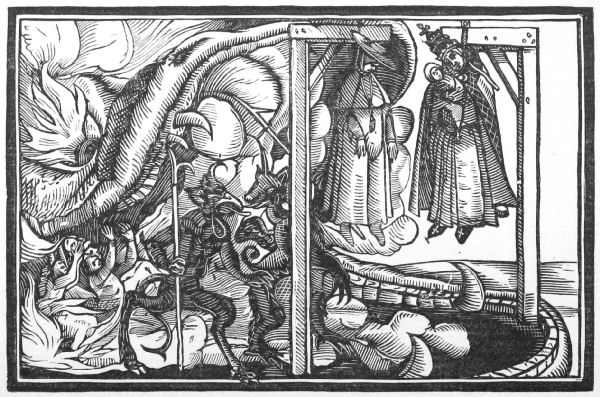
I think anyone interested in mythology of the Medieval period would find this book a valuable resource. Baring-Gould is careful to explain the far distant origins of many of the myths. While he clearly detests Lutherans and some other Protestants, his work is quite interesting. Many of the myths (such as Prester John, and Pope Joan) are ones I had never heard. Others are old favorites like William Tell—but they have origins that I did not know before I read this book.


The status of Working Women of Japan

March 22, 2011

A Japanese proverb from the WWII post-war period says:「戦後強くなったのは女性と靴下。」It translates as “After the war, two things became stronger: women and socks.” Women had gotten stronger thanks to new laws that granted them the right to vote, and other rights. The socks had gotten stronger because of nylon.

To see how much has changed, read Sidney L. Gulick’s “Working Women of Japan.” It shows what the life of working Japanese women was like in 1915 and the years before.

The purpose of this book is to give some information as to conditions prevailing among working women, which conditions have called for the establishment of institutions whose specific aim is the amelioration of the industrial and moral situation. Two classes of workers have not been considered—school-teachers and nurses.

Specifically treated were farm workers, workers in domestic industries, silk workers, wives of artisans and merchants, baby-tenders, household domestics, hotel and tea-house girls, factory workers, geisha, and licensed prostitutes. None of these were fun occupations. The hours were long, the conditions were harsh, and the pay was small.

For instance, he gives this description of conditions of a cotton thread spinning factory in Matsuyama, on the island of Shikoku.

Silk Factory

Factory Workers in a Silk Factory

In 1901, when Mr. Omoto began to work in the factory, he was amazed to see how many were the children taking their turns in work along with the older girls by day and by night. Large numbers ranged from seven to twelve years old, the majority, however, being from fifteen to twenty. They worked in two shifts of twelve hours each, but as they were required to clean up daily they did not get out till six-thirty or seven, morning and night. The only holidays for these poor little workers came two or three times a month, when the shifts changed; but even then there was special cleaning, and the girls who had worked all night were kept till nine and even ten in the morning. He was also deeply impressed with their wretched condition and immoral life. The majority of them could neither read nor write; their popular songs were indecent, and they were crowded together in disease-spreading and vermin-breeding, immoral boarding-houses, where they were deliberately tempted. Some of the landlords were also brothel keepers.

As a missionary in Japan for twenty-five years, the author’s distaste for the “native religions” was evident in passages such as this:

The reader will naturally ask what the native religions have done to help women meet the modern situation. The answer is short; practically nothing. They are seriously belated in every respect. For ages the native religions have served by doctrine and practise to hold women down rather than to elevate them. The doctrine of the “triple obedience” to father, to husband, and when old to son, has had wide-reaching and disastrous consequences. It has even been utilized for the support of the brothel system.

Also evident was his distaste for the “loose morality” of the Japanese culture. Speaking of prostitution, he wrote:

while in Occidental Christian lands no girl can voluntarily enter this sphere of life without being conscious of its shame and immorality, many of the girls of Japan may have no adequate knowledge of these inevitable consequences until their fate has been sealed.

Finally, also evident was his strong conviction that adoption of the Christian system of beliefs was necessary for Japan to become an ethical and moral country. This led him to be a tad dismissive of the strengths of native culture.

This book is not an objective look at the role of working women in Japan, instead it was a call for support of the missionary movement. That movement was not a general success, with only about 1 to 2% of the Japanese becoming Christian. Still, the book does have insights into the situation that did exist at one point in time in Japan, viewed through the mindset of a missionary living there.