Sir George Howard Darwin: Scientific Papers, Volume 5

November 25, 2011

George Howard Darwin was the fifth child of Charles and Emma Darwin, though only the third to survive to adulthood. Like his brothers Francis and Horace, George had a distinguished scientific career, and, among many other honors, was elected a Fellow of the Royal Society. As President of the Cambridge Philosophical Society, George Darwin presided over the fifth International Congress of Mathematicians (ICM) just a few months before his death.

George Darwin’s scientific works are collected in five volumes. The fifth volume, completed at Distributed Proofreaders in March 2011, contains papers, lectures, addresses, and posthumous reminiscences, and will be of interest to historically- and scientifically-minded readers. The book is the first work by George Darwin to appear at Project Gutenberg.

The essay of widest general appeal is the “Memoir of Sir George Darwin”, written by his brother, Sir Francis Darwin, with contributions from scientists and other family friends. This memoir paints a vivid, intimate portrait of the Darwins’ family life, and the environs of their home in Down, a country town 20 miles from London. We watch as George grows from a touchingly precocious boy into a talented student of mathematics at Cambridge, and finally into a mature scientist, renowned astronomer, and energetic administrator of academic societies. Ultimately, Sir Francis’s memoir evokes bittersweet pangs of loss: One feels that a beloved and humane Victorian scientist, whom one had known since his childhood in the 1850s, had recently died at the untimely age of 67. With a century’s retrospect, Sir George’s passing in late 1912 signaled the close of the era of British naturalism exemplified by the Darwin sons and their illustrious father Charles.

Darwin’s “Inaugural Lecture”, delivered at Cambridge in 1883 upon his election to the Plumian Professorship, contains advice to students that is still relevant in our era of standardized testing, college rankings, and performance-based funding of school districts. His 1912 address to the ICM, delivered at the end of his career, gives a snapshot of mathematics in the early 20th Century, and movingly expresses Darwin’s scientific gratitude to the great mathematician and physicist Henri Poincaré, who had died just weeks previously.

A chapter by Professor Ernest Brown of Yale University surveys Darwin’s scientific work. Darwin’s lasting contribution is his work on the tides, a deceptively simple problem requiring analysis of the gravitational attractions of elastic bodies. (His famous book “The Tides” describes his fascinating but ultimately futile attempts to build a mechanical measuring device sensitive enough to measure the diurnal deformation of the earth as it rotates in the moon’s gravitational field.)

The present volume also contains two examples of Darwin’s work in mathematical astronomy. The lectures on “Hill’s Lunar Theory” sketch the main physical and mathematical ideas in Hill’s detailed technical account. The article “On Librating Planets” is Darwin’s final published paper. Admittedly technical, the paper gives the reader a glimpse into the laborious manual methods of computation required prior to the advent of electronic computers, yet also exploits modern topological arguments, pioneered by Poincaré, for proving the existence of closed orbits.

Though parts of this volume will appeal mostly to readers with advanced undergraduate training in mathematics or physics, the book also contains material that all readers can enjoy, and, like many ebooks produced at Distributed Proofreaders, forges memorable links with the lives and times of years past.

This review was contributed by DP-volunteer adhere.


Little Women

August 17, 2011

I was so excited when I found Little Women in the smooth-reading pool at DP. I love this book! Sometime in my late teens, I lost count of how many times I had read it. When I saw that this edition included a lot of illustrations, I was even more excited. The versions I read as a child and young adult had only a few illustrations, and it’s always fun to see how artists interpret stories. I’ll be looking for the e-book release of the story, so I can see the illustrations.

I love this book because I am Jo and Jo is me. I’m the middle child of eight, surrounded by four brothers. I’m a bit of a klutz, I wanted to be an author, I was socially inept, and who wouldn’t want to be loved by the handsome (rich!) boy next door? When things were going badly for me, or when my brothers had been their usual insufferable selves, I would retreat to Jo’s attic in my mind, and re-read Little Women. I found refuge, consolation, and wisdom in the pages of this story.

The characters in the story are based on Louisa May Alcott,  her sisters, and their lives. To me, the characters are real and vivid. Perhaps because I have so many siblings, I can see that it’s entirely possible for four sisters to have totally different personalities. I completely understand Jo’s frustration when Amy is being particularly supercilious or mean. I understand how Meg can make a complete and total disaster of cooking dinner, and be teased about it at the same time as the sisters pitch in to help clean up the mess—a real-life experience for my oldest sister and me. I know why Beth is shy and doesn’t speak up much. Jo’s frustrations and anger about the world changing rapidly around her mirrored my own feelings as a teenager who had no control over circumstances around me. Amy’s desperation to be considered socially acceptable is the same desire young women feel in today’s world, although we don’t trade pickled limes in order to be one of the gang.

There are some very funny moments (for instance, when the set collapses during one of the stage shows written by Jo, or when Aunt March’s parrot talks to Laurie), and some very sad moments which I won’t specify to avoid spoiling the story for new readers. The moralizing can be a little heavy-handed, although for the time that the book was written, it would have been fairly normal. Some modern readers will be clueless about the references to Pilgrim’s Progress; perhaps they can use those references as an opportunity to learn even more about the world the little women lived in. The moral truths in the story can easily be found, and are as applicable today as they were in the 1800s.

If I were a young lady today, looking for an engrossing story that could tear me away from the world of tweets, emails, youtube, and facebook, I would try this book. I hope that many new readers will discover the joy of reading Little Women when it goes to Project Gutenburg. Maybe some mothers and daughters will read it together. Grandmothers could read the story to granddaughters, thereby cementing a bond between themselves. I have big dreams for this book’s future!


Love and Hatred

June 7, 2011

“Oh, but this is terrible—”

Laura Pavely did not raise her voice, but there was trembling pain, as well as an almost incredulous surprise, in the way she uttered the five words which may mean so much—or so little.

The man whose sudden, bare avowal of love had drawn from her that low, protesting cry, was standing just within the door of the little summer-house, and he was looking away from her, straight over the beautiful autumnal view of wood and water spread out before him.

He was telling himself that five minutes ago—nay, was it as long as five minutes?—they had been so happy! And yet, stop—he had not been happy. Even so he cursed himself for having shattered the fragile, to him the already long perished, fabric, of what she no doubt called their “friendship.”

Thus begins a tale of unrequited love, jealousy, and murder. The book is Love and Hatred, written by Mrs. Belloc Lowndes and published in 1917. The setting is the English countryside.

It is not a fun read (since the characters are basically good people in a bad situation with bad consequences), but it is a fascinating read. What makes it fascinating is the full characterization of the people described.

The recipient of the undesired avowal of love is Laura Pavely, who first appears to be merely a cold woman placed upon a pedestal by admirers, but first impressions are often wrong. It is not that she is incapable of love, she loves her daughter deeply.

The maker of the avowal of love is Oliver Tropenell, a neighbor and family friend. He befriends Laura’s husband to please Laura, but hates the inability of her husband to make her happy and thinks she deserves someone better (i.e., himself).

The third party of this triangle is the husband, Godfrey Pavely, who also places Laura on a pedestal, but has a jealous mistress (the banking profession). He is better at banking than he is at satisfying the unstated needs of his wife, and his customers hold him in high esteem.

The fourth party of this triangle is Godfrey’s good friend (and past lover), Katty Winslow:

It is a great mistake to think that coldness and calculation always go together. Katty Winslow was calculating, but she was not cold. For once she had been quite honest when writing that odd little postscript to her letter of thanks for Godfrey Pavely’s wedding present. Godfrey had, in very truth, been her first love, and she had suffered acutely in her heart, as well as in her pride, when he had run away. Even now, she felt as if there were a strong, secret, passionate link between them, and there was no day when she did not tell herself that she would have made the banker a perfect, and yes—a very happy wife.

Life would have been so much simpler if Godfrey had married Katty, instead of Laura. Godfrey could communicate with Katty in a way that he couldn’t communicate with his wife, and Laura could communicate with Oliver in a way that she couldn’t communicate with her husband. But then, we don’t always make the right decisions, and these are responsible people who honor their commitments, even when the commitments were unwisely made.

Viewing all this is Oliver’s mother, whose joy is “to fall in with even the least reasonable of her son’s wishes.” And yet, she feels a vague, exasperating sense of restlessness and unease about what she sees. It is as if she is the only one seeing that two approaching trains are on the same track.

Train wrecks can be morbidly interesting, and emotional train wrecks can be fascinating when caused by tragic flaws in characters we care about. Love and Hatred presents such an emotional train wreck.


Renaissance in Italy: Italian Literature, by John Addington Symonds

May 26, 2011

The Renaissance — French for “rebirth” — was a period of re-flowering for art and literature after the gloom of the Dark Ages. From the 14th through the 16th Centuries, artists and writers all over Europe created an amazing body of masterworks whose beauty and intensity still bring joy to us today. And Italy — though not yet a unified nation — was the birthplace of this re-flowering.

Renaissance in Italy is a monumental series of treatises by English literary critic John Addington Symonds (1840-1893), covering virtually all aspects of the subject. The first three volumes cover the fragmented political landscape of the time; the rise of Humanism; and a detailed study of the great Italian architects, sculptors, and painters.

The fourth and fifth volumes, Italian Literature (Part I, Part II), brilliantly examine Italian literary masters, from Dante to Machiavelli. For Symonds, the Golden Age of Italian literature took place between 1300 and 1530, when poets and essayists moved away from Latin and composed their best works in their native Italian dialects — particularly Tuscan, which became the basis for modern Italian. Sicilian and Provençal troubadours of the 13th Century, writing in their own languages, led to the “dolce stil novo” (sweet new style) of Dante and other poets writing in the Tuscan dialect. The highest expression of this style was, of course, Dante’s Divine Comedy.

From this linguistic and literary transition sprang all that followed: Boccaccio and his Decameron, Ariosto and his Orlando Furioso, Machiavelli and his Prince, and many other masterpieces by many other masters in between. Symonds recognized that Italy’s greatest literature was also born of the artistic ideals of ancient Rome:

When all her deities were decayed or broken, Italy still worshiped beauty in fine art and literary form. When all her energies seemed paralyzed, she still pursued her intellectual development with unremitting ardor… They wrought, thought, painted, carved and built with the antique ideal as a guiding and illuminative principle in view. This principle enabled them to elevate and harmonize, to humanize and beautify the coarser elements existing in the world around them. What they sought and clung to in the heritage of the ancients, was the divinity of form — the form that gives grace, loveliness, sublimity to common flesh and blood in art; style to poetry and prose; urbanity to social manners; richness and elegance to reflections upon history and statecraft and the problems of still infantine science.

Renaissance in Italy: Italian Literature (Part I) was part of DP’s 20,000 titles celebration. The entire Renaissance in Italy series is available at Project Gutenberg: The Age of the Despots, The Revival of Learning, The Fine Arts, Italian Literature (Part I), Italian Literature (Part II), and The Catholic Reaction (Parts I and II).

Banner for DP's 20k celebration

This post was contributed by Linda Cantoni, a Distributed Proofreaders volunteer.


Curious Myths of the Middle Ages

May 19, 2011

Curious Myths of the Middle Ages, written by S. Baring-Gould, M.A., is fascinating. When I first saw the title, I thought, “Oh, this will be fun. It’ll be about werewolves, and vampires, and ‘… ghosties and ghoulies and long-leggity things that go bump in the night!'” But it is not about those myths. This book deals with myths having to do with Christianity. The stories and the origins of the myths make for enthralling reading, at least to me.

One of the legends intrigued me by its title: The Wandering Jew. Now, I am familiar with a plant by that name. It’s a vine, which has dark green leaves with purple lines in them, and it propagates by growing along the ground and putting down roots anywhere one of its joints touches the ground. I thought, “I’m finally going to find out why this plant has that name!” I was wrong: the myth recounted in the book is about a man called The Wandering Jew, who was made to wander the Earth till the return of Christ. The Jew was condemned to wander because he refused to let Jesus rest in the man’s doorstep on His way to Calvary.

Divining RodAnother myth that was interesting to me was the legend of the divining rod. Now, I’ve used divining rods myself, to find water and underground pipes. I know that something weird happens, when I use them. My rods were not made of hazel wood or any other “magical” wood, but of whatever sticks were laying around. So, it was interesting to me to read about the efforts on the parts of scientists to prove or disprove whether divining rods actually work. The author comes to the conclusion that it is most likely that divining rods work because of muscle tremors, but he cannot say for sure. Another way to divine things was to suspend a ring over various metals, and by the rotation of the ring one could determine the type of metal. The author did an experiment himself:

I remember having been much perplexed by reading a series of experiments made with a pendulous ring over metals, by a Mr. Mayo: he ascertained that it oscillated in various directions under peculiar circumstances, when suspended by a thread over the ball of the thumb. I instituted a series of experiments, and was surprised to find the ring vibrate in an unaccountable manner in opposite directions over different metals. On consideration, I closed my eyes whilst the ring was oscillating over gold, and on opening them I found that it had become stationary. I got a friend to change the metals whilst I was blindfolded—the ring no longer vibrated. I was thus enabled to judge of the involuntary action of muscles, quite sufficient to have deceived an eminent medical man like Mr. Mayo, and to have perplexed me till I succeeded in solving the mystery.

Most of us have heard the familiar “William Tell Overture.” It’s the music most famously played at the beginning of “The Lone Ranger.” I knew the story: William Tell must shoot an apple off the head of his son, to prove his prowess as a bowman. But, I did not know that this legend was widespread across the Medieval world, and was not just a Swiss story. The author describes how the myth originated, and retells versions from Scandinavia, England, Scotland and the Faroe Islands, and even a Persian version. He says,

The coincidence of finding so many versions of the same story scattered through countries as remote as Persia and Iceland, Switzerland and Denmark, proves, I think, that it can in no way be regarded as history, but is rather one of the numerous household myths common to the whole stock of Aryan nations. Probably, some one more acquainted with Sanskrit literature than myself, and with better access to its unpublished stores of fable and legend, will some day light on an early Indian tale corresponding to that so prevalent among other branches of the same family. The coincidence of the Tell myth being discovered among the Finns is attributable to Russian or Swedish influence. I do not regard it as a primeval Turanian, but as an Aryan story, which, like an erratic block, is found deposited on foreign soil far from the mountain whence it was torn.

One of the most interesting chapters is the one about numbers and numerology. I wonder if Dan Brown read this treatise on the sigificance of various numbers, before he wrote The Da Vinci Code. I doubt that he did, because I think if he had, that book never would have been written! Baring-Gould does a good job of debunking numerology.

Pope Joan

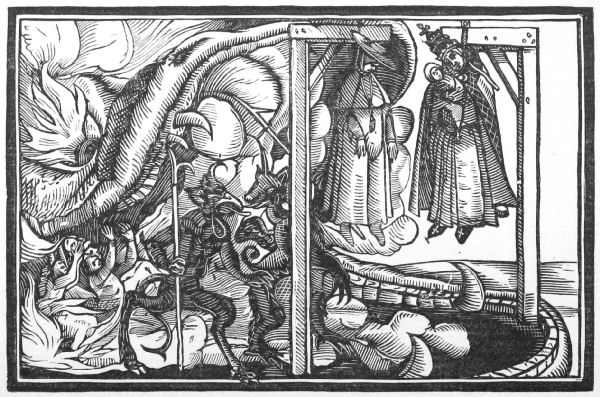
I think anyone interested in mythology of the Medieval period would find this book a valuable resource. Baring-Gould is careful to explain the far distant origins of many of the myths. While he clearly detests Lutherans and some other Protestants, his work is quite interesting. Many of the myths (such as Prester John, and Pope Joan) are ones I had never heard. Others are old favorites like William Tell—but they have origins that I did not know before I read this book.


The status of Working Women of Japan

March 22, 2011

A Japanese proverb from the WWII post-war period says:「戦後強くなったのは女性と靴下。」It translates as “After the war, two things became stronger: women and socks.” Women had gotten stronger thanks to new laws that granted them the right to vote, and other rights. The socks had gotten stronger because of nylon.

To see how much has changed, read Sidney L. Gulick’s “Working Women of Japan.” It shows what the life of working Japanese women was like in 1915 and the years before.

The purpose of this book is to give some information as to conditions prevailing among working women, which conditions have called for the establishment of institutions whose specific aim is the amelioration of the industrial and moral situation. Two classes of workers have not been considered—school-teachers and nurses.

Specifically treated were farm workers, workers in domestic industries, silk workers, wives of artisans and merchants, baby-tenders, household domestics, hotel and tea-house girls, factory workers, geisha, and licensed prostitutes. None of these were fun occupations. The hours were long, the conditions were harsh, and the pay was small.

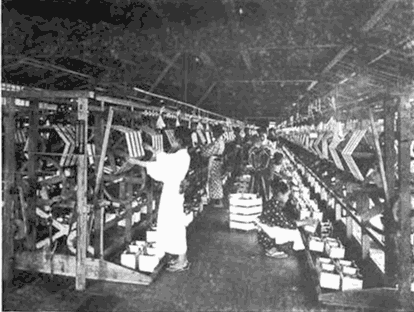
For instance, he gives this description of conditions of a cotton thread spinning factory in Matsuyama, on the island of Shikoku.

Silk Factory

Factory Workers in a Silk Factory

In 1901, when Mr. Omoto began to work in the factory, he was amazed to see how many were the children taking their turns in work along with the older girls by day and by night. Large numbers ranged from seven to twelve years old, the majority, however, being from fifteen to twenty. They worked in two shifts of twelve hours each, but as they were required to clean up daily they did not get out till six-thirty or seven, morning and night. The only holidays for these poor little workers came two or three times a month, when the shifts changed; but even then there was special cleaning, and the girls who had worked all night were kept till nine and even ten in the morning. He was also deeply impressed with their wretched condition and immoral life. The majority of them could neither read nor write; their popular songs were indecent, and they were crowded together in disease-spreading and vermin-breeding, immoral boarding-houses, where they were deliberately tempted. Some of the landlords were also brothel keepers.

As a missionary in Japan for twenty-five years, the author’s distaste for the “native religions” was evident in passages such as this:

The reader will naturally ask what the native religions have done to help women meet the modern situation. The answer is short; practically nothing. They are seriously belated in every respect. For ages the native religions have served by doctrine and practise to hold women down rather than to elevate them. The doctrine of the “triple obedience” to father, to husband, and when old to son, has had wide-reaching and disastrous consequences. It has even been utilized for the support of the brothel system.

Also evident was his distaste for the “loose morality” of the Japanese culture. Speaking of prostitution, he wrote:

while in Occidental Christian lands no girl can voluntarily enter this sphere of life without being conscious of its shame and immorality, many of the girls of Japan may have no adequate knowledge of these inevitable consequences until their fate has been sealed.

Finally, also evident was his strong conviction that adoption of the Christian system of beliefs was necessary for Japan to become an ethical and moral country. This led him to be a tad dismissive of the strengths of native culture.

This book is not an objective look at the role of working women in Japan, instead it was a call for support of the missionary movement. That movement was not a general success, with only about 1 to 2% of the Japanese becoming Christian. Still, the book does have insights into the situation that did exist at one point in time in Japan, viewed through the mindset of a missionary living there.


Uncle Sam’s Place and Prospects (1899)

February 15, 2011

In Barbara Tuchman’s The Proud Tower, there is a chapter (“End of a Dream”) about America’s decision to become a colonial power. At the time, we had just won the Spanish-American war and there was a major political conflict between those that believed that America was destined to become an imperial power (the pro-imperialism forces) and those that believed that becoming an imperial power would destroy America’s principals of self-government and isolation (the anti-imperialism forces). The pro-imperialism forces won.

The political paper “Outlook: Uncle Sam’s Place and Prospects in International Politics” gives a feel for the nature of that political conflict. That paper was read by Newton MacMillan before The Fortnightly Club (Oswego, N. Y.) on May 2, 1899.

In that paper, Mr. MacMillan argued for colonization of the Philippines, in part, because it was needed to protect our interests in capturing the Chinese market. He cited statistics about the value of our exports to China and talked of conspiracies of other foreign powers to shut us out of that market.

But how long is this to continue? With our experience of tariffs we need not be reminded that low prices do not command markets. Continental Europe does not like us. We saw that during the Spanish war, and we have heard it since in various impatient declarations of hostility, at Berlin or Vienna, far more significant than official assurances of distinguished consideration. Indeed, if Germany, or France, or Russia does not openly break with us, it is because fear or prudence is stronger than inclination. The moment any one or all of them combined feels able to slam the door in our face without fear of reprisals, the door will be slammed.

He argued for setting up a base for operations against any attempts to shut us out of China.

So, in great measure, the Philippines mean for us a foothold in the East and a strong leverage on China. Would our co-operation be sought at this time, as it has been, not only by England but by Germany, if George Dewey had not sailed his ships into the harbor of Manila on the night of the 30th of April, 1898, dodging the sunken mines and torpedoes, that he might on the morrow fire “the shot heard round the world?” On that day and since then the world learned that we are a nation not only of shopkeepers and money-grabbers, but also of fighters; that in a prolonged war we stand unconquerable, irresistable. A year and a day ago we were a nation; to-day we are a power, and have only to assert ourselves as such.

Then, after arguing that we must subject the Philippines to our rule for economic reasons, he argued that colonization was needed to “make us less corrupt”:

But if, on the other hand, we set up good government in the colonies, how long shall we be content with misrule at home? Not long, I promise you. “It is one of the most beautiful compensations of this life,” says the wise man, “that no man can sincerely try to help another without helping himself.” No less true is this of nations. The eyes of the world are upon us and the conscience of civilization will hold us strictly accountable. As we deal with those ignorant wards whom the God of Battles has given into our keeping, even so shall we be dealt with. And in uplifting them from barbarism so shall we be uplifted.

He even stated that:

I believe the present low tone of our internal politics to be due to the long and peaceful isolation of the Republic.

In other words, peaceful isolation is bad, but colonizing foreign lands will save our soul. Interesting arguments.


Among the Forest People

January 26, 2011

Among the Forest People, by Clara Dillingham Pierson, is a charming book. Filled with small tales of denizens of a forest, the book teaches young children lessons on selfishness, bullying, kindness, humility, and other excellent values. Yet, in most instances, the stories are not preachy or overdrawn.

There were two stories which I found particularly amusing. The first one, “Mrs. Mourning Dove’s Housekeeping,” tells us that all of the other birds are aghast that Mrs. Mourning Dove’s nest is so untidy and seemingly unsafe:

“Really,” said one of the Blackbirds, who had flown over from the swamp near by, “I never should think of calling that thing a nest! It is nothing but a few twigs and sticks laid together. It is just as flat as a maple-leaf, and what is to keep those poor little Doves from tumbling to the ground I can’t see.”

There was much discussion amongst the birds and other forest denizens as to whether Mrs. Mourning Dove’s eggs would survive. And then the rumors started: the eggs had fallen through the nest; the eggs were on the forest floor; the eggs had been eaten up; there were no baby doves!

The story ends happily, with the neighbors admitting that Mrs. Dove is not a good housekeeper, which she freely admits herself, but that she is a lovely bird and is raising her children to be polite and proper. In the end, everyone is friends.

In “The Red Squirrels Begin Housekeeping,” we have a love story. Mr. Red Squirrel had been kept in a cage, but one day he was able to get free. He had no skill or training in how to live in the wild, and he was beginning to be very hungry, when PLOP came an acorn on top of his head. He was sitting under a maple tree, which of course did not make acorns! So Red quickly ate the acorn. He had barely finished that when from nowhere came a walnut down in front of him! He ate that, and these were rapidly followed by other nuts:

Next came a hazelnut, then a butternut, and last of all a fat kernel of yellow corn. He knew now that some friend was hidden in the branches above, so he tucked the corn in one of his cheek-pockets, and scampered up the maple trunk to find out who it was. He saw a whisking reddish-brown tail, and knew that some other Red Squirrel was there. But whoever it was did not mean to be caught, and such a chase as he had! Just as he thought he had overtaken his unknown friend, he could see nothing more of her, and he was almost vexed to think how careless he must have been to miss her. He ran up and down the tree on which he last saw her, and found a little hollow in one of its large branches. He looked in, and there she was, the same dainty creature whom he had so often watched from his cage. He could see that she was breathless from running so fast, yet she pretended to be surprised at seeing him.

A few paragraphs later, after Red Squirrel chatted with his benefactress, he asked her to marry him. She agreed, they set up housekeeping, and raised a family. Then in the fall, they began gathering nuts again, to get through the winter.

“Don’t stop to think how many you need,” said the little mother to her children. “Get every nut you can. It may be a very long winter.”

“And if you don’t eat them all,” said their hard-working father with a twinkle in his eyes, “you may want to drop a few down to some poor fellow who has none. That was your mother’s way.”

“When was it her way? What makes you smile when you say it? Mother, what does he mean?” cried the young Red Squirrels all in a breath.

And Mr. Gray Squirrel, a neighbor, tells the little red squirrels that their mom saved their dad’s life! it’s just a really cute story with a little moral about kindness.

Each tale in this book has a point, and most are made with care. Instead of being preachy, the book teaches with humor and by making the stories fun to read. I know that in today’s world it is not fashionable to give animals human voices and characteristics. However, that very technique is an effective teaching tool for small children, as I learned from personal experience. My children were much more willing to listen to a story about animals finding out how to behave than they were to hear me telling them not to be selfish, or to be kind, or to learn to think.

This would be an excellent book for a grandparent to share with a grandchild, or a parent to share with a child. It’s fun, funny, and charming.


Englishman from Paris: A Farce

January 20, 2011

One of the benefits of working on older books for Distributed Proofreaders is that they give glimpses into the popular culture of their time. Judging from the English farce The Englishman from Paris by Arthur Murphy, the year 1756 was a time of effeminate fops in France and xenophobic hooligans in Britain. No one looked good in this farce, but then that is normal for farces.

The play was made available to us through The Augustan Reprint Society, which reprinted the play in 1969, along with an introduction by Simon Trefman. That introduction tells about the checkered past of this play that had its “first and last performance at Drury Lane on 3 April 1756.”

He was going to write a sequel to one of Foote’s plays, The Englishman in Paris (C. G. 24 March 1753), a popular farce that satirized the boorish antics of a English squire in a country where politeness is the mode. Murphy’s idea was to show this blood returned to England as a Frenchified effeminate fop at odds with his family and former friends. Foote listened closely as Murphy gave him the plot and even some of the dialogue. Then, thinking that no one had a better right to a sequel than the author of the original, Foote, keeping his own counsel, wrote The Englishman Return’d From Paris in time for the new season.

Simon Trefman discusses how, despite similarities that cause Murphy to accuse Foote of plagiarism, there were substantial differences between the two plays.

Interestingly enough, Murphy’s sequel is based on different characters from those appearing in Foote’s play, but it is closer in spirit to the original than Foote’s own sequel. Murphy’s is an ironic and gentle comedy that at first glance seems to be chauvinistically anti-French and pro-English, reflecting public sentiment prior to the outbreak of the Seven-Years’ War with France. Though the climax of the plot is the fop’s rejection of French affectations (and Murphy made sure that the French dogs did not get the best of it), English brutality and intolerance are also exposed; and care is taken that nothing irrevocable is done so that there is room for reformation on both sides.

So how was the play as comedy? It is hard to tell from the printed page. Comedy is best seen acted, instead of read on a printed page or on a computer screen. There are moments where I could see what a good set of actors could do with this material. For instance, there is the Philosopher/teacher who plots against his student:

Florid. (Alone) I have already fixed a ridiculous Aposiation of Ideas in my young Pupil’s Mind concerning Marriage. If I can bring him to decline it, I shall see whether I can’t awaken Miss Harriet’s Affections in my own behalf—I have almost finish’d a short Treatise upon Beauty, which I shall dedicate to her. I must make all I can of this family; and then the pleasures of Imagination will strike the Internal Sense with a finer Impulse, when some Ideas of Property concur.

There is the Country Squire who discounts the advantages of foreign travel with the comment:

Quicksett. I don’t know that Sir Robert; I have seen a great many hopefull, promising young Men, come home such mere Ragouts. I’ll tell you what, Sir Robert—I was hugely pleas’d with one Inscription I once read in a country church-yard. “Here lies John Trott, an honest Man who was never out of his own Country.”

And there is the “hero” Jack, who spouts:

Jack. This Eyebrow is very obstinate today, here La Fleur, arch my Eyebrow. Tell my Lady Betty that I am so deranged by these People, that I must now go and take the Air to recover my Spirits—and tell my Lady Betty if she will come to the Park, we will entertain ouselves with a little Raillery upon the Mob of English Gentlemen. It is well observed by one of the wits of France that few People know how to take a walk, I’ll shew them how to walk. Plus belle que l’Aurora.

Of course, right after this, the mob doesn’t react with the admiration and respect he was expecting, and he barely escapes an angry mob only because they are diverted with beating up on a pickpocket.

And of course there is the unbelievable change in character, as the hero gives up his foolishness:

Jack. You must, Sir, and when you are arriv’d, divest yourself of your Prejudices; don’t follow the Example of Voltaire and Abbé Le Blanc, but dare to speak the Truth. Tell your countrymen you heard here of a King determin’d to prosecute a vigorous War, but more desirous of an honorable Peace—tell ’em we have Ministers who understand the true Interest of their country, and are determin’d to maintain the just rights of Great Britain—tell ’em that plain good Sense, honor, honesty, and a regard for our word, are the characteristicks of the English Nation—and tell ’em the most ridiculous object you saw in this country is a Frenchify’d Englishman.


Child’s Own Books

January 13, 2011

Book coverUsually, it is easier to develop short books for Project Gutenberg than it is to develop longer books, but sometimes short books can pose their own intellectual challenges. One such series of short books is the “CHILD’S OWN BOOK of Great Musicians” series (1915) by Thomas Tapper. These books have a couple of pages of illustrations so that the child can cut and paste those illustrations into the appropriate places to make a book and other places where the child can write a story about the musician.

Recently, we posted four books from this series. One book was on Bach (Johann Sebastian Bach: The story of the boy who sang in the streets). Another was on Haydn (Franz Joseph Haydn: The Story of the Choir Boy who became a Great Composer). Still another was on Mozart (Mozart: The story of a little boy and his sister who gave concerts). The fourth was on Beethoven (Beethoven: The story of a little boy who was forced to practice).

In each of these books, we produced an HTML file that shows what the finished workbook looks like, and a MIDI file that corresponded to an illustration of sheet music in the book (e.g., this minuet by Mozart). The MIDI files were produced by the DP Music Team.

The Mozart book project and the Beethoven book project have something that the other two book projects do not: a PDF file that shows what the workbook probably looked like before being finished, and that PDF file can be printed out to make a workbook that a child can fill in, just like the books sold almost a hundred years ago. Creating that PDF file was an interesting and challenging experience. The reason why the Mozart book and the Beethoven book project have a PDF and the others do not, is that these projects differ from the other two in that they had the two sheets of illustrations intact.

All in all, it has been an interesting challenge, especially the production of the PDF file, which was created in Microsoft Word. I learned a lot from it. Still, I am looking forward to working with longer, less challenging books.