These are a few of my favourite things

August 1, 2016

A while ago I wrote about Smooth-Reading and the variety of things I’ve read while doing it. I thought that, today, I’d mention a handful of those books in more detail. These were ones that, for some reason or another, really stood out for me.
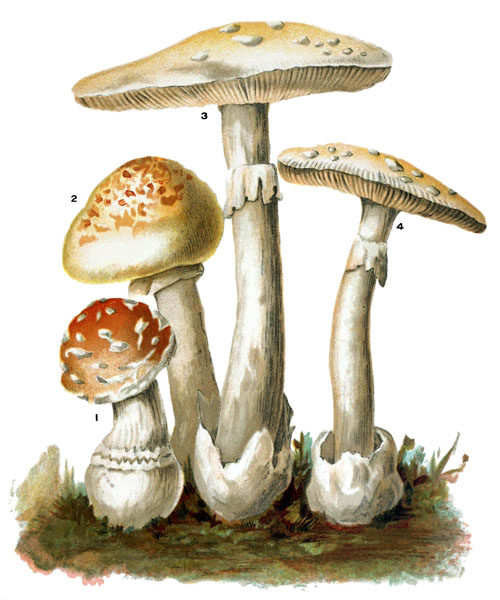
Picture of Poisonous Mushrooms

Poisonous Mushrooms of the Genus Amanita

One was a brilliant book called Mushrooms of America, Edible and Poisonous, with absolutely beautiful pictures, like the one to the left. It told you how to tell which ones are poisonous—and how to cook the ones that aren’t. It was the first one that I felt compelled to download, just so I could look at the pictures again. I also have a weakness for recipe books, so it fed another of my guilty pleasures at the same time. (By the way, don’t try eating these ones, they’re definitely not good for you.)

Another pick of the bunch was Jacko and Jumpo Kinkytail (The Funny Monkey Boys), a collection of 31 bedtime stories for young children by Howard R. Garis, with extremely surreal endings. This is one of a series of books by the same author, many of which are now available on Project Gutenberg. One chapter ending goes:

Now next I’m going to tell you about the Kinkytails and the doll’s house—that is, if the alarm clock will stop making figures all over my paper so I can write the story, and if the coffee pot doesn’t step on the rolling pin’s toes.

Well, things must have worked out OK because the next story was, indeed, as advertised. The stories themselves contained a distinctly surreal universe. I think the children to whom these stories were read probably grew up to be imaginative and inventive individuals, or possibly horribly disturbed. It’s a bit of a coin toss as to which.

Then there was the excellent and very entertaining Stanley in Africa. The Wonderful Discoveries and Thrilling Adventures of the Great African Explorer and Other Travelers, Pioneers and Missionaries. Stanley was the man who found Dr. Livingstone, who’d been lost in the African Interior for a while, and greeted him with the immortal words “Dr. Livingstone, I presume”. It is, of course, typical of its time (1889) and there are things in it, such as the casual racism, that we cringe at nowadays. It does, however, contain some useful information on what to do if attacked by an ostrich.

Ostrich farming is a large industry in these South African States. […] The birds are innocent and stupid looking, but can attack with great ferocity, and strike very powerfully with their feet. The only safe posture under attack by them is to lie down. They then can only trample on you.

OK. I’ll try and remember that if I encounter any.

An out-and-out winner was the final two volumes of The Paston Letters, a collection of letters, wills and other documents relating to an influential Norfolk family between 1422 and 1509. Most of the letters are either written in haste, or to be delivered in haste, and they tell you not just about the things you get in history books, but also domestic issues and family quarrels. One spat occurs when a daughter of the family, Margery, gets engaged to a man without her family’s knowledge or permission and her mother refuses to have her in the house or to speak to her again—categorising her as a loose woman. The marriage goes ahead, but I suspect they’d planned a more advantageous match for her than one of their employees. She is very noticeably omitted from her mother’s will, in which everyone and their grandmothers are left something. At one point they seem very short of money, their letters are full of requests to each other for cash, and replies saying “don’t ask me, I don’t have any money.” Their wills are extraordinarily detailed—individual bequests include mattresses and specific pieces of bedding. They lived at quite a turbulent period, kings come and go, including Richard III—to this day depicted as a hunched and limping villain who killed his nephews. They seem to have come round, financially, by the time we leave them in 1509, but I have no doubt they continued to have their ups and downs.

Another favourite was a book on copyright law from 1902. I have spent much of my working life in places where copyright and intellectual property are hot topics. So the subject caught my eye and I picked it up to read. Written by a lawyer, for other lawyers, A Treatise upon the Law of Copyright in the United Kingdom and the Dominions of the Crown, and in the United States of America, by a barrister named E.J. MacGillivray, was fascinating reading, and surprisingly accessible to a lay person such as myself. It rounded up the development of the idea of copyright and all the laws that had sought to provide protection to writers and other creative artists, together with clarifications obtained during a huge number of court cases. The author’s aim was simple:

The foundations of this work were laid by my endeavours to understand what is perhaps the most complicated and obscure series of statutes in the statute book. In working from time to time at the Law of Copyright I found great want of a textbook which should be exhaustive of the case law, and at the same time contain a concise and clearly arranged epitome of the statutory provisions. This want I have tried to supply for myself in the present compilation, and it is now published in the hope that it may prove useful to others.

I think he succeeded admirably, and although the law will have changed in the ensuing century, it’s still an excellent summary of the development of copyright protection in the UK, the USA and various places that were part of the British empire.

I can’t recommend Smooth-Reading enough as a fun thing to do with your time. Right now there are dozens of books, ranging across novels for adults and children, history, drama, science, and others.

Ooohh, choices, choices. What shall I pick first?


Wednesday the Tenth: A Tale of the South Pacific by Grant Allen

September 10, 2014

Picture of Book Cover

I wanted to tell you about an excellent adventure story, published in 1890, that I read recently.

The book is Wednesday the Tenth: A Tale of the South Pacific by Grant Allen. To be honest, I picked it up because it was short and I wanted something that would be easier and quicker to read than my usual fare. I’m glad I did, though, because it was an exciting and suspenseful tale that had me enthralled to the end.

It starts with a rescue, when two boys in an open rowboat are discovered in the middle of the Pacific Ocean by a steam yacht plying its trade among the islands (yes, I know that’s a sailing boat on the cover, but it is definitely a steam vessel in the book). They are the children of missionaries and they tell a harrowing tale of slave traders who get the locals drunk and rouse them up against the family, after the father thwarts the slave traders’ attempts to get the locals to sell people to them.

The family are taken prisoner and held by the locals who plan to kill them—and then eat them. The boys manage to escape and set to sea in the rowboat, in the hope of finding help.

In this excerpt, the boys have just been picked up by the yacht and the crew have given them a small amount of food and water (not too much as they are literally starving). The older boy is already lying unconscious on a bunk and the younger is about to follow him, but manages to utter a few words:

“Steer for Makilolo … Island of Tanaki … Wednesday the tenth … Natives will murder them … My mother—my father—Calvin—and Miriam.”

Then it was evident he could not say another word. He sank back on the pillow breathless and exhausted. The color faded from his cheek once more as he fell into his place. I poured another spoonful of brandy down his parched throat. In three minutes more he was sleeping peacefully, with long even breath, like one who hadn’t slept for nights before on the tossing ocean.

I looked at Jim and bit my lips hard. “This is indeed a fix,” I cried, utterly nonplussed. “Where on earth, I should like to know, is this island of Tanaki!”

“Don’t know,” said Jim. “But wherever it is, we’ve got to get there.”

Wednesday the tenth of the month is when the sacrifice is scheduled to happen. The boys are convinced it’s Friday, but the sailors on the yacht are equally convinced it’s Saturday. Even so, the yacht’s captain gives orders to make for the island at full speed, sure they’ll make it in time.

Now, obviously, all doesn’t go as smoothly as anticipated or there wouldn’t be a book to read. As they get close to their destination they run aground on a reef that isn’t where the charts say it should be.

… Jim, looking up from in front, with a cool face as usual, called out at the top of his voice, but with considerable annoyance, “By Jove, we’re aground again!”

And so we were, this time with a vengeance.

“Back her,” I called out, “back her hard, Jenkins!” and they backed her as hard as the engines could spurt; but nothing came of it. We were jammed on the reef about as tight as a ship could stick, and no power on earth could ever have got us off till the tide rose again.

Well, we tried our very hardest, reversing engines first, and then putting them forward again to see if we could run through it by main force; but it was all in vain. Aground we were, and aground we must remain till there was depth of water enough on the reef to float us.

They get off the reef, but the yacht’s damaged, and they’re running out of time. Between engine troubles, the tide and a contrary wind will they make it before the missionaries are killed and eaten?

You’ll have to read it yourself to find out.


What have you been reading lately?

July 25, 2014

I have a varied, some would say bizarre, reading list. Everything from popular fiction to science (in every branch) to fairy tales to dictionaries and encyclopaedias to old books of all kinds. Some very old books indeed.

Hello, my name’s CJ and I’m a Smooth-Reader.

I found Distributed Proofreaders just over five years ago, and fell in love. I’ve always spotted the misspellings and iffy punctuation in the books I read, and here was my chance to be as nitpicking as I wanted with nobody to tell me I was peculiar. In fact, everyone else was like me. So I couldn’t be that odd after all.

I started like everyone else, checking that the text we produce matches the original book as closely as possible. I graduated to putting formatting codes around text that needed it, and two months after signing up I did my first Smooth-Read. I’ve now read 146 books and I’m looking forward to reading many more.

It’s great to be part of a team effort like this, doing something as worthwhile as preserving all these old texts. I like it that we don’t just work on the classics of literature and the “big” scientific texts that everybody knows about. All those less known books deserve saving too—and can be more interesting because they’ve been forgotten. I love that I can talk about a shared interest to people from the USA to the Philippines, and Australia to Hawaii—as well as nearer to home in the UK. Whatever the time of day or night there’s always someone around. (Don’t tell anyone, but there’s fun stuff too—like word games and jokes.)

What was my first Smooth-Read? It was a set of three plays by Olive Dargan, The Mortal Gods and Other Plays, published in 1912. After reading them, I felt we ought to have let the playwright remain in obscurity. I didn’t like it at all, and this piece of dialogue should explain why. (Phania, allegedly an adult, is speaking to her father and, sadly, this is typical of her conversational style.)

Pha. Lose me? O, never, daddy, never! I’m
Your pipsey, wipsey, umpsey, ownty own!

It didn’t put me off Smooth-Reading, however, and eight days later I sent in comments on something much more enjoyable—The Eighteenth Century in English Caricature  by Selwyn Brinton. During the rest of the year, I read adventures and romances, fairy tales from China and Russia, science fiction, essays, archaeology, healthcare, history, science and cookery.

2010 brought a new list of books—more fiction of all sorts, biographies, political pamplets and books. I think my favourite of the whole year (and competition was fierce) was Jacko and Jumpo Kinkytail (The Funny Monkey Boys), a collection of bedtime stories for young children. Most of it was read while on a train home from work. My journey wasn’t normally that long, but something happened on the way home—something I felt compelled to share with the poor post-processor of the book.

I’m stuck on a train. Someone’s thrown a large tractor tyre on the tracks, we hit it at speed and everything rattled and shook and jumped, we did an emergency stop and then everything went off. The engine’s badly damaged (no fuel, water or oil, no electrics or anything) and we’re sat in a wooded cutting waiting for rescue. They’ve put detonators (yes, detonators!!) on the track ahead of us so that the relief train knows when it’s getting near. Oh—and it’s hot—very hot. I was going to the theatre tonight, having saved up for the ticket, but it starts in an hour, so even if the train arrives now, we can’t get to the town where I live in time for me to get home and back.

I also shared the progress of the rescue effort as I read on. At twenty past seven the rescue train arrived (three hours after we’d set off) and we were transferred to it. At eight o’clock the police declared it a crime scene and we weren’t allowed to leave. Finally, at ten past eight, we were on our way.

Hooray for Smooth-Reading—I would have been as bored as the rest of the passengers after three and a half hours on a stationary train in a heatwave. Instead, I walked into my house that night having done on the train what I would normally do in an evening at home, making the commute part of my leisure time instead of lost hours.

Among the books I read in 2011 were an account of explorers and missionaries in Africa and a compilation of Creole proverbs (two of which were far too indelicate for our sensitive compiler to translate into English). There were also fiction, natural history, political tirades, magazines, and a book on etiquette.

In the following year I had a bit of a break, while I did other things, but at the end of the year I picked up a some fascinating books from the 15th and 16th centuries that brought history to life. The first was a couple of volumes of The Paston Letters, a collection of letters, wills and other documents relating to an influential Norfolk family between 1422 and 1509. It gives an insight into not just the political events of the time, but also domestic concerns and family quarrels that sound very modern.

Image of Friction Clutch Mechanism

Aultman & Taylor Friction Clutch

The second was the first volume of Holinshed’s Chronicles of England, Scotland, and Ireland. This overview of Britain as it was in 1587, and the history of how it got there, is informative, entertaining, even chatty. The author wanders off the topic, and then comes back saying “now, where was I again?” You get anecdotes, recipes and gossip in with your history and the description of every aspect of life in Elizabethan England.

2013 brought a new crop, including books about apples, George Washington’s first military campaign, Vasco da Gama’s first voyage and handicrafts for boys. There were works by Erasmus and Galileo, a somewhat gruesome (but informative) book on amputation from 1764 and a variety of novels.

A standout was Farm Engines and How to Run Them: The Young Engineer’s Guide, containing the most amazing technical drawings, of which my favourite is the one to the right. I think it’s the combination of the hugely detailed part and the outline drawing of the surrounding engine that attracts me. It’s worth downloading this book for the pictures alone.

This is why I love Smooth-Reading. There are so many different things to read that, whatever you like, you’re bound to find something you’ll enjoy. So do give it a go. You never know what you’ll discover.

I’m looking forward to what the next year will bring me to read, but in the meantime, I’ll just return to that philosophy book and an adventure novel from 1921.


Celebrating Women’s History Month

March 23, 2014

March is Women’s History Month and whilst most of the attention tends to be centred on 8 March, International Women’s Day, here at Distributed Proofreaders we like to spend the whole month inviting volunteers to focus their attention on books by women or about them and their achievements.

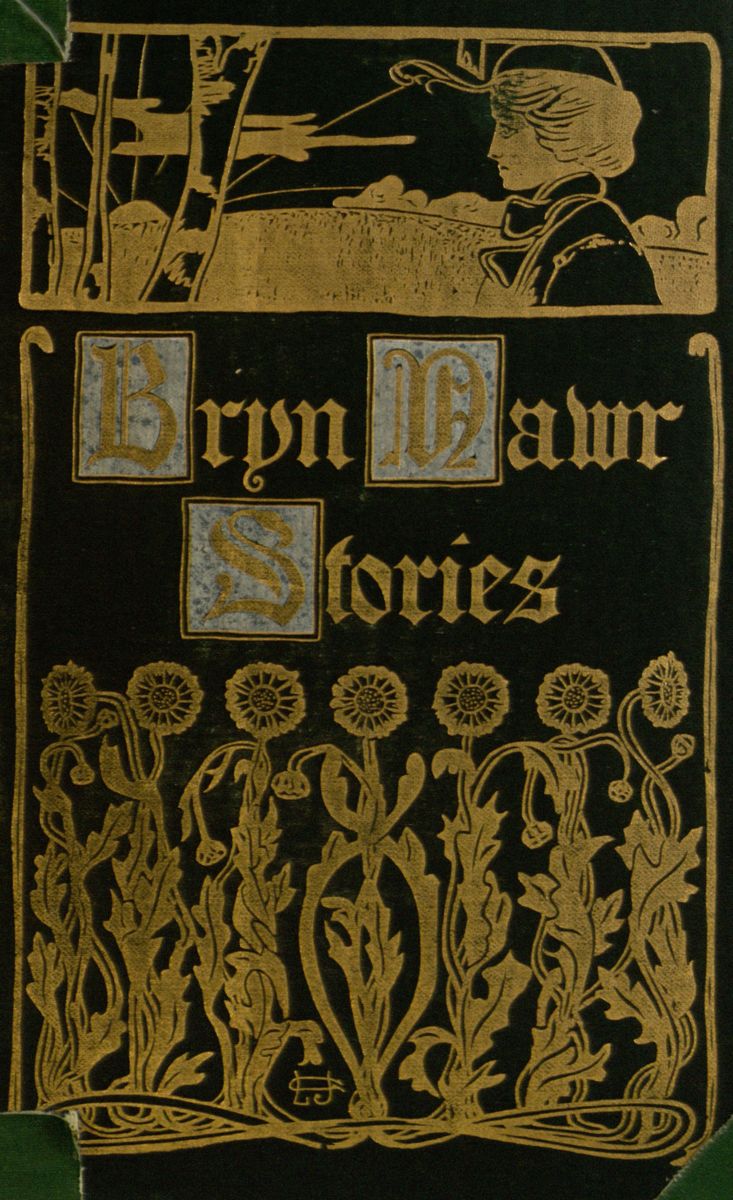
One of those books is one we posted in August last year, A Book of Bryn Mawr Stories by Harriet Jean Crawford et al. I wanted to talk about it because I feel that it fits well with this year’s theme—Celebrating Women of Character, Courage, and Commitment—as well as with the theme for International Women’s Day—Equality for Women is Progress for All.

Bryn Mawr College in Philadelphia was founded in 1885 and was one of the first higher education institutions to offer graduate degrees to women. 129 years later it is still going strong, and it still has a strong focus on promoting educational access, equality and opportunity for women. Initially affiliated with the Quakers, by the time this collection of stories was published in 1901 it had become non-denominational.Book cover - Bryn Mawr Stories

The book is a collection of stories written by students of the college.  In the opening story, Ellen, the central character, has been asked to give a speech on The Educational Value of College Life. Struggling to come up with inspiration, she visits fellow graduates of Bryn Mawr for ideas. When she parts from one of them, the other woman says, by way of advice:

“I should certainly deal with the practical value of college life, taking up some line of thought that will show its power to make women effective citizens in the broad sense of the word.”

And this is a recurrent theme in the book: how educating women, far from making them unfit for the place society has designated for them, actually makes them more fit.

I remember when they passed equal opportunities employment legislation here in the U.K. It seemed like the world opened up. I could do anything. It made you dizzy with the new possibilities. All right, I was fourteen and naive and unaware that legislation is one thing and changing the mindset of a whole country is another. It didn’t stop me visualising all sorts of possible futures that I would never have even considered before.

Those early women scholars must have felt a bit like that. At a time when it was still seriously believed by men of science that if a woman had to think about “man things” (like politics, economics, science, etc.) then her brain would literally overheat dangerously, the introduction of degree courses for women was revolutionary.

There were many critics of teaching women to this level. They said that it wasn’t necessary, after all a woman’s place was in the home as a wife and mother. They said it was dangerous, making women dissatisfied with their lot and leading them to disagree with men. It seems very strange, here in the U.K. slightly more than a century later, but it was the way things were back then.

Many of the characters in the stories sound slightly stilted and preachy to the modern ear. This is understandable when you remember that they were written in 1901, a time of great change, and at the height of the struggle for women’s suffrage and improved rights for women. They argue the point that educating women does not make them unwomanly, unfit for matrimony or other feminine pursuits. That it is good for women to be able to think and to be aware of the issues of the day. I am one of the many beneficiaries of the fight for women’s rights and I appreciate it every day. Although I live somewhere that has come a long way from where the students writing these stories were living, there are still places where women do not have the same rights as men, where they do not have the same access to education, property ownership, work and money. There are still societies where the fight fought by Bryn Mawr and other groundbreaking institutions like it is ongoing.

This book was inspirational and, more importantly, aspirational, and I, for one, hope that some day all women (and men) will be seen as equal, with the same rights and responsibilities, the same economic and political power.

Maybe, a century from now, we won’t need a special day or month to celebrate women and their contribution to the societies in which they live.

Here’s hoping.


Something to Do in the Meantime

March 5, 2014

While the Distributed Proofreaders website is down, you might like to check out some of the other books we’ve already posted to Project Gutenberg. One you may enjoy is a book I read recently, Poison Romance and Poison Mysteries by CJS Thompson.
Picture of book cover
This thoroughly enjoyable book, published in 1904, begins with an advertisement for the health-giving properties of Eno’s Fruit Salt and ends with an advert from a tea and coffee purveyor. I’m not sure they’d have been too happy at the association with poisons. It’s partly a history of poisons and poisoning and partly a titillating true-crime book, with a foray into criticism of the use of poison in fiction.

  • Enjoy the reviews (all recommended it, except for the Daily Mail, which was a bit sniffy about it)
  • Wonder at the story of poisons throughout human history
  • Thrill as you read the details of actual cases of poisoning
  • Gasp with astonishment at how easy it will be for you to poison someone after reading this book 1
  • Smile at the critique of the unrealistic use of poisons in fiction—even Shakespeare doesn’t escape censure
  • Ponder whether the advertisers knew their products were being advertised in a book about poison
1  Although I don’t think he realised he was writing a poisoner’s manual, and I don’t recommend experimenting. 😉

Interestingly, tobacco is included in the list of poisons, it seems that even in 1904, tobacco was considered harmful by some.

The habitual inhalation of tobacco smoke is undoubtedly harmful, but unless the smoke be intentionally inhaled, very little makes its way into the lungs.

Employed to excess, it enfeebles digestion, produces emaciation and general debility, and is often the beginning of serious nervous disorders.

But on the other hand

Be this as it may, the moderate smoking of tobacco has, in most cases, even beneficial results, and there appears little doubt that it acts as a solace and comfort to the poor as well as the rich. It soothes the restless, calms mental and corporeal inquietude, and produces a condition of repose without a corresponding reaction or after-effect. In adults, especially those liable to mental worry, and all brain workers, its action is often a boon, the only danger being in overstepping the boundary of moderation to excess.

Indeed, at the beginning of the 1600s, King James I is reported as describing smoking as

a custom loathsome to the eye, hatefull to the nose, harmfull to the brain, dangerous to the lungs; and in the black, stinking fume thereof, nearest resembling the horrible Stygian smoake of the pit that is bottomlesse

When criticising the fictional depiction of poison, the author’s worst strictures are reserved for

the lady novelist is the greatest sinner in this respect, and stranger poisons are evolved from her fertile brain than were ever known to man.

Real life poisoning cases are described and analysed, including various ladies who were accused of murdering their husbands and lovers, a doctor who murdered his brother in law, another who killed his wife and mother in law, the infamous Neill Cream who killed a number of young women, and a celebrated recent American murder case.

In recommending this book, I really can’t put it better than the reviewers did at the time.

The Saturday Review:—”A great deal of curious information concerning the history of poisons and poisonings.”

Illustrated London News:—”The story portions will attract most attention, and the poisoned gloves and rings of old romance supply satisfaction to that sensational instinct which is absent in hardly one of us.”

The Queen:—”Will fascinate most people. Is very readably written. Its only fault is that it is too short.”

Liverpool Courier:—”It is a readable book as well as an able one. The author is an eminent toxicologist and writes pleasantly on the lore connected with the science.”

The Scotsman:—”It is successful and interesting. Full of odd and startling information.”

Aberdeen Free Press:—”Fascinates the majority of his readers. One could wish that Mr. Thompson had written much more.”

Glasgow Citizen:—”A book of the week.”

Glasgow Herald:—”Light and eminently readable.”

My own review? A fascinating, entertaining book that should be on everybody’s ‘must read’ list.


The Boy Craftsman by A. Neely Hall

May 14, 2013

I want to make a doll’s house. And a miniature theatre. And fireworks. And a desk and shelves. And … and….

I’ve been reading a book published over a hundred years ago that would never see the light of day in today’s risk-averse society. Back then, it seems, the best present you could get for your twelve year old boy was a small axe and a selection of sharp blades—together with dangerous chemicals and other toxic substances. It was a time when boys and girls had different pastimes and every boy carried a small folding knife with him.

The Boy Craftsman, subtitled Practical and Profitable Ideas for a Boy’s Leisure Hours, was one of a series of similar books, and it starts with things a boy can make to earn money. These range from household items such as a display rack for plates for the dining room, to snow ploughs and newspapers. It’s lavishly illustrated with diagrams, photographs and templates for some of the parts. The instructions for all the projects are very detailed and the whole thing is inspirational. The author was enthusiastic about his subject and he wrote in a clear style, because the book was aimed at children. Judging by the illustrations, the boys in question were in the 11-16 age range, so well able to undertake the projects in the book.

After money-making ideas, Mr Hall moves on to discuss outdoor activities, the list of chapters suggesting building up to leaving the poor boy stranded in the great outdoors. It seems he’s being taught to make a shelter, transport and then how to catch his own food.

How to build a log-cabin
How to build a canvas canoe
Home-made traps
Toy guns, targets, and bows and arrows

Log Cabin

Even though I know things were different then, it’s impossible to shake off my 21st century sensibilities. Every time the book mentions yet another sharp implement, or painting things with white lead (enamel paint is suggested as an alternative), I suffer a moment of shock that children were given these things. The basic tools for a workshop are listed as “A hatchet, hammer, saw, plane, chisel, jack-knife, bit and bit-stock, screw-driver, and square”.

And here’s a chapter you’d never find in a book for teenagers these days,

Work to do with a knife

There are instructions for maintaining and sharpening your tools, for developing photographs, for making a bow and arrow (including metal arrowheads), setting up your own printing press, for making animal traps of various kinds, for creating “safe” fireworks.

A toy pistol, that will fire a piece of cardboard has a piece of advice that I think would have been good to repeat later when making arrows. “It is advisable to keep this pistol out of range of your companions’ faces.

Really? You think?

Physical activity isn’t forgotten, an outdoor gymnasium is constructed with everything you could need in 1905—including a punching bag platform and a vaulting pole. Pole vaulting for children? Where are my smelling salts, I think the shock’s getting too much for me.

The final section is given over to indoor pastimes, the first of which is creating a miniature theatre complete with scenery, props and mechanical effects. If that doesn’t appeal, you could always make a toy railway or clockwork cars. I noted with amusement the advice to boys about to dismantle an old clockwork mechanism for cleaning.

Before taking a set of works apart, it is well to examine it carefully and note the positions of the various springs and wheels, so it will be possible to put them together again properly should you wish to do so. Without taking notice of this, you are likely to have a handful of wheels as a result, with which you can do nothing except perhaps convert them into tops.

Have you ever sat and watched as an impatient person takes a mechanism apart without looking and then sits scratching their head at the piece left over when they’ve reassembled it? Seems it’s not a new phenomenon.

I think one of the most amazing things about so many of the books I read, is that they still have relevance now. The basic techniques and tools here still hold good and I can think of worse things than undertaking some of these projects with older children. Just imagine the quality time spent together—because there’s no way we’d leave them unsupervised with these things nowadays. Some of the projects might need a little thought (the doll’s houses use a lot of cigar boxes, for which an alternative would need to be identified) and some are no longer possible (creating a dark room for developing photographs from glass plates).

On the whole though, here’s a wide range of creative and constructive projects of varying sizes that I think kids (and their parents) would still enjoy doing. Why not download this book and try one or two? Perhaps not the log cabin, though.

See you later—I’m off to see what my own workshop contains.


Dress as a Fine Art: With Suggestions on Children’s Dress. by Mrs. Merrifield.

October 30, 2010
This was first published in England in the London Art Journal and this book is an edition put together for publication in America in 1854. Mrs Merrifield is writing about clothing as more than just a covering to preserve modesty or protect us from the elements. I can’t put it better than she does, so here’s a quote from the book.

“In a state so highly civilized as that in which we live, the art of dress has become extremely complicated. That it is an art to set off our persons to the greatest advantage must be generally admitted, and we think it is one which, under certain conditions, may be studied by the most scrupulous. An art implies skill and dexterity in setting off or employing the gifts of nature to the greatest advantage, and we are surely not wrong in laying it down as a general principle, that every one may endeavor to set off or improve his or her personal appearance, provided that, in doing so, the party is guilty of no deception.

“… the rules of society require that to a certain extent we should adopt those forms of dress which are in common use, but our own judgment should be exercised in adapting these forms to our individual proportions, complexions, ages, and stations in society. …… Our persons change with our years; the child passes into youth, the youth into maturity, maturity changes into old age. Every period of life has its peculiar external characteristics, its pleasures, its pains, and its pursuits. The art of dress consists in properly adapting our clothing to these changes.”

Her aim is to give people guidance on the principles they should follow when deciding on what they should wear, so as not to look ridiculous.

“In the present essay, we propose to offer some general observations on form in dress. The subject is, however, both difficult and complicated, and as it is easier to condemn than to improve or perfect, we shall more frequently indicate what fashions should not be adopted, than recommend others to the patronage of our readers.”

Although it’s an admirable intention, sadly the passage of time has made it more likely you’ll laugh at what she says. She means what she says about condemning and doesn’t hold back!

Figure 25 from bookThere are chapters on head dresses and the idea of dress as a fine art and then separate chapters for the head, the dress and the feet. The remaining chapters are remarks on particular costumes, economy of ornamentation and thoughts on principles to bear in mind when considering children’s clothing. Mrs Merrifield doesn’t just talk about the dress of her day, but describes the development of fashions and styles through the ages, with comments on those things she considers good (and bad). This is backed up by 12 plates containing nearly 100 pictures illustrating what she’s talking about, so you can see what she’s describing.

I picked this book out to read because I’ve always been interested in how people lived in the past, including how they dressed, and thought it would be good to read (I was right). My travel to work includes a long train journey and I read this on my daily commute. My fellow travellers were looking at me a little disapprovingly because I was enjoying myself far too much for someone on their way to work. Mrs Merrifield was a lady of strong opinions and I laughed out loud at quite a bit of what she said–or rather how she said it. I think that even people who aren’t fascinated by the history of dress would like this book, just because of that.

On a more serious note, it’s always interesting to read something by a person who’s passionate about their subject, and there’s no doubt the author of this work cared greatly about what she saw as the problems caused by following the extremes of fashion. Not only crimes against style and good taste, but the health problems caused by certain things including wearing next to nothing in cold weather (which will ring a bell with anyone who’s seen groups of young women shivering in thin, short dresses in the middle of winter).

There are also things in here that are still relevant and interesting today. The distortion of the body to fit a fashionable ideal was something of which Mrs Merrifield disapproved profoundly–just look at the pointy toes and high heels in fashion at the moment (I have toes and knees that prove how bad for you those are!). She makes a good point–later confirmed by scientists–about the damage done by wearing corsets to give yourself a tiny waist.

She has clear views about what is suitable for women of different ages (she is writing particularly about women’s dress), how ugly some hats are, the tyranny of fashion. There are times when she sounds just like the middle aged and elderly people now who make disapproving comments about the fashions of the day. In particular, I’d better make the most of the couple of years I have left to wear bright colours and sleeveless tops.

“The French, whose taste in dress is so far in advance of our own, say, that ladies who are cinquante ans sonnés, should neither wear gay colors, nor dresses of slight materials, flowers, feathers, or much jewelry; that they should cover their hair, wear high dresses and long sleeves.”

Although we do still have quite firm ideas about what you should wear at different ages. How many of us haven’t looked at a middle aged person dressed like a 17 year old and made uncharitable comments to our friends? I know I’ve done it.

I think my favourite passage was this one, making me doubt that she knew any men (or that they lied to her about their reaction to a low neckline). She goes on to say that older ladies most certainly should not disply their ageing necks and shoulders as it is “disgusting”.

“It is singular that the practice of wearing dresses cut low round the bust should be limited to what is called full dress, and to the higher, and, except in this instance, the more refined classes. Is it to display a beautiful neck and shoulders? No; for in this case it would be confined to those who had beautiful necks and shoulders to display. Is it to obtain the admiration of the other sex? That cannot be; for we believe that men look upon this exposure with unmitigated distaste, and that they are inclined to doubt the modesty of those young ladies who make so profuse a display of their charms.

In summary–do give this book a try. Even if it’s just the unintentional comedy that a modern reader would get from strong opinions, firmly expressed it’s worthwhile. The surprisingly large number of comments that are still relevant are thought provoking and many can still be heard in some form or other today.

Enjoy!