Patent medicines. Nostrums. Panaceas. Snake oil. These are all synonyms for those old-time elixirs that unscrupulous vendors sold to the gullible public back in the olden days. Today they sometimes take the form of “supplements.” And what the old and modern have in common is that they are usually ineffective and sometimes downright deadly.
Before the patent medicine industry came under stricter regulation in the 20th Century, manufacturers had a free hand not only in how they advertised their products, but also in what ingredients they listed on the label. Many were advertised as having “secret” formulas. All too often, that meant that, unbeknownst to the public, cheap, ineffective, or even dangerous ingredients were used. The popular soft drink Coca-Cola, for example, marketed as an energy tonic beginning in 1904, originally contained coca leaves, from which cocaine is made. And remedies for babies often contained alcohol and even opium.
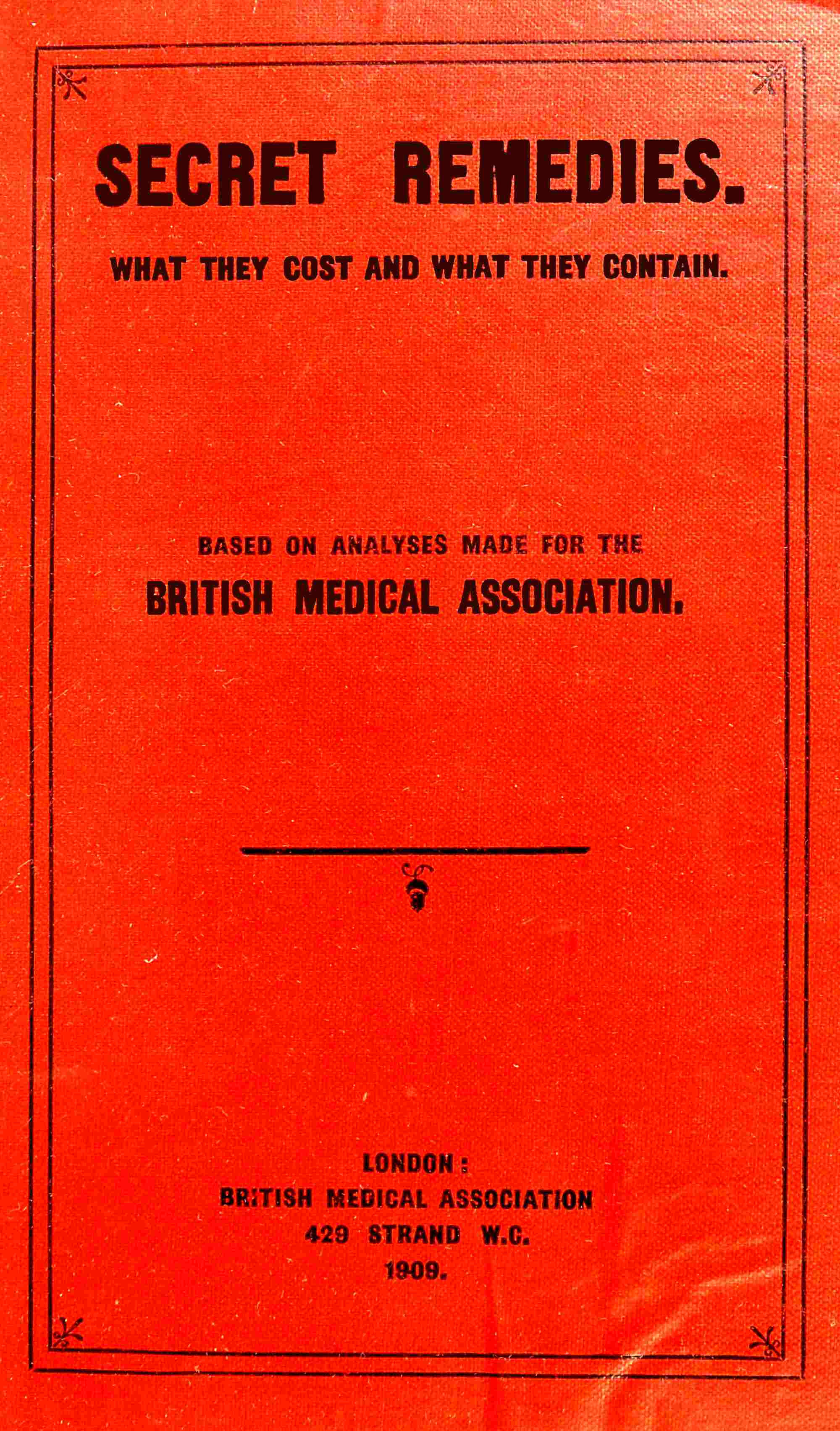
In 1909, the British Medical Association published a bombshell report, Secret Remedies: What They Cost and What They Contain. Through chemical analysis of some of the most popular and widely advertised remedies, Secret Remedies showed what they were really made of, and how much money was being bilked out of unsuspecting customers who were desperate for relief from a variety of painful and incapacitating conditions.
The first category of patent medicines in the report relates to those claiming to cure colds and catarrh (i.e., mucus buildup). The report says that these remedies “furnish a good example of the absurdity of the barefaced pretensions in which nostrum mongers indulge.” For example, advertisements for Dr. Lane’s Catarrh Cure claimed that the medical profession ignored the seriousness of catarrh, and that “over 20,000 people died in the United Kingdom last year of Consumption caused by Catarrh.” (It was already known by the 1880s that consumption, the old name for tuberculosis, was caused by bacteria, and could not be caused by catarrh, which is a symptom, not a disease.) Analysis of Dr. Lane’s Catarrh Cure showed that it contained a pinch of table salt, water, and a trace amount of phenol (carbolic acid), which can be toxic. To show how much profit could be made from this particular nostrum, the report calculated that a one-shilling bottle contained about 1/30 of a farthing’s worth of ingredients. There were 48 farthings in a shilling, which means there was a markup of nearly 160,000% on every bottle.
More troubling are the useless remedies for deadly diseases, like tuberculosis. In the chapter on Consumption, the report notes, “The injury to the public … arises from the excessive nature of the claims made, the excessive price usually charged, and the probability of the advertised medicine being taken in cases for which it is quite unsuitable, when it may do harm positively by its effects or negatively by preventing the sufferer from seeking proper advice.” The report goes on to describe the hard-sell tactics that quack-remedy makers used to get people to keep buying their products. In one tragic case, the mother of a young man who used a consumption “treatment” sold by the Weidhaas Hygienic Institute wrote to the company complaining that it seemed to be doing him “more harm than good.” The company wrote back insisting, “Give the treatment a fair trial and it will do all that is claimed for it.” The young man died seven weeks later.
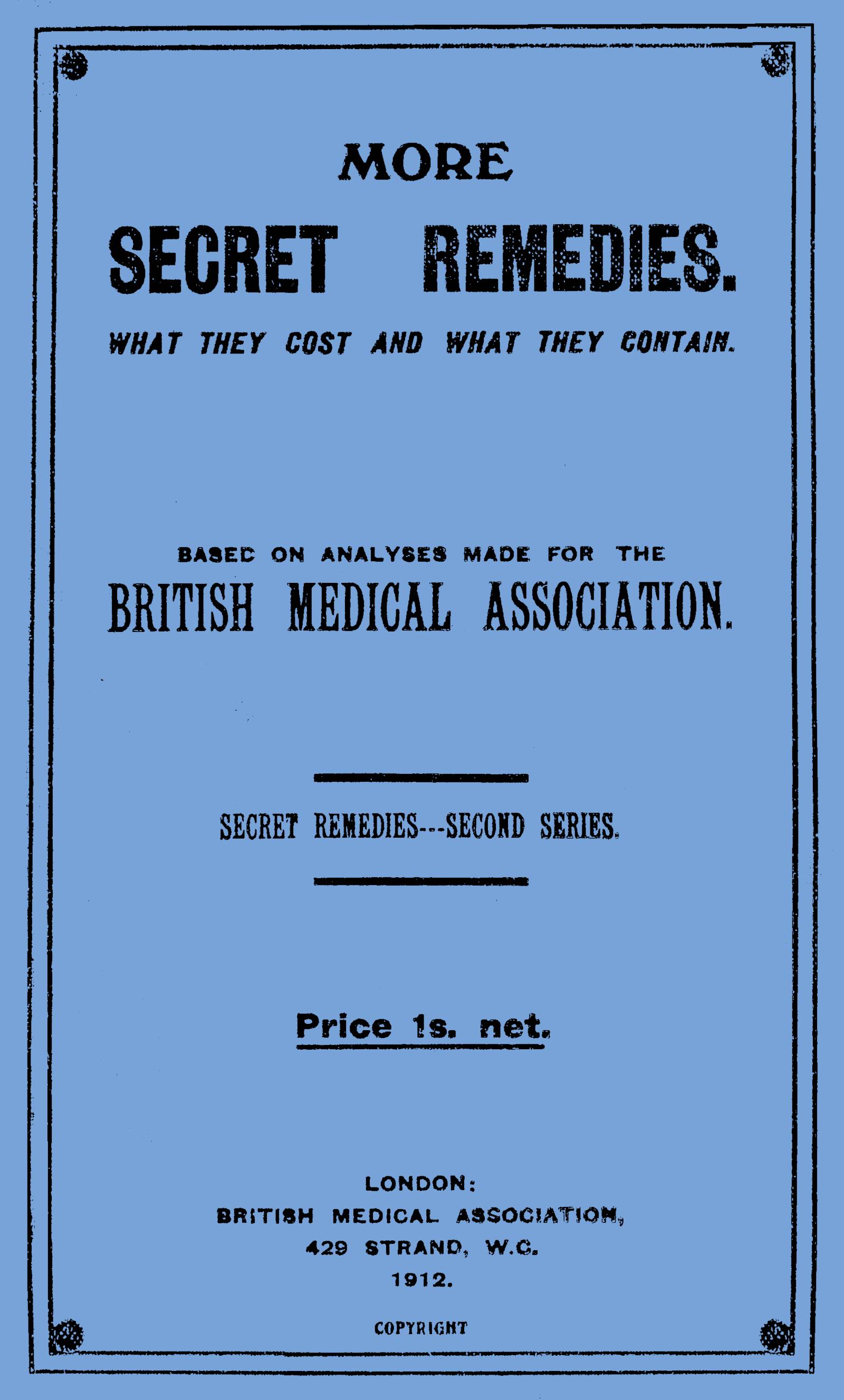
In 1912, the British Medical Association issued a second report, More Secret Remedies, with analyses of a host of additional quack remedies. The Preface notes that in the wake of the first report, the British Parliament had opened an inquiry into patent medicines with a view toward legislation. (It was not until 1941 that a law regulating the manufacture and advertisement of patent medicines was enacted.) “But the surest enemy of quackery in this department,” the report notes, “is increased publicity in regard to the facts, and the recognition by the public of the great disparity that exists in many cases between the actual composition of many nostrums on the one hand, and the extravagant claims that are made for their curative powers on the other.”
More Secret Remedies covers many of the same ailments as the first report, but it adds, among other things, an extensive chapter on “female medicines.” These wildly popular, expensive, and therefore highly profitable remedies purported to cure various menstrual issues. But, as the report reveals, advertisements for some contain “thinly veiled recommendations that they should be used for cutting short an unwelcome pregnancy,” often with ineffective but “highly dangerous” ingredients. Many contain oil of pennyroyal, an ancient folk remedy and abortifacient that is in fact toxic to humans, even in small doses.
Thanks to the volunteers at Distributed Proofreaders and Project Gutenberg, you can read these important works of medical history from anywhere, for free.
This post was contributed by Linda Cantoni, a Distributed Proofreaders volunteer.


