Celebrating 49,000 Titles

April 12, 2025

49K Banner

This post celebrates the 49,000th unique title Distributed Proofreaders has posted to Project Gutenberg: The Trail of the Serpent, by Mary Elizabeth Braddon. Congratulations and thanks to all the Distributed Proofreaders and Project Gutenberg volunteers who worked on it!


I don’t suppose it rained harder in the good town of Slopperton-on-the-Sloshy than it rained anywhere else. But it did rain… A bad, determined, black-minded November day. A day on which the fog shaped itself into a demon, and lurked behind men’s shoulders, whispering into their ears, “Cut your throat!—you know you’ve got a razor, and can’t shave with it, because you’ve been drinking and your hand shakes; one little gash under the left ear, and the business is done. It’s the best thing you can do. It is, really.” … A bad day—a dangerous day

This excerpt from the opening paragraph of The Trail of the Serpent, by the queen of the Victorian sensation novel, Mary Elizabeth Braddon, aptly sets the atmosphere for this dark tale of a career criminal, his many victims, and the mute detective who, despite his disability, is hot on the perpetrator’s trail. Some say that The Trail of the Serpent, published in 1860, was the first English detective novel. It helped begin the trend of thrilling novels that enraptured the British public, novels that in turn inspired the pulp fiction of the 20th Century.

The author of this decidedly unladylike story was born in London in 1835. Her mother left Braddon’s solicitor father due to infidelity and brought her up alone, managing to give her a good private education. She began writing stories as a child after her godfather gave her a writing desk. As a teenager, she became an actress to help support herself and her mother, performing under a stage name to preserve her family’s reputation. Though she initially had some success, her acting career began to wane when she was in her twenties, but not before she attracted the attention of Edward Bulwer-Lytton, who became one of her literary mentors.

In 1860, a printer who had seen her poems in a local newspaper offered Braddon £10 for a serialized novel, combining, as she later described it in an article in The Idler magazine, “the human interest and genial humor of Dickens with the plot-weaving of G.W.M. Reynolds,” a popular mystery novelist. Published as Three Times Dead, the novel was not a success. “That one living creature ever bought a number of ‘Three Times Dead’ I greatly doubt,” she said. And instead of the promised £10, all she received was the printer’s 50-shilling advance. But the publisher John Maxwell – a married man who became her lover, later her husband and the father of her six children – convinced her to revise it and turn it into The Trail of the Serpent, which sold a thousand copies in the first week.

It’s not hard to see why it was so popular. The lurid melodrama has everything – horrid murders, dark secrets, shocking coincidences, miserable poverty, suicides, abandoned children. But what makes it worth reading today – so much so that it was brought back into print in 2003 – is Braddon’s wonderful writing style. It is piquant, wonderfully descriptive, and frequently funny. It is also quite reminiscent of the style of Dickens, including her keen interest in the lives of the poor, though Braddon is far less sentimental. And her characters are vividly drawn, especially the “serpent” of the title, Jabez North, and the detective Joe Peters, who, despite his inability to speak, brilliantly pursues him.

Braddon wrote over 80 novels, many of which are available at Project Gutenberg. Perhaps her best known are Lady Audley’s Secret and Aurora Floyd. But The Trail of the Serpent is a very worthy beginning to her sensational career.

The volunteers at Distributed Proofreaders are proud to have The Trail of the Serpent as their 49,000th unique title for Project Gutenberg!

This post was contributed by Linda Cantoni, a Distributed Proofreaders volunteer.


They Might Be Giants

April 1, 2025

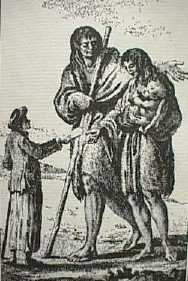
From the 15th Century on, European voyagers to the New World and beyond recounted fabulous tales of the strange peoples they encountered. Among these were the so-called Patagonian Giants. They were a tribe of super-tall people whom the Portuguese explorer Ferdinand Magellan and his crew supposedly encountered in southern Argentina during their voyage around the world in 1519-1522. The legend persisted for over 200 years. In May 1766, after Commodore John Byron‘s ship HMS Dolphin returned from its circumnavigation of the world, the Gentleman’s Magazine reported that the Dolphin “has found out a new country in the East, the inhabitants of which are eight feet and a half high.”

Seizing on this absurdity, the English politician, writer, and wit Horace Walpole wrote An Account of the Giants Lately Discovered, a satirical “Letter to a Friend in the Country” published in July 1766. Walpole was already a celebrated author; his wildly popular Gothic novel, The Castle of Otranto (1764), spawned an entire literary genre. He now took pen in hand to lampoon the alleged discovery of “Five Hundred Giants on Horseback” in Patagonia. Walpole notes that there have been few sightings of these giants over the years, and speculates that it is because they may be “a roving Nation, and seldom come down to the Coast; and then I suppose, only to bob for Whales.”

Walpole savages British colonialism by suggesting, “As soon as they are properly civilized, that is, enslaved, due care will undoubtedly be taken to specify in their Charter that these Giants shall be subject to the Parliament of Great-Britain, and shall not wear a Sheep’s Skin that is not legally Stamped.” That last clause is a clear dig at the infamous Stamp Act of 1765, a British revenue-raising measure that required American colonists to buy specially stamped paper, including sheepskin parchment, for printed matter. (It was later one of the major catalysts of the American Revolution.)

He has even harsher words for the slave trade:

“I would advise our prudent Merchants to employ [the Giants] in the Sugar Trade; … they must be worse treated, if possible, than our Black Slaves are; they must be lamed and maimed, and have their Spirits well broken, or they may become dangerous. This too will give a little respite to Africa, where we have half exhausted the Human, I mean, the Black Breed, by that wise maxim of our Planters, that if a Slave lives Four Years, he has earned his Purchase-Money, consequently you may afford to work him to Death in that time.”

Walpole even mocks the corporations that grew fat on imperialism, suggesting that the Giants “ought to be put under their Majesties, a West-Indian Company; the Directors of which may retail out a small Portion of their Imperial Revenues to the Proprietors, under the name of a Dividend.”

There are several other references to 18th-Century affairs in An Account of the Giants Lately Discovered: the Cock Lane Ghost hoax, the South Sea Bubble fraud, the mythical Beast of Gévaudan, the alleged misdeeds of the Russian empress Catherine the Great (whom Walpole calls “a Soldier’s Trull”), the plundering of India, and the “Humiliation” of Ireland, among others. Walpole even manages to slip in a sly reference to his own best-seller, The Castle of Otranto, as “the Cold Tale of a late notable Author, who did not know better what to do with his Giant than to make him grow till he shook his own Castle about his own Ears.”

The alleged sighting of the Patagonian Giants was later debunked in a 1773 account of Commodore Byron’s voyage. But Walpole did not need validation to wield his satiric flair. Thanks to the volunteers at Distributed Proofreaders and Project Gutenberg, you can enjoy Walpole’s wit yourself, for free.

This post was contributed by Linda Cantoni, a Distributed Proofreaders volunteer.


The Girlhood of Queen Victoria

March 1, 2025
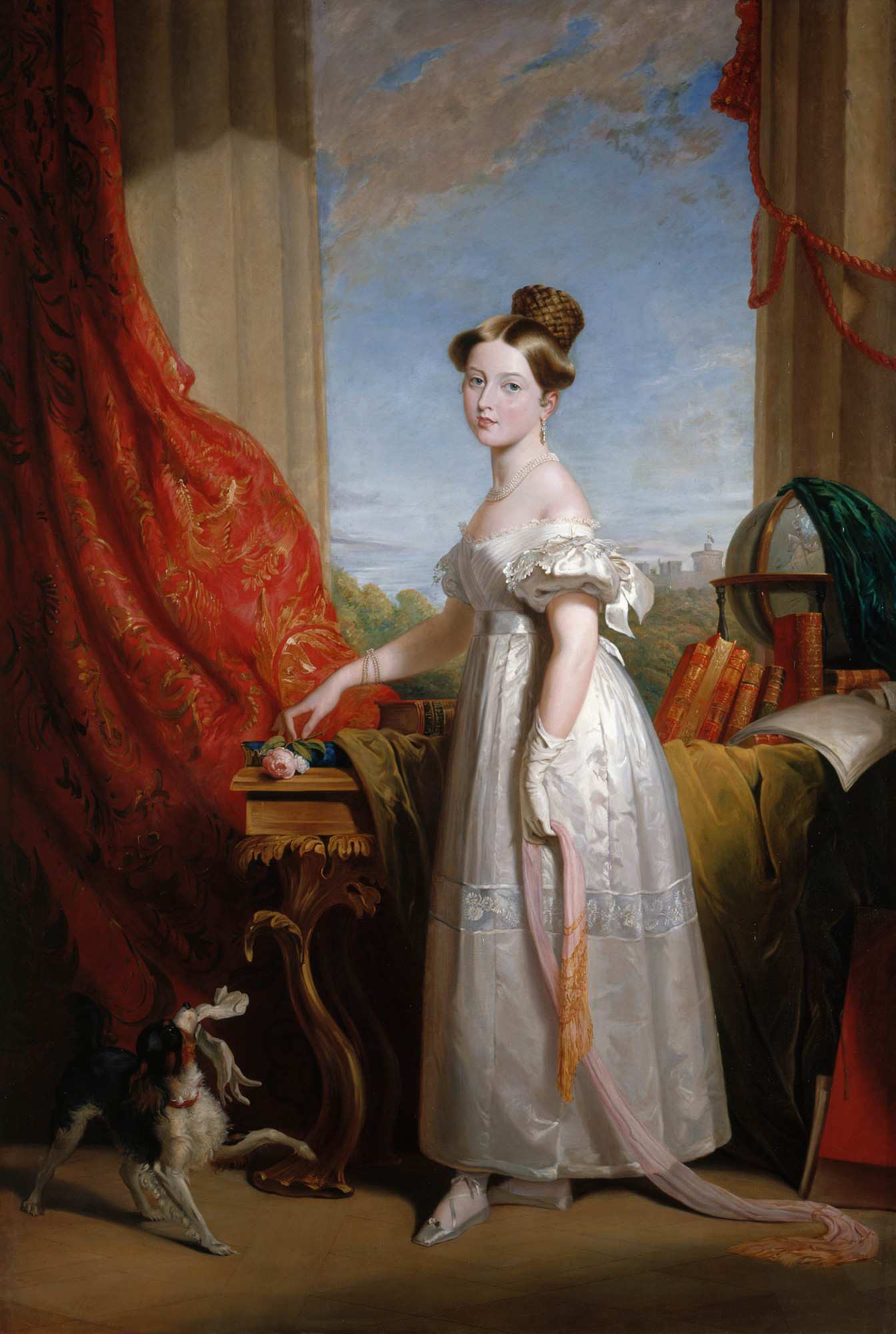
Princess Victoria at 13 with her spaniel, Dash, painted by George Hayter

Queen Victoria ruled the United Kingdom of Great Britain and Ireland for 63 years, the longest-reigning British monarch until Queen Elizabeth II’s 70-year reign. An entire era of social, cultural, industrial, and imperial changes – from Victoria becoming Queen in 1837 at the age of 18 to her death in 1901 at the age of 81 – was named after her.

The clichéd image most people have in their minds when they hear Victoria’s name is that of an elderly, grim widow given to proclaiming, “We are not amused.” But she began as a teenaged queen, inexperienced in politics but earnestly wanting to do the right thing.

The Girlhood of Queen Victoria (Vol. I) is part of a two-volume collection of extracts from her early journals, beginning in 1832, when she was 13, and ending in 1840, upon her marriage to Prince Albert when she was 21. (Volume II is in progress at Distributed Proofreaders.) The first volume begins with her first “Royal Progress” through England in August 1832 (though she was then five years away from becoming Queen), and ends in August 1838, two months after her official coronation ceremony.

Victoria’s journals reveal a lively girl, fond of music and dancing. On her 14th birthday, her uncle, King William IV, arranged a “Juvenile Ball” in her honor, to which many teenaged noblemen had been invited. Her excitement is palpable:

I danced first with my cousin George Cambridge, then with Prince George Lieven, then with Lord Brook, then Lord March, then with Lord Athlone, then with Lord Fitzroy Lennox, then with Lord Emlyn. [After supper] I then danced one more quadrille with Lord Paget. I danced in all 8 quadrilles. We came home at ½ past 12. I was very much amused.

Despite her secluded life and her diligent studies in history, law, and languages, Victoria was often amused. She loved going to plays, ballets, and the opera, and she made many sketches of the performing artists she saw, some of which are included in The Girlhood of Queen Victoria. But as she matured, the vision of her future became more sobering. Her uncle, King Leopold of Belgium, soon began advising her on her royal responsibilities, and suggested her first cousin, Prince Albert of Saxe-Coburg, as a possible candidate for marriage. Victoria and Albert first met in 1836, when she turned 17 and he was about to. She found him “extremely handsome,” and became very fond of him and his brother Ernest, but there was no indication at that point that she was in love with Albert.

On her 18th birthday in 1837, she noted, “How old! and yet how far am I from being what I should be.” She vowed to “study with renewed assiduity … and to strive to become every day less trifling and more fit for what, if Heaven wills it, I’m some day to be!” That day came on June 20, 1837, when King William died and she became Queen. She wrote in her journal, “I am very young and perhaps in many, though not in all things, inexperienced, but I am sure, that very few have more real good will and more real desire to do what is fit and right than I have.” In the ensuing months, Victoria, though indeed very young, grew up quickly in the world of government and politics, with the close guidance of her Whig Prime Minister, Lord Melbourne.

These extracts from Victoria’s journals, published in 1912, were edited, with an introduction and explanatory material, by Viscount Esher, under the auspices of Victoria’s son King Edward VII and her grandson King George V. Lord Esher had a close relationship to both Victoria and Edward, so anything too controversial or personal in the journals was expurgated. Nonetheless, The Girlhood of Queen Victoria has great historical value and is cited by Victoria’s biographers to this day.

Thanks to the volunteers at Distributed Proofreaders and Project Gutenberg, you can get a fascinating glimpse into young Victoria’s world for free.

This post was contributed by Linda Cantoni, a Distributed Proofreaders volunteer.


Jethro Tull’s Horse-Hoeing Husbandry

February 1, 2025

You might think Horse-Hoeing Husbandry is a little-known album by the 20th-Century progressive rock band Jethro Tull – but no. It is, in fact, a well-known book (in agricultural circles) by the 18th-Century progressive agriculturalist Jethro Tull, after whom the band was named. (Ian Anderson, leader of the rock band, once said that his agent, a history buff, came up with the name. Anderson had no idea it was “a dead guy who invented the seed drill” and wished he had changed it to “something less historical”). The volunteers at Distributed Proofreaders and Project Gutenberg have now made it possible for you to tell the difference.

Jethro Tull (the agriculturalist) was born in Berkshire, England, in 1674. He read law at Oxford and became a barrister. After he married, he and his wife settled on his father’s farm in Oxfordshire, where he became an avid gentleman farmer. Tull then traveled to the Continent to improve his health. He was struck by the similarity between his agricultural ideas and those actually in operation in the vineyards of France and Italy. He had theorized, and to his mind the success of the vineyards proved, that fertilizing the soil with manure was unnecessary – frequently tilling the soil was not only enough, but was also much more cost-effective.

On his return to England, Tull moved to the aptly named Prosperous Farm near Hungerford, where he put his farming ideas into practice. He invented a seed drill that automatically sowed and planted seeds, a method that was far more productive than hand-broadcasting. He also found that hoeing the soil with a device pulled by a horse was much more effective and less labor-intensive than hand-hoeing by individual workers. He expanded on his ideas about tilling in Horse-Hoeing Husbandry (subtitled “An Essay on the Principles of Vegetation and Tillage. Designed to introduce a New Method of Culture; Whereby the Produce of Land will be increased, and the usual Expence lessened”), first published in 1731.

In addition to finding fertilization with manure to be unnecessary, Tull railed against the use of it in growing food for human consumption. In a chapter entitled “Of Dung,” he writes, “’Tis a Wonder how delicate Palates can dispense with eating their own and their Beasts Ordure, but a little more putrefied and evaporated; together with all Sorts of Filth and Nastiness, a Tincture of which those Roots must unavoidably receive, that grow amongst it.” Later it was proven that some fertilization with manure is still necessary for the best results, but Tull’s innovative methods revolutionized agriculture in Europe and America, and are still in use today, albeit with more sophisticated machinery.

Tull died in 1741, but Horse-Hoeing Husbandry continued in print for many years afterward. The edition that Distributed Proofreaders contributed to Project Gutenberg is the fourth, published in 1762.

This post was contributed by Linda Cantoni, a Distributed Proofreaders volunteer.


Project Gutenberg Celebrates 75,000 Titles

December 30, 2024

Distributed Proofreaders is proud to have contributed Project Gutenberg’s 75,000th title, Folk Tales from Tibet, collected and translated by Captain W.F. O’Connor, and published in 1906.

Captain (later Sir William) O’Connor was an Irish diplomat and British army officer who served from the 1890s until his retirement in 1925. He spent many years on military missions in India, Tibet, and other South Asian countries, as well as Iran and Siberia, and was even a captive of the Persian army for a time. He was first posted to Tibet in 1903 as part of the Younghusband Expedition, which was essentially a military invasion designed to prevent the Dalai Lama from allying Tibet with Russia.

In his preface, O’Connor doesn’t mention this invasion, recounting only that he spent two years in Tibet, where he “made many friends amongst all classes of Tibetans – high and low, rich and poor” from whom he “learned that there exists amongst this fascinating and little-known people a wealth of folk-lore, hitherto inaccessible to the outside world.” He included 22 stories in Folk Tales from Tibet, and did his best to include only those that he believed were genuinely Tibetan, rather than those that had been “imported bodily” from Indian or Chinese sources.

Illustration for “How the Hare Got His Lip Split”

The stories are filled with folk wisdom very similar to that in Western stories, serving as cautionary tales about hubris, foolhardiness, greed, and other human foibles. Many of the stories feature anthropomorphized animals, as is common in folklore the world over. In one, “How the Hare Got His Lip Split,” a wily hare plays a series of nasty tricks on a tiger, a man and his horses, some ravens, and a shepherd boy and his sheep. Among the human characters are a quarreling king and queen, a set of thieves, an old Lama and his servant, and a deformed boy. O’Connor tantalizingly notes in the preface that “some of the very best and most characteristic stories are unfit for publication in such a book as this,” leading one to wonder if there might have been an Arabian Nights quality to them. (He does assure the reader that he has separately preserved omitted stories that “possess any scientific interest.”)

The collection’s subtitle notes that it includes “illustrations by a Tibetan artist and some verses from Tibetan love-songs.” The Tibetan artist is not named, but his or her artwork is richly colored and quite striking, despite O’Connor’s misgivings that the illustrations are “somewhat weak in details” because he was “unable personally to superintend their execution.” But O’Connor does not spare himself; he modestly apologizes for the “crudeness and lack of artistic finish” of his translations of the love songs, which are rendered in a very English rhyme-scheme.

Congratulations to the volunteers at Distributed Proofreaders and Project Gutenberg who made this 75,000th Project Gutenberg title possible!

This post was contributed by Linda Cantoni, a Distributed Proofreaders volunteer.


Millions of Cats

December 1, 2024

One of the great things about Public Domain Day is that every year, a treasure trove of “new” old books enters the public domain in the U.S., allowing the volunteers at Distributed Proofreaders and Project Gutenberg to turn them into free e-books. Among the gems that entered the public domain in 2024 is Wanda Gág‘s delightful children’s book, Millions of Cats.

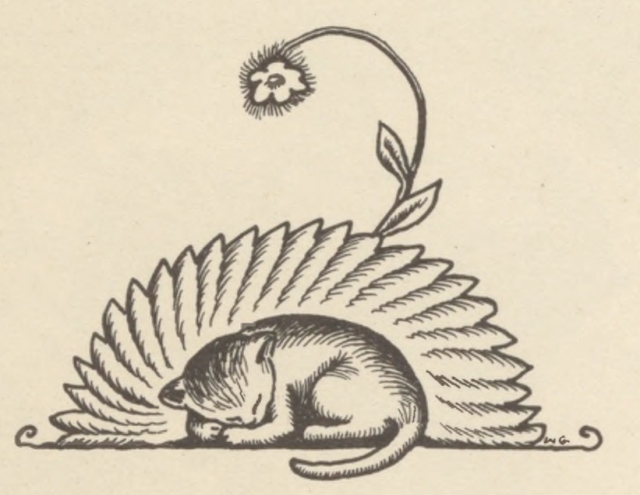
The book, which Gág both wrote and illustrated, was published in 1928 and has never been out of print. In fact, it’s considered to be the oldest American picture book still in print. In 1929, it won a Newbery Honor award, given for distinguished contributions to American children’s literature.

Millions of Cats tells the story of a lonely old couple who want to adopt a cat. The husband goes in search of one and finds a hill covered in “Millions and billions and trillions of cats.” He can’t decide which one he likes best, so he winds up taking all of them home. Without spoiling the ending, let’s just say that a cat-astrophe ensues…

Gág’s charming illustrations, reminiscent of European folk-art woodcuts, were no doubt influenced by her ethnic background. She was born in 1893 to German immigrants who had settled in Minnesota. She was 15 when her father, an artist and photographer, died of tuberculosis, leaving the family impoverished. Despite pressure to quit school and get a job to support her family, she finished high school and became a teacher for a time. Then, with the help of scholarships, friends, and a wealthy patron, she studied at various art schools, including the Art Students League of New York. The practical education she received there enabled her to earn a living as a commercial artist. Soon, Gág’s art was being featured in public exhibits, published in national magazines, and sold through prominent art galleries.

Millions of Cats wasn’t Gág’s only award-winning foray into children’s literature. The ABC Bunny (1933), written for her nephew, also won a Newbery Honor; Snow White and the Seven Dwarfs (1938) and Nothing at All (1941) received Caldecott Honors. Although those books are not yet in the public domain, you can now enjoy her unique and enchanting artwork in Millions of Cats thanks to the volunteers at Distributed Proofreaders and Project Gutenberg.


Lost at Sea

November 1, 2024

“Of all the heavy afflictions incident to a seafaring-life, shipwreck is the most disastrous. For what can afford a more affecting spectacle than those poor way-worn mariners, who, on their joyful return from a long voyage to the bosom of their families, are unhappily cast away at the very mouth of the harbour! To behold them, in this perilous situation, conflicting with the merciless waves; clinging to the broken planks, or with uplifted hands and piercing shrieks imploring aid with all the eloquence of ineffable woe!”

The Shipwreck
The Shipwreck, by J.M.W. Turner (1805)

These impassioned words begin the sobering report, An Essay on the Preservation of Shipwrecked Mariners, written in 1799 by English physician Anthony Fothergill. It was awarded a prize by the Royal Humane Society, whose directors noted that it was “a very able and scientific performance, happily enlisting Philosophy in the cause of Humanity.”

Fothergill began his Essay with accounts of shipwrecks that happened near the shore. One was the wreck of the Britannia in the West Indies in 1792. A laconic entry in the Marine List of September 11, 1792, issued by Lloyd’s of London, the famous insurance market, drily states: “The Britannia, Woodyear, from St. Kitts to London, is lost at St. Kitts.” Fothergill recounts the real horror of it. The ship, with 30 people aboard, struck a sandbar near the shore and “soon broke to pieces.” Most of the people were washed overboard, but Captain Woodyear – who could have saved himself by swimming to shore – remained on the wreckage trying to save two women, a child, and several men. An attempt to send a rescue boat failed, so relatives of the victims had to watch helplessly from the shore as the captain and the others drowned. “Next morning,” Fothergill concludes, “the beach was covered with dead bodies that had been cast on shore in the night!”

According to Fothergill, there were several problems leading to shipwrecks in the first place: storms, unseaworthy (“crazy”) vessels, and human error. He suggested ways to predict hurricanes and other storms. He made many recommendations to improve the seaworthiness of ships and new safety features such as lifeboats (which had only begun to come into use in the 1780s). He also expounded upon the proper conduct of the captain and crew in preventing shipwrecks in the first place, and the critical importance of maintaining discipline and order during a disaster in order to increase the chances of survival.

Fothergill noted that most shipwrecks occurred near the shore, but often potential rescuers on land could not get to the ship. He posited a number of different ideas to accomplish this, such as a long rope fired toward the ship using a skyrocket, a large bow and arrow, or a musket. He even suggested, “Might not Dr. Franklin’s experiment, with a large paper-kite, deserve a trial, especially in the direction of a fair wind and lee-shore?” (Fothergill was apparently a great admirer of Benjamin Franklin; he mentions Franklin several times in the Essay.) Fothergill also emphasized the importance of being able to swim, a skill that, surprisingly, even many sailors of the time did not have. And he urged the establishment of temporary asylums for “distressed mariners of all nations” who survive shipwrecks.

Shipwrecks continued to be a serious problem well into the 19th Century, but improvements in shipbuilding and technology eventually made sea voyages far safer. Thanks to the volunteers at Distributed Proofreaders and Project Gutenberg, you can get a glimpse into early modern efforts to prevent these disasters and save lives.

This post was contributed by Linda Cantoni, a Distributed Proofreaders volunteer.


Sanditon

October 1, 2024

My name perhaps—tho’ I am by no means the first of my Family, holding Landed Property in the Parish of Sanditon, may be unknown at this distance from the Coast—but Sanditon itself—everybody has heard of Sanditon,—the favourite—for a young & rising Bathing-place, certainly the favourite spot of all that are to be found along the coast of Sussex;—the most favoured by Nature, & promising to be the most chosen by Man.” – Mr. Parker in Sanditon, by Jane Austen

Nowadays, if you’ve heard of Sanditon, it’s possibly because of the recent television adaptation of Jane Austen‘s last novel, left unfinished at her untimely death in 1817. Sanditon has spawned a host of posthumous “continuations” of varying forms since the first transcription of the manuscript was published in 1925. Thanks to the volunteers at Distributed Proofreaders and Project Gutenberg, you can now enjoy that first transcription in Fragment of a Novel Written by Jane Austen, edited by Austen scholar R.W. Chapman.

Jane Austen
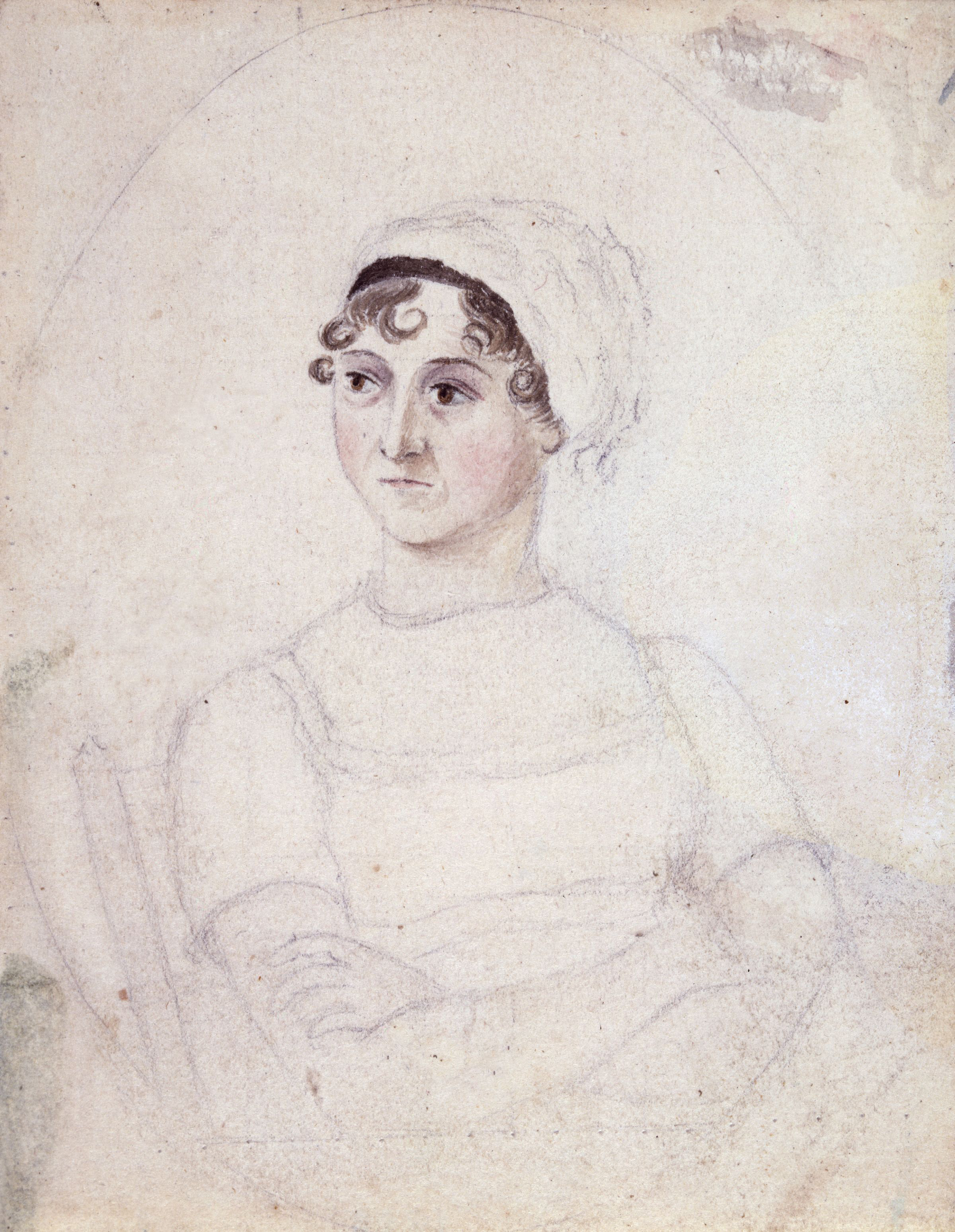
Sketch of Jane Austen by her sister Cassandra, c. 1810

Austen’s most famous novels, Sense and Sensibility (1811), Pride and Prejudice (1813), Mansfield Park (1814), and Emma (1816), were published anonymously in her lifetime but were not huge successes at the time. They endure today, however, because of the brilliance of Austen’s mordant commentary on the British landed gentry and the social position of women, particularly those who, like Austen, were unmarried and therefore had limited options for an independent life.

Sanditon continues Austen’s interest in the quirks and foibles of the gentry, this time viewing them through the lens of business speculation. Mr. Thomas Parker has invested heavily in developing Sanditon as a fashionable seaside resort and is obsessed with making it a success. “He could talk of it forever … it was his Mine, his Lottery, his Speculation & his Hobby Horse; his Occupation his Hope & his Futurity.” Plenty of comedy is provided not only by the overeager Mr. Parker, but also by his siblings, the voluble and officious Diana, and the hypochondriacs Susan and Arthur.

Against this background, Austen begins the intertwined stories of Charlotte Heywood, daughter of a prosperous family and a visitor at Sanditon; and Clara Brereton, a poor relation of and companion to Lady Denham, the wealthy grande dame of Sanditon. Mr. Parker’s “very good-looking” younger brother Sidney may or may not become a romantic interest for Charlotte. Meanwhile Clara is courted by Lady Denham’s impecunious and pretentious nephew by marriage, Sir Edward, whose interest in Clara is strictly financial, as she is a potential heir to Lady Dedham’s estate. But Lady Dedham wants Sir Edward to court Miss Lambe, a very wealthy but sickly “half-mulatto” heiress from the West Indies who has come to Sanditon from a London finishing school.

We don’t know how these romantic entanglements work out because Austen, who had begun Sanditon in January 1817, abandoned it after only 12 chapters due to a “fever and bilious attack” in March 1817. She died in July 1817, possibly of lymphoma, at the age of 41.

Part of the first page of the Sanditon manuscript

The manuscript of Sanditon passed down to her niece’s granddaughter, who made it available for the transcription and later donated it to Kings College, Cambridge. (You can view images of the manuscript pages here.) The transcription, as explained in the Preface, is as close as possible to the original, including misspellings, abbreviations, and inconsistent punctuation. But it also has the great value of a Notes section revealing what she changed in the manuscript. In the Project Gutenberg edition, the HTML and mobile e-book formats contain links to individual notes on Austen’s deletions and additions.

This post was contributed by Linda Cantoni, a Distributed Proofreaders volunteer.


Music after the Great War

September 1, 2024

In 1913, Igor Stravinsky‘s groundbreaking ballet, The Rite of Spring, premiered in Paris. The dissonant music and strange choreography caused near-riots at the first two performances. The young American music critic Carl Van Vechten recalled: “Three ladies sat in front of me [in a box] and a young man occupied the place behind me… The intense excitement under which he was laboring, thanks to the potent force of the music, betrayed itself presently when he began to beat rhythmically on the top of my head with his fists. My emotion was so great that I did not feel the blows for some time. They were perfectly synchronized with the beat of the music… We had both been carried beyond ourselves.”

So began Van Vechten’s love for Stravinsky’s music, as he recounts in Music after the Great War, a collection of seven lively essays on the performing arts scene of the early 20th Century. The book was published in 1915, when World War I was still in full swing, and in the title essay, “Music after the Great War,” Van Vechten speculates on which contemporary composers will prove to have the most lasting impact after the war. His picks: Stravinsky and Arnold Schoenberg – as well as a teenaged prodigy named Erich Korngold, who later became an Oscar-winning film composer.

As the assistant music critic for The New York Times, Van Vechten had the opportunity to travel to Paris and observe the avant-garde cultural scene first hand, and to meet some of its most important proponents. Indeed, two of the ladies in his box at the Rite of Spring performance were none other than Gertrude Stein and her partner Alice B. Toklas. Van Vechten doesn’t name them in his book, but Stein recounts in The Autobiography of Alice B. Toklas that Van Vechten, who became a lifelong friend, was there.

The essays in Music after the Great War include not only Van Vechten’s predictions in the title essay, but also extended appreciations of Stravinsky and of the Ballets Russes, which produced The Rite of Spring and several other Stravinsky ballets. “The music [of The Rite of Spring] is not descriptive, it is rhythmical,” Van Vechten writes. “All rhythms are beaten into the ears, one after another, and sometimes with complexities which seem decidedly unrhythmic on paper, but when carried out in performance assume a regularity of beat which a simple four-four time could not equal.”

Rite of Spring score excerpt
The first eight bars of the Sacrificial Dance in The Rite of Spring, showing the complex meter changes.

The remaining essays demonstrate the breadth and depth of Van Vechten’s interest in the performing arts. In “Music for Museums?” he decries the “fossilization” of symphonic concerts through constant recycling of familiar works while new music goes unperformed. Surprisingly for one so enamored of new music, however, in another essay Van Vechten expresses a fondness for Jules Massenet‘s florid and decidedly Romantic operas. The last two essays in the book set forth Van Vechten’s well-informed opinions on stage decoration in opera, ballet, and drama.

Thanks to the volunteers at Distributed Proofreaders and Project Gutenberg, this fascinating slice of cultural history is available to all.

This post was contributed by Linda Cantoni, a Distributed Proofreaders volunteer.


Celebrating 48,000 Titles

July 19, 2024

This post celebrates the 48,000th unique title Distributed Proofreaders has posted to Project Gutenberg: The Reign of King Oberon. Congratulations and thanks to all the Distributed Proofreaders and Project Gutenberg volunteers who worked on it!

The Victorian era marked a turning point in literature for children. In earlier eras, the primary goal was to provide children with moral and religious instruction, based on the puritanical idea that children are born with sin and must constantly be warned of its consequences. But a sea-change began to occur during the 19th Century. Childhood began to be seen more as a time of innocence and joy, and children’s literature began to reflect that. There were, of course, still moral lessons to be learned, but they could be taught in more entertaining ways, accompanied by eye-catching illustrations.

The Reign of King Oberon (subtitled The True Annals of Fairyland) is an excellent example of the Golden Age of children’s literature. Published around 1902, it is a collection of fairy tales from various sources, edited by English journalist Walter Jerrold and illustrated by his frequent collaborator, Charles Robinson.

The framing story takes place at the court of King Oberon and Queen Titania. These age-old royal personages are best known today as the King and Queen of the Fairies in Shakespeare’s comedy A Midsummer Night’s Dream. Jerrold borrows from Shakespeare the quarrel between Oberon and Titania over a changeling child whom each wants as a servant. They reconcile, and all the denizens of Fairyland gather at Oberon’s court to celebrate and tell stories. The changeling child listens carefully and later writes these stories down for our enjoyment.

Among the over two dozen stories in the collection are familiar tales by Hans Christian Andersen, the Brothers Grimm, and Charles Perreault, as well as Norse, Irish, French, and Eastern European folk tales. Thumbelina is here, as are Rumpelstiltskin, Hansel and Gretel, and many other beloved characters. The book has a beautiful, colorful cover, and there are numerous lovely pen-and-ink illustrations throughout.

The volunteers at Distributed Proofreaders are proud to have The Reign of King Oberon as their 48,000th unique title for Project Gutenberg!

This post was contributed by Linda Cantoni, a Distributed Proofreaders volunteer.