“My name perhaps—tho’ I am by no means the first of my Family, holding Landed Property in the Parish of Sanditon, may be unknown at this distance from the Coast—but Sanditon itself—everybody has heard of Sanditon,—the favourite—for a young & rising Bathing-place, certainly the favourite spot of all that are to be found along the coast of Sussex;—the most favoured by Nature, & promising to be the most chosen by Man.” – Mr. Parker in Sanditon, by Jane Austen
Nowadays, if you’ve heard of Sanditon, it’s possibly because of the recent television adaptation of Jane Austen‘s last novel, left unfinished at her untimely death in 1817. Sanditon has spawned a host of posthumous “continuations” of varying forms since the first transcription of the manuscript was published in 1925. Thanks to the volunteers at Distributed Proofreaders and Project Gutenberg, you can now enjoy that first transcription in Fragment of a Novel Written by Jane Austen, edited by Austen scholar R.W. Chapman.
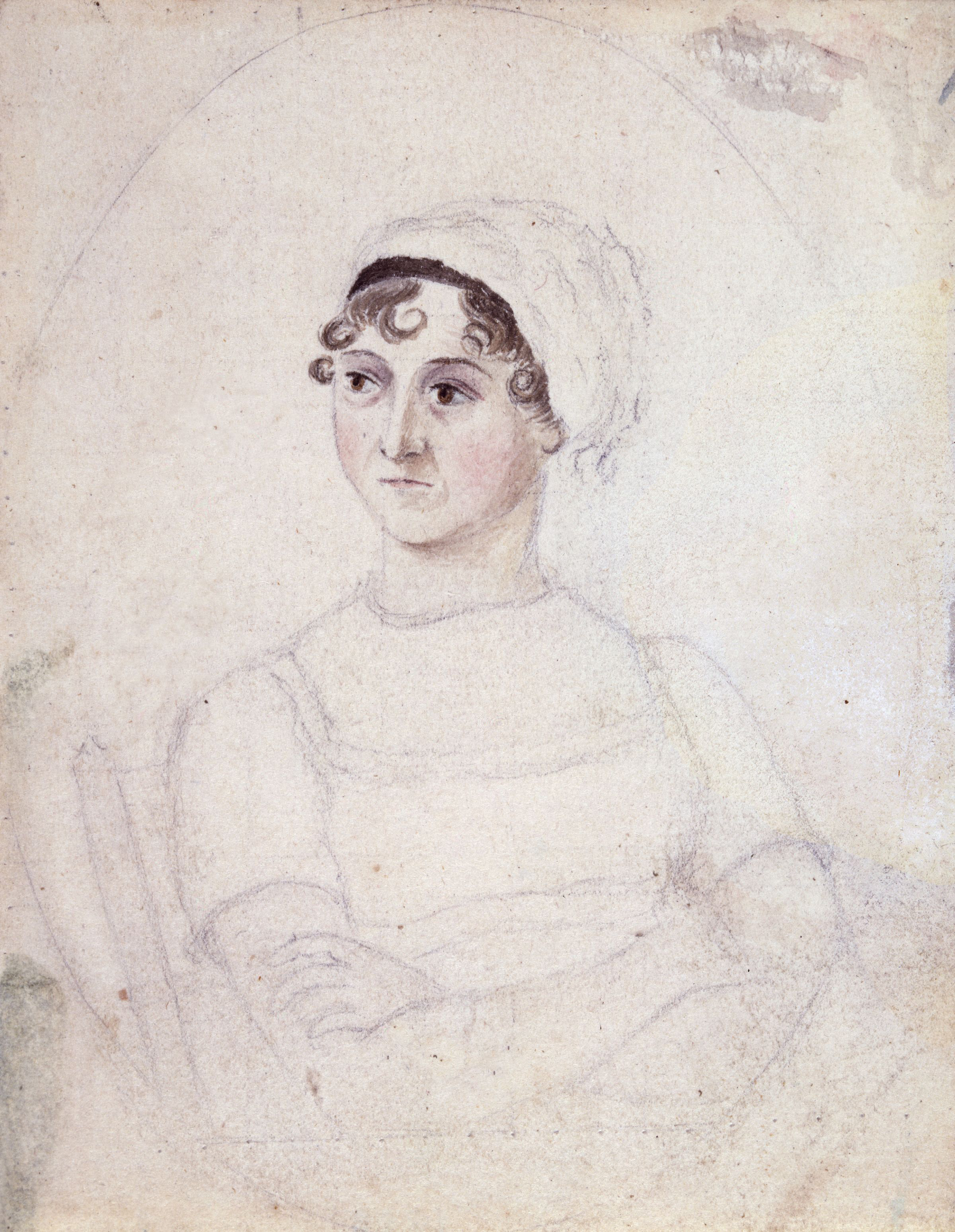
Austen’s most famous novels, Sense and Sensibility (1811), Pride and Prejudice (1813), Mansfield Park (1814), and Emma (1816), were published anonymously in her lifetime but were not huge successes at the time. They endure today, however, because of the brilliance of Austen’s mordant commentary on the British landed gentry and the social position of women, particularly those who, like Austen, were unmarried and therefore had limited options for an independent life.
Sanditon continues Austen’s interest in the quirks and foibles of the gentry, this time viewing them through the lens of business speculation. Mr. Thomas Parker has invested heavily in developing Sanditon as a fashionable seaside resort and is obsessed with making it a success. “He could talk of it forever … it was his Mine, his Lottery, his Speculation & his Hobby Horse; his Occupation his Hope & his Futurity.” Plenty of comedy is provided not only by the overeager Mr. Parker, but also by his siblings, the voluble and officious Diana, and the hypochondriacs Susan and Arthur.
Against this background, Austen begins the intertwined stories of Charlotte Heywood, daughter of a prosperous family and a visitor at Sanditon; and Clara Brereton, a poor relation of and companion to Lady Denham, the wealthy grande dame of Sanditon. Mr. Parker’s “very good-looking” younger brother Sidney may or may not become a romantic interest for Charlotte. Meanwhile Clara is courted by Lady Denham’s impecunious and pretentious nephew by marriage, Sir Edward, whose interest in Clara is strictly financial, as she is a potential heir to Lady Dedham’s estate. But Lady Dedham wants Sir Edward to court Miss Lambe, a very wealthy but sickly “half-mulatto” heiress from the West Indies who has come to Sanditon from a London finishing school.
We don’t know how these romantic entanglements work out because Austen, who had begun Sanditon in January 1817, abandoned it after only 12 chapters due to a “fever and bilious attack” in March 1817. She died in July 1817, possibly of lymphoma, at the age of 41.

The manuscript of Sanditon passed down to her niece’s granddaughter, who made it available for the transcription and later donated it to Kings College, Cambridge. (You can view images of the manuscript pages here.) The transcription, as explained in the Preface, is as close as possible to the original, including misspellings, abbreviations, and inconsistent punctuation. But it also has the great value of a Notes section revealing what she changed in the manuscript. In the Project Gutenberg edition, the HTML and mobile e-book formats contain links to individual notes on Austen’s deletions and additions.
This post was contributed by Linda Cantoni, a Distributed Proofreaders volunteer.


 Hot off the Press