
This post celebrates the 47,000th unique title Distributed Proofreaders has posted to Project Gutenberg: the Betty Crocker Picture Cooky Book. Congratulations and thanks to all the Distributed Proofreaders and Project Gutenberg volunteers who worked on it!

Everybody loves cookies! So proclaims the fictional Betty Crocker in the introduction to the seminal 1948 booklet on baking them, the Betty Crocker Picture Cooky Book. Thanks to the volunteers at Distributed Proofreaders – especially the Cookbook Lovers team – you can re-create the delicious goodies that post-World War II American housewives made for the growing Baby Boom generation.
This early version of the Betty Crocker Picture Cooky Book is only a 46-page booklet, but it crams in “128 of the most popular tested recipes from her collection … with 70 ‘how-to-do’ tips, 50 success pointers and 175 illustrations.” All that for just 25 cents, if you sent it to Betty at General Mills, the Minnesota food conglomerate behind the icon. Later editions in full-size book form – particularly the classic 1963 edition – were greatly expanded to include hundreds of recipes. And, of course, some recipes were modernized based on changing tastes and eating habits. But the goal remained the same: to make it easy for busy homemakers to bring the comforting, nostalgic aromas and flavors of cookies to their families.
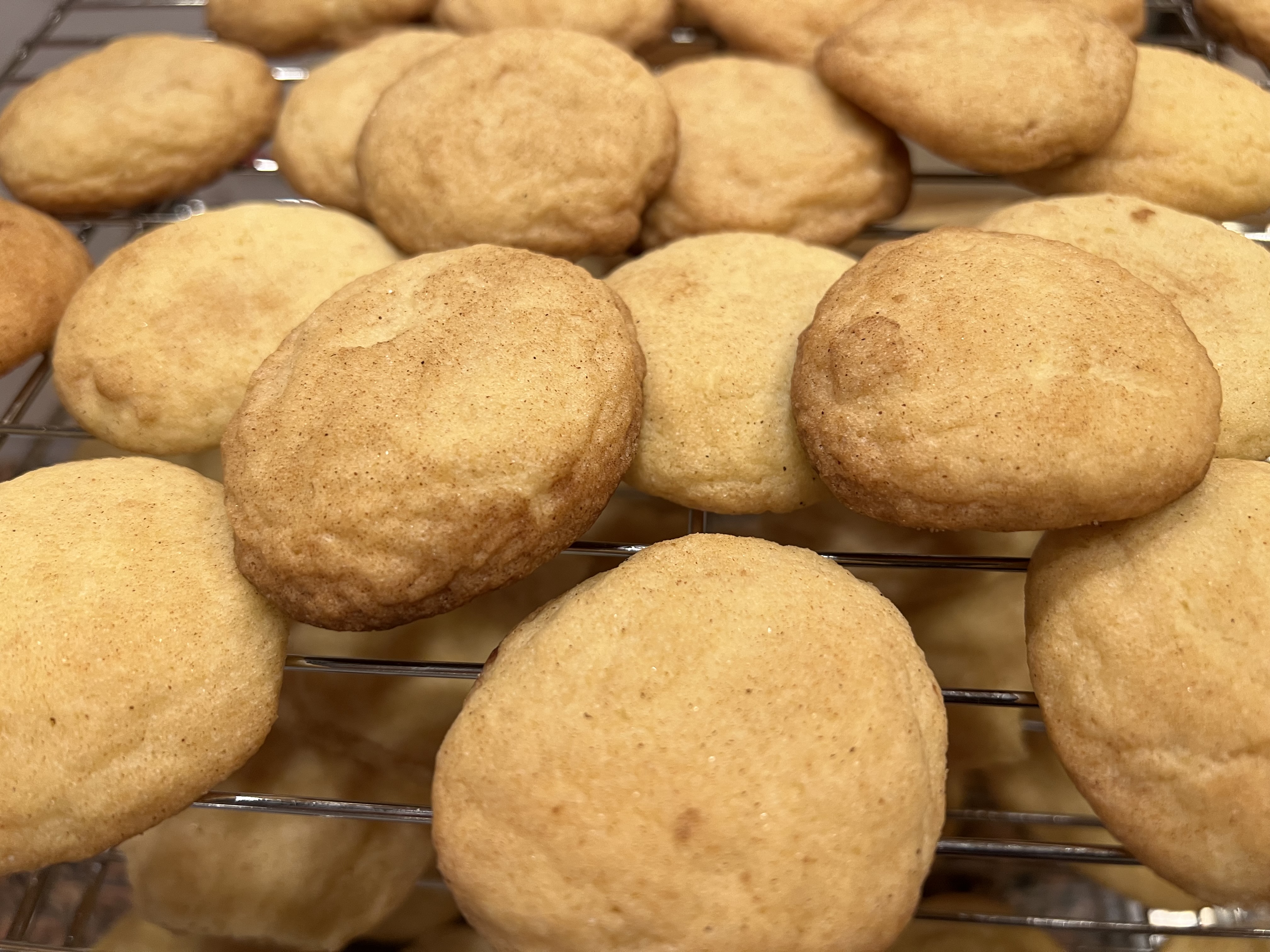
This milestone is particularly meaningful because the booklet was contributed by a Distributed Proofreaders volunteer, Lisa Corcoran (Leebot). It belonged to her mother, and Lisa still bakes from it. She recalls:
“My mom collected lots of these promotional cookbooklets through the years, as well as recipes from various TV and cooking shows. She cooked and baked from scratch. My sister and I loved coming home from school to a batch of chocolate chip or peanut butter cookies, or Snickerdoodles (the recipe in the photo). At Christmas she made many types of cookies, many of which she’d assemble into gift boxes for neighbors and friends. The Berliner Kranser (little wreaths) recipe remains a favorite.”
Lisa prefers to substitute real butter for shortening in these recipes. She advises, “If you do substitute butter, make a couple of test cookies first as you may need to adjust the ratio of flour. If they spread out and are too buttery, work more flour into the dough until you get the right consistency.”
Distributed Proofreaders is proud to celebrate its 47,000th title with this very special cookbook. Many thanks to everyone who made it possible. And Happy Holidays to all!
This post was contributed by Linda Cantoni, a Distributed Proofreaders volunteer, with contributions from Lisa Corcoran (Leebot), leader of the Distributed Proofreaders Cookbook Lovers team.


 Posted by LCantoni


 Hot off the Press